China’s innovation, economic flexibility and openness seen as convincing drivers of success in 2026 despite challenges: Ex-Bundestag VP
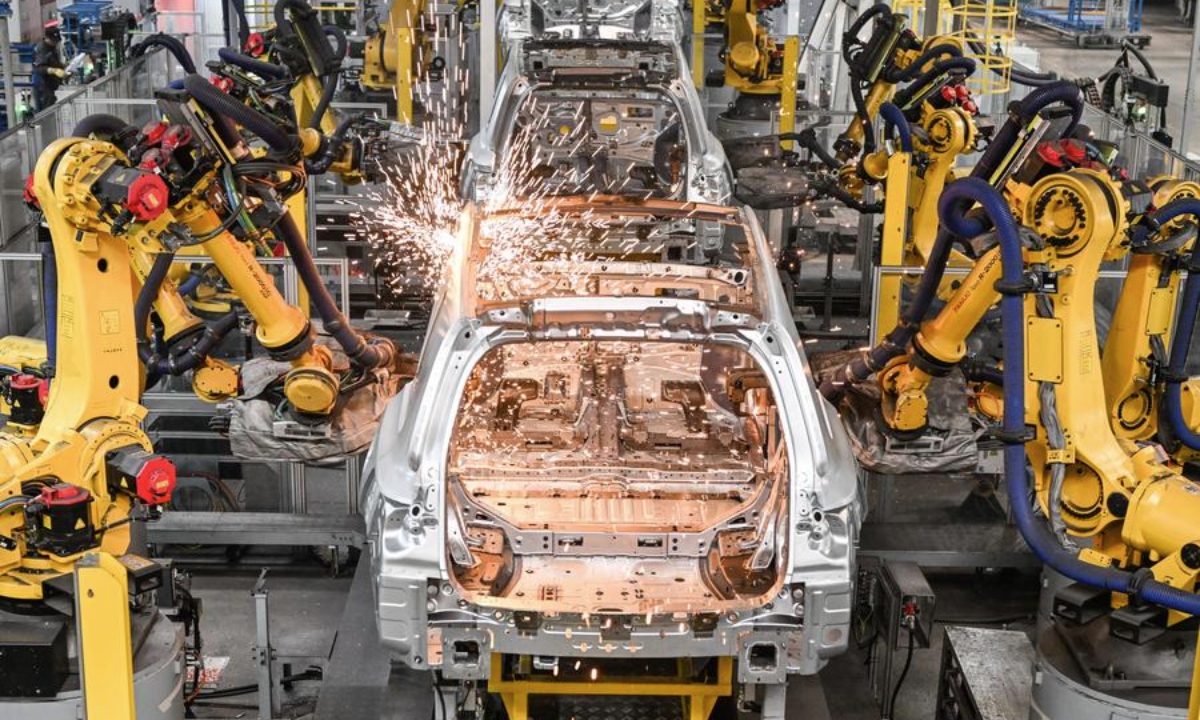
Robots weld bodyshells of cars at a workshop of Chinese electric vehicle (EV) maker Li Auto Inc. in Changzhou, east China's Jiangsu Province, Jan. 10, 2024. (Xinhua/Ji Chunpeng)
China's tech innovation, economic flexibility and openness to cooperation provide convincing evidence that the country will continue to succeed in 2026 despite challenges, said Hans-Peter Friedrich, former vice president of German Bundestag and chairman of the German-Chinese parliamentary group, in an interview with the Global Times.
The remarks were made after the just-concluded annual Central Economic Work Conference was held in Beijing, as Chinese leaders decided priorities for the economic work in 2026, the Xinhua News Agency reported.
Commenting on the significance of the key meeting, Friedrich said that for every economy, it is crucial to regularly assess and analyze its economic development.
The importance of the Central Economic Work Conference is reflected in two main aspects: first, it reviews and analyzes the economic performance of the past year, systematically sorting out the new problems, challenges, and phenomena that China's economy faces, providing a realistic basis for formulating future policies; second, it clarifies the overall direction, policy tone, and key tasks of economic work in the next phase, offering authoritative guidance for government action and ensuring sustained and healthy economic development, according to Friedrich.
The Central Economic Work Conference is a key window through which China communicates its economic policy direction to the world. Amid rising global uncertainty and evolving trade patterns, the signals released by the conference provide foreign investors and international partners with clear and stable policy references, demonstrating China's commitment to maintaining stability through coordinated and predictable economic management, said Friedrich.
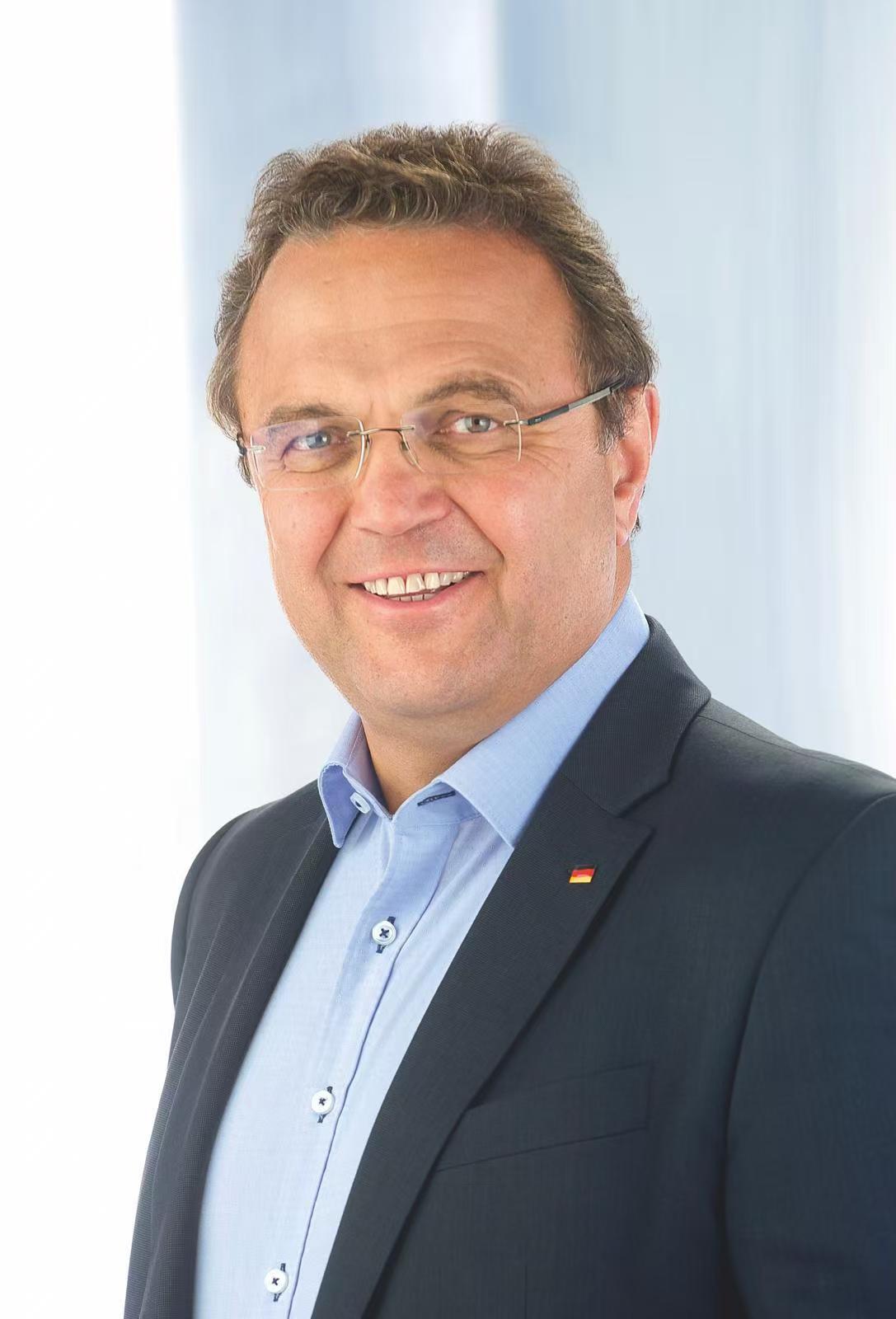
Hans-Peter Friedrich, former vice president of German Bundestag and chairman of the German-Chinese parliamentary group Photo: Courtesy of Hans-Peter Friedrich
Friedrich has visited China multiple times, which has given him a deep understanding of the country's development dynamism and regional diversity.
Talking about his prospects for China's economic development in 2026, based on his close exchanges with China, Friedrich said that he is convinced that China will succeed in overcoming the challenges facing all economies worldwide in 2026, as well as the specific challenges facing China.
"My optimism and confidence are based in particular on the high level of innovation and flexibility of the Chinese economy, but also on the fact that China is open to engaging with other countries and economies around the world in economic terms, seeking common interests and solutions," he further noted.
When it comes to the specific sectors where he sees the booming opportunities in China, he mentioned new energy sector.
"It will be especially important to advance decarbonization and new energy sources, as well as to succeed in the transformation toward new, sustainable manufacturing technologies, a circular economy, and the implementation of artificial intelligence," he said.
Especially when it comes to the challenges of an aging society, China, and also Germany, will develop solutions that will ultimately benefit all countries of the world, he said.
As China is promoting new quality productive forces, with tech innovation being a core, Friedrich said that the country is expected to further enhance its competitiveness in frontier areas such as renewable energy and energy storage technologies, while contributing its part to the world energy transformation.
China's new energy vehicles are a good example of their contribution to the energy transition, as their cost-effectiveness makes them more accessible to the world users, according to Friedrich.
This year's Central Economic Work Conference called for adhering to opening-up to the outside world and promoting win-win cooperation across multiple fields.
Commenting on the significance of China's commitment to expanding openness for maintaining global economic stability, Friedrich said that "open borders and open markets, as well as companies that engage in fair international competition, have contributed to the successful fight against world hunger and have replaced social tensions with societal stability in many areas. This path of open borders and open cooperation in fair competition will continue to be the right one and will remain important for China itself, as well as for many countries worldwide."
One clear example is the deepening economic and industrial cooperation between China and Germany in recent years, which Friedrich said reflects mutually beneficial opening‑up and integration into global value chains.
German companies such as BMW, Bosch, and Siemens have expanded significant investments in China. At the same time, China has become Germany's top trading partner, with bilateral trade sustained at high levels and both sides benefiting from deep industrial complementarity.
As a chairman of the German Eastern Business Association's Committee on International Cooperation, Friedrich said that the committee will continue to serve as a bridge of cooperation between Germany and China, translating the frontline insights it has gathered into actionable cooperative projects.
Looking ahead, more focus will be made on promoting the implementation of substantive projects between Chinese and German companies in high-tech, green technology, and healthcare, promoting China-German cooperation move into a more practical and deeper new phase, he said.
Next year, China will host APEC for the third time. He said that open markets and economic cooperation are important pillars of regional and even global stability. Amid global uncertainty and a shifting geopolitical landscape, China hosting APEC helps enhance predictability and confidence, he said, noting that the APEC meeting can also send an important signal to other parts of the world — that future hope lies in economic cooperation, rather than isolation and protectionism.
RELATED ARTICLES