Illustration: Xia Qing/GT
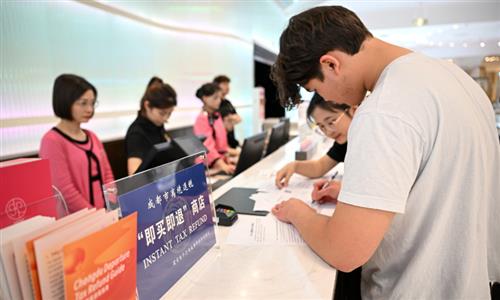
Shenzhen, in South China's Guangdong Province, processed 56,000 departure tax refund transactions in the first 11 months of this year, a thirteen-fold year-on-year increase. Sales that were eligible for refunds rose 2.4 times, while "buy-and-refund-on-the-spot" sales skyrocketed nearly fortyfold. Incoming travelers from more than 160 countries and regions completed departure tax refund procedures in Shenzhen, local authorities reported on Thursday.Departure tax refunds are part of China's broader "expand high-level opening-up, promote consumption" strategy, aimed at boosting tourism shopping and upgrading domestic consumption. The rapid growth in both the number of refunds and sales volume reflects the surging macro trend of "China Shopping" and the increasing international appeal of Chinese travel and products.
This growth has been accompanied by a rapid expansion of the refund infrastructure across China. In Shenzhen, for example, six departure tax refund ports are open, and the number of tax refund shops has surpassed 2,000, significantly improving convenience for inbound travelers.
Nationwide, the number of incoming travelers claiming tax refunds rose 285 percent year-on-year in the first 11 months, while sales and refund amounts nearly doubled (98.8 percent), demonstrating the scale of cross-border consumption growth. As of the end of November, the number of departure tax refund shops nationwide reached 12,252, including 9,151 newly added this year. More than 7,000 shops now offer "buy-and-refund-on-the-spot" services, further expanding the coverage of tax refunds.
"China Shopping" is indeed a macro trend gaining dynamism - not only because China continues to relax incoming tourism shopping policies, but also because data and on-the-ground feedback show strong purchasing interest among incoming tourists.
As part of its high-level opening-up strategy, China has continuously optimized incoming tourism and shopping policies, including departure tax refunds, "buy-and-refund-on-the-spot" programs, and expanded duty-free shopping in Hainan. These measures lower barriers for shoppers, enhance convenience, and create a direct, tangible experience of "China shopping," driving rapid growth in spending.
At the same time, the design, quality, and value of Chinese products continue to improve, particularly in electronics, fashion, cultural and creative goods, and high-end consumer items, aligning well with foreign consumers' preferences. Both data and on-site feedback indicate that incoming visitors enjoy purchasing Chinese products and are willing to pay a premium for high-quality and distinctive goods, reflecting the increasing international appeal of Chinese brands.
In the transition from "Made in China" to "Innovated in China," foreign visitors are no longer satisfied with cheap souvenirs - they actively seek well-designed, high-quality, culturally rich, and technologically sophisticated products.
In Shenzhen, authorities have focused on encouraging trendy domestic brands such as DJI drones, Huawei smartphones, ceramics, and specialty foods to participate in the tax refund program, diversifying the selection of eligible goods. According to the official WeChat account of Shenzhen, departure tax refund applications involving these flagship Chinese products accounted for more than 50 percent of the total in the first 11 months.
Although measures such as the departure tax refund policy are not traditional macroeconomic policies, they directly shape incoming tourists' perception of a city and even a country. Facilitating tax refunds stimulates inbound consumption, requiring the integration of financial, currency exchange, and cross-border payment systems.
Shenzhen's experience demonstrates that China is reducing friction costs for international travelers through more detailed, market-oriented institutional arrangements. This consumer-centered approach to opening-up is creating new growth in "China shopping."
To further streamline the process, Shenzhen has optimized approval procedures for tax refund shops and introduced the nation's first cross-border bank card transfer service for refunds. This ensures that incoming travelers receive their tax refunds promptly, overcoming delays caused by international banking and settlement issues.
The success of Shenzhen's departure tax refund program illustrates a broader trend: China's rise as a global shopping destination is driven not only by policy facilitation but also by product innovation, quality, and cultural appeal. As infrastructure and digital services improve, cross-border consumption will likely continue to grow, reinforcing China's position as a hub for international retail and a showcase of the country's economic transformation.
The author is a reporter with the Global Times. bizopinion@globaltimes.com.cn
RELATED ARTICLES