Rubio shows China-Japan balance in Takaichi-triggered row; remarks shatter Tokyo’s bid for Washington's backing: expert
By Li Yawei and Published: Dec 20, 2025 06:35 PM

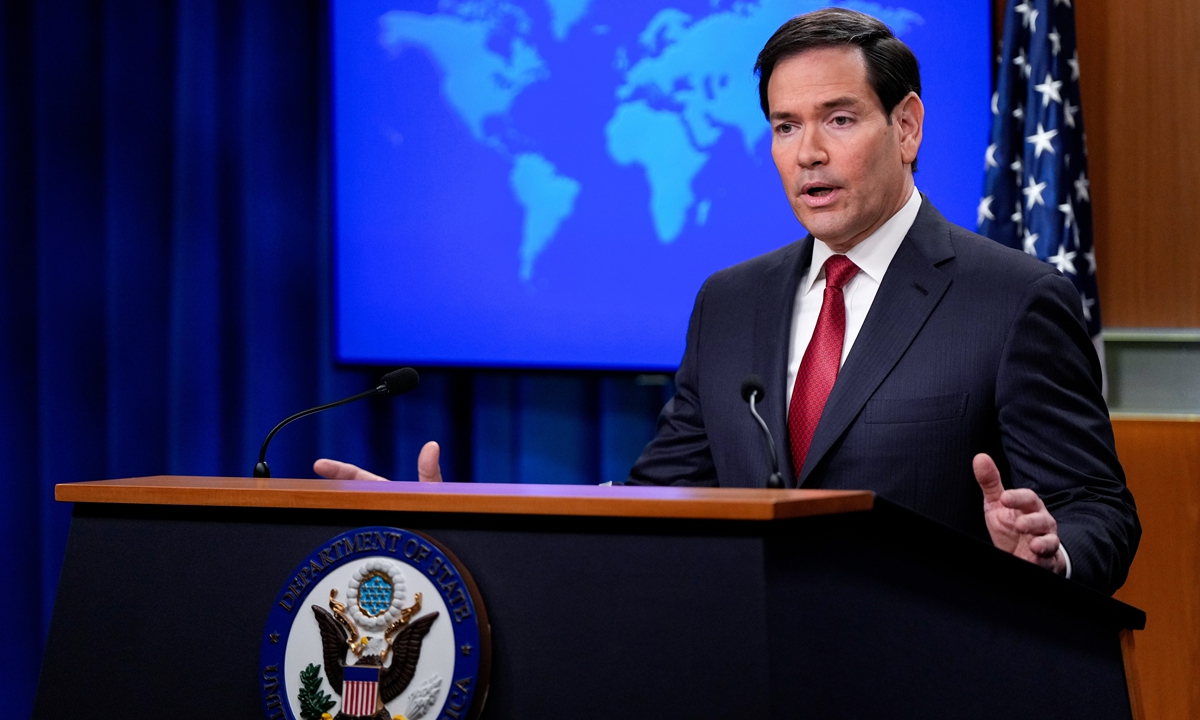
US Secretary of State Marco Rubio speaks during a news conference at the State Department, Friday, Dec. 19, 2025, in Washington. Photo: VCG
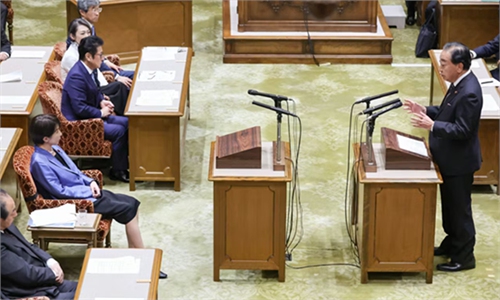
US Secretary of State Marco Rubio's remarks made on Friday on the recent escalation of tensions between Japan and China—claiming that the US can continue its strong and firm partnership and alliance with Japan while also finding productive ways to work with China—have drawn attention from Japanese media, with some noting that Rubio avoided making critical remarks about China and refrained from siding with either Japan or China.Due to Japanese Prime Minister Sanae Takaichi's erroneous remarks on Taiwan in the Diet on November 7 and refusal to retract her remarks, bilateral relations have deteriorated in recent weeks.
At his year-end press conference held Friday, when responding to a media question on his view of recent escalation of tensions between Japan and China and does he "condemn" China's recent so-called "provocative actions against Japan," Rubio claimed that "I think we have made good progress with the Chinese." He continued that "I think these tensions are pre-existing. We understand that's one of the dynamics that has to be balanced in that region," according to a release from the US State of Department.
He also claimed that "We feel very strongly that we can continue with our strong, firm partnership and alliance with Japan and do so in a way that continues to allow us to find productive ways to work together with Chinese," according to the release.
"China is going to be - is and it will continue to be a rich and powerful country and a factor in geopolitics. We have to have relations with them." claimed Rubio, per the release. "I think both sides are mature enough to recognize that there will be points of tension now and for the foreseeable future."
Rubio's remarks reflect the core intent of the current US administration, which seeks to neither abandon its own interests nor infringe upon China's core interests amid the disputes between China and Japan, Li Haidong, a professor at the China Foreign Affairs University, told the Global Times on Saturday.
Commenting on Rubio's stance of not taking sides, Ichiro Ozawa, a member of Japan's House of Representatives from the Constitutional Democratic Party, wrote on X on Saturday that "This is completely Prime Minister Takaichi's solo performance. If a single remark by the prime minister were to isolate Japan and suddenly heighten tensions in Asia, that would be an extremely unfortunate situation. It goes without saying that Prime Minister Takaichi herself, who started this whole affair, should take responsibility and bring the situation to a close."
Li said Takaichi and her government's members seek to highlight the solidity of the US-Japan alliance to exert pressure on China and urge the US to formulate China policy in line with Japan's own aspirations, but the US balance-seeking stance has dashed this expectation.
Defense Minister Shinjiro Koizumi inspected the US Navy nuclear submarine Seawolf moored at the Yokosuka Naval Base on Friday. He received a briefing from the crew on board the submarine. This was the first time Koizumi had inspected the US military submarine since taking office. He also boarded the Japan Maritime Self-Defense Force submarine Seiryu to encourage the crew members, Nikkei News reported.
Koizumi seeks to secure support by demonstrating his emphasis on the US, yet this essentially reflects his inner panic and psychological fragility, the expert noted.
Rubio's remarks have garnered attention from some Japanese media outlets. A TBS News Dig reported on Saturday that "This is the first time Rubio has commented on Japan-China relations since Takaichi's "Taiwan contingency" remarks in Diet and the report said Rubio's statement "clearly refrained from explicitly siding with either Japan or China."
Also, in a report on Saturday, Asahi Shimbun said that Rubio's statement "circumvented making critical remarks about China" and implied a stance of the position that the issue of confrontation should be resolved by Japan and China themselves.
Japanese media Kyoto Shimbun noted that Rubio's statement showed the US "aspiration to support its ally, but it does not want to provoke China."
Nippon News Network said on Saturday that Rubio mentioned about cooperate with both China and Japan and avoid provocation, "reflecting a stance aimed at avoiding provoking China."
Japanese media Kochi News claimed that Rubio was known as a hardliner on China during his time as a US senator. Since assuming office as secretary of state, he has increasingly shown a willingness to take into account President Trump's emphasis on economic interests.
When commenting Rubio's remarks, Daisuke Tsuda, a Japanese YouTuber, tweeted on Saturday that "No matter how much Japan fawns over the United States, it will abandon it when push comes to shove—declaration."
Previously in November, multiple Japanese media outlets reported that when asked whether she had discussed the Taiwan question with US President Donald Trump during their recent call, Takaichi dodged the question. Meanwhile, the Wall Street Journal reported that after a China-US phone call initiated by Washington, Trump soon phoned Takaichi and, days after she "outraged China," advised her not to provoke Beijing over Taiwan's sovereignty.
It needs to be stressed that after Prime Minister Takaichi made the erroneous remarks, there has been indignation from the Chinese people as well as objective and rational opposition and criticism from Japan, US strategists and international commentators. What the Japanese side should do is to listen to these calls and do soul-searching rather than persuade other countries into believing their groundless explanations and shift the responsibility and seek endorsement, Chinese Foreign Ministry spokesperson Guo Jiakun said at a press conference on Friday.
However, in addition to not retracting Takaichi's Taiwan-related remarks, some Japanese politicians continue to make worrying remarks suggesting dangerous military build-up intention. On Thursday, an unnamed official, who is responsible for advising Prime Minister Takaichi on security policies and related matters, was quoted as saying in the Asahi Shimbun that he personally believes that "Japan should possess nuclear weapons." Such remarks have continued to spark criticism at home and from abroad.
Ozawa said on his X account on Saturday, "Nuclear weapons are weapons of human extinction. And our country is the only nation that has suffered atomic bombings."
"Politics that should protect the lives of the people exposes the country to danger with foolish statements and actions. There is absolutely no awareness of being entrusted with the lives of the people," read the post. He noted on the post that "The Takai Cabinet is precarious."
Yoshihiko Noda, leader of the main opposition Constitutional Democratic Party of Japan, pointed out at a news conference that Takaichi is urged to dismiss the senior government official who has said that the country should possess nuclear weapons, the Japan Times reported.
RELATED ARTICLES