GT Voice: S.Korean business leaders’ reported visit shows their pursuit of growth
China South Korea Photo:VCG
Business leaders from four major South Korean conglomerates - SK chairman Chey Tae-won, Samsung Electronics chairman Lee Jae-yong, Hyundai Motor executive chair Euisun Chung and LG chairman Koo Kwang-mo - plan to visit China early next year as members of a large business delegation, the Yonhap News Agency reported on Monday, citing industry sources.The report noted that the delegation is being arranged by the Korea Chamber of Commerce and Industry, which plans to bring about leaders from 200 South Korean companies to visit China.
Although the plan is not yet finalized, it has attracted widespread attention already. At a pivotal moment of profound shifts in the global economic landscape, the planned visit by a good number of corporate leaders from South Korea sends a strong signal, reflecting South Korean business community's eagerness to ramp up economic cooperation with China for stability and growth.
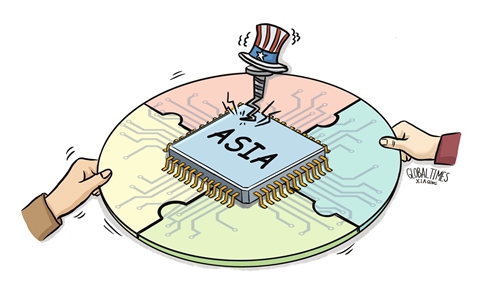
Currently, the world economy is overshadowed by multiple challenges such as rising protectionism and growing risks of fragmentation.
Narratives of "decoupling" and "de-risking" have brought enormous uncertainty and additional costs to business operations, based on the global division of labor. For an export-oriented economy such as South Korea, which is highly dependent on international trade and investment, such uncertainty will directly translate into various corporate operational risks.
In this context, China's importance to the South Korean economy remains irreplaceable and cannot be ignored. In 2024, the bilateral trade reached $328.08 billion, up 5.6 percent year-on-year. With their production and supply chains deeply intertwined, China has been South Korea's largest trading partner for 21 consecutive years, and South Korea is China's second-largest trading partner.
The China-South Korea Free Trade Agreement went into effect in 2015. Since then, bilateral free trade and investment have continued to rise, with cooperation expanding from traditional manufacturing to emerging fields such as high-end manufacturing, cross-border e-commerce and the digital economy.
The reported visit to China, organized by South Korea's largest chamber of commerce, will be a clear gesture. It reflects a broad consensus within the South Korean business community to preserve longstanding economic and trade ties with China and to ensure a predictable, sustainable policy and market environment for long-term corporate development.
Only by firmly seizing the opportunities presented by China's super-large market and leveraging its complete industrial ecosystem can South Korean businesses inject certainty and new momentum into their growth. Furthermore, China's unwavering commitment to high-level opening-up and its continuously optimized business environment have strengthened multiple South Korean firms' confidence in deepening their presence in the Chinese market.
Moreover, as the drivers of global growth shift, emerging sectors such as new energy, artificial intelligence, and biomedicine are becoming key arenas for multinational companies. Meanwhile, the industrial landscapes of China and South Korea are evolving dynamically.
China has established a massive market scale, backed up with application scenarios and innovative vitality in many of these new fields, helping the country gain growing momentum in the global supply chain.
Closer cooperation with South Korean businesses will involve exploring new models involving the division of labor and cooperation in areas where China has made notable advances. Companies aim not only to consolidate existing cooperation but, more importantly, to explore collaborative potential in new domains such as the digital economy and green, low-carbon initiatives, striving to secure an advantageous position in the industries of the future.
It is noteworthy that Chinese Commerce Minister Wang Wentao met with South Korean Minister of Trade, Industry and Resources Kim Jung-kwan in Beijing in mid-December and the two officials exchanged views on implementing the important consensus reached by the two countries' leaders.
The two senior officials shared views on advancing the second-phase negotiations of the China-ROK Free Trade Agreement, consolidating traditional areas of cooperation, expanding emerging areas of cooperation, and elevating the quality and upgrading of bilateral economic and trade cooperation, China's Ministry of Commerce said in a statement posted on its website.
From intergovernmental policy coordination to broader business-led engagement, China and South Korea are demonstrating through concrete actions the enduring role of economic and trade cooperation as the "ballast stone" in development bilateral relations.
RELATED ARTICLES