2025 Yearender: Regional coordination fuels balanced growth and development in China
Editor's Note:
As 2025 draws to a close, the Global Times is releasing a series of in-depth reports focusing on China's economic governance. Through concrete case studies and data analysis, the series explores the broader macroeconomic trends reflected in micro-level narratives, showcasing China's new achievements and insights in 2025 under the stories of the new development philosophy featuring innovation, coordination, green development, openness and shared benefits. The series reviews key hot-button issues of the year while reflecting on long-term strategic thinking: How China's governance offers the world the solutions and an anchor of stability. This is the third installment of the series.

Moviegoers may still be captivated by the stunning visual effects in this year's blockbuster animated sequel Ne Zha 2, which has gained more than 15.9 billion yuan ($2.26 billion) at the global box office. Yet behind its more than 1,900 spectacular special effects shots lies a lesser-known hero: the computing power of Guizhou, a landlocked province in Southwest China.
The production of Ne Zha 2 took about five years, with close to three years dedicated to rendering - powered by the computing resources of the Gui'an Supercomputing Center. More than 40 percent of the film's visual effects relied on the center's computing power for rendering, peaking at the simultaneous use of 1,000 high-performance GPUs, Xia Hai, director of the Construction and Development Department of Gui'an New Area Science and Technology Innovation Industry Development Co, the operator of the center, told the Global Times.
"There are a wealth of breathtaking scenes in Ne Zha 2, such as the flowing of lava, the waves of water, and the water tornado of the dragon king. Some special effects shots in the film last only two or three seconds on screen, yet rendering them with ordinary computing power could take up three to five days. At the Gui'an Supercomputing Center, however, the same task is completed in just a few hours," said Xia.
This is far from the first time that the center has provided rendering support for film and television productions. Since 2020, more than 150 movies, including The Wandering Earth II and The Battle at Lake Changjin, have relied on Guizhou's computing power.
Highway for data
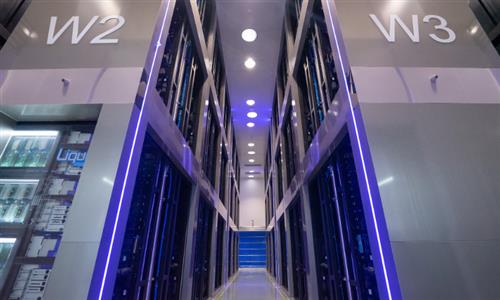
The supercomputing center is located in Gui'an New Area of Guiyang, a region that hosts the world's highest concentrations of hyper-large data centers.
By October 2025, the Gui'an New Area boasts 26 large-scale data centers, including those from Huawei, Tencent and Apple, with total computing capacity exceeding 113 EFlops - a unit measuring massive computing power, representing one quintillion floating-point operations per second - 98 percent devoting to intelligent computing.
Applications of Gui'an's computing power now extend to fields such as biomedicine and astronomical meteorology.
As Huang Yong, a National People's Congress delegate and chairman of Guizhou Tuzhi Information Technology Co., Ltd, noted in March during the two sessions, "Guizhou has emerged as one of China's leading hubs for intelligent computing resources. Its computational power supports not only films like Ne Zha 2 but also cutting-edge AI models, such as DeepSeek."
This goes beyond mere data transfer - it reflects China's "East Data, West Computing" strategy. As one of the first eight nationally approved computing hub nodes, Guizhou absorbs intensive data demand from the energy-hungry eastern regions and channels it westward, optimizing overall resources allocation.
A human blink spans 100-400 milliseconds, yet data travels the 1,600 kilometers from Gui'an to Hangzhou in East China's Zhejiang Province in just 16 milliseconds. And it only takes 10 milliseconds for data to travel from Gui'an to Guangzhou and Shenzhen in South China's Guangdong Province, which are about 1,100 kilometers away.
In 2023, Guizhou built the world's first 400-gigabyte computing power channel, which is now expanded with elastic bandwidth to Shenzhen, paving the way for a southern data corridor under the "East Data, West Computing" strategy.
"The 'East Data, West Computing' strategy serves as an important mechanism to facilitate the flow of computing power and data, thereby unleashing the vitality of the digital economy, which has emerged as a key force in reshaping economic structures in recent years," Wang Peng, an associate researcher at the Beijing Academy of Social Sciences, told the Global Times.
Such coordination addresses China's regional imbalances: The eastern part of China's tech boom strains power grids, while the western part's renewable riches go underused, said Wang.
Wang pointed out that computing power, as the core productive force of the digital economy, will become a basic public resource akin to water, electricity, and gas in the future.
Bridging connection
Yet regional coordination isn't limited to cables and code; it's about bridging economic chasms. The Shenshan Special Cooperation Zone, established in 2011, straddling Shenzhen's innovation power and Shanwei's untapped land in Guangdong, is a prime example.
The zone was established at a time when Shenzhen, having evolved from a small fishing village over some 30 years of development, saw its land become more coveted than gold.
Meanwhile, the city of Shanwei, despite being located in the economically developed Guangdong and adjacent - just 100 kilometers away - to the bustling megacity of Shenzhen, struggled to reach such lofty development heights, and historically had a high concentration of underprivileged residents, according to the Xinhua News Agency.
As Wu Qubo, Party secretary of the Shenshan Special Cooperation Zone, puts it: "We explore enclave models to match Shanwei's land advantages with Shenzhen's industries for mutual gain."
Now, located in Shanwei, the zone has become a key hub for the new-energy vehicle (NEV) industry, with Shenzhen-based NEV giant BYD and around 30 companies in the NEV supply chain, Xinhua reported.
RoboSense Technology Co., Ltd, an AI-driven robotics technology company and major global LiDAR sensor provider, produces one LiDAR unit every per 12 seconds at its base in the Shenshan Special Cooperation Zone, with an annual production capacity of 1.7 million units, the company told the Global Times.
LiDAR sensors act as the "eyes" for NEVs and autonomous cars, using laser pulses to create precise 3D maps of their surroundings, enabling safer navigation, obstacle avoidance and advanced driver assistance. They are a crucial part of the automotive and NEV supply chain.
Industrial development brought prosperity. The zone's managed population rose to 140,000 by 2024 from 60,000 at the outset, while GDP rose to 24.2 billion yuan from 3.9 billion yuan in 2018, with average annual growth of 35.6 percent, official data showed.
'Systemic endeavor'
"Development in one region should catalyze growth in others, serving as an engine for greater balance. Coordinated development goes beyond just redrawing the economic map; it embodies the shared aspirations of the people for a better life," Hou Yongzhi, former director-general of the Development Strategy and Regional Economy Department at the Development Research Center of the State Council, was quoted by the People's Daily as saying.
Advancing coordinated regional development is a long-term, complex and systemic endeavor, Hou said.
According to Xinhua, in recent years, western regions of China have recorded faster growth than the eastern regions, demonstrating the coordinated development championed by the new development philosophy. Coordinated development is expected to be further advanced over the next five years.
Coordinated regional development is essential for Chinese modernization, according to the Recommendations of the Central Committee of the Communist Party of China for Formulating the 15th Five-Year Plan (2026-30) for National Economic and Social Development, released in October.
"We should give full play to the synergies between the coordinated regional development strategies, major regional initiatives, functional zoning strategy, and the new urbanization atrategy, improve the allocation of major productive forces, and ensure that key regions play their role as growth poles. Our goal is to develop a regional economic layout and a territorial space system that enable regions to leverage their complementary strengths in pursuit of high-quality development," read the recommendations.
Analysts pointed out that given China's vast territory, large population and rare global disparities in regional natural endowments and development foundations, coordinating regional development has always been a major challenge. Regional synergy is an essential requirement for sustained regional growth.
As 2025 draws to a close, the Global Times is releasing a series of in-depth reports focusing on China's economic governance. Through concrete case studies and data analysis, the series explores the broader macroeconomic trends reflected in micro-level narratives, showcasing China's new achievements and insights in 2025 under the stories of the new development philosophy featuring innovation, coordination, green development, openness and shared benefits. The series reviews key hot-button issues of the year while reflecting on long-term strategic thinking: How China's governance offers the world the solutions and an anchor of stability. This is the third installment of the series.
Photo: VCG
Moviegoers may still be captivated by the stunning visual effects in this year's blockbuster animated sequel Ne Zha 2, which has gained more than 15.9 billion yuan ($2.26 billion) at the global box office. Yet behind its more than 1,900 spectacular special effects shots lies a lesser-known hero: the computing power of Guizhou, a landlocked province in Southwest China.
The production of Ne Zha 2 took about five years, with close to three years dedicated to rendering - powered by the computing resources of the Gui'an Supercomputing Center. More than 40 percent of the film's visual effects relied on the center's computing power for rendering, peaking at the simultaneous use of 1,000 high-performance GPUs, Xia Hai, director of the Construction and Development Department of Gui'an New Area Science and Technology Innovation Industry Development Co, the operator of the center, told the Global Times.
"There are a wealth of breathtaking scenes in Ne Zha 2, such as the flowing of lava, the waves of water, and the water tornado of the dragon king. Some special effects shots in the film last only two or three seconds on screen, yet rendering them with ordinary computing power could take up three to five days. At the Gui'an Supercomputing Center, however, the same task is completed in just a few hours," said Xia.
This is far from the first time that the center has provided rendering support for film and television productions. Since 2020, more than 150 movies, including The Wandering Earth II and The Battle at Lake Changjin, have relied on Guizhou's computing power.
Highway for data
The supercomputing center is located in Gui'an New Area of Guiyang, a region that hosts the world's highest concentrations of hyper-large data centers.
By October 2025, the Gui'an New Area boasts 26 large-scale data centers, including those from Huawei, Tencent and Apple, with total computing capacity exceeding 113 EFlops - a unit measuring massive computing power, representing one quintillion floating-point operations per second - 98 percent devoting to intelligent computing.
Applications of Gui'an's computing power now extend to fields such as biomedicine and astronomical meteorology.
As Huang Yong, a National People's Congress delegate and chairman of Guizhou Tuzhi Information Technology Co., Ltd, noted in March during the two sessions, "Guizhou has emerged as one of China's leading hubs for intelligent computing resources. Its computational power supports not only films like Ne Zha 2 but also cutting-edge AI models, such as DeepSeek."
This goes beyond mere data transfer - it reflects China's "East Data, West Computing" strategy. As one of the first eight nationally approved computing hub nodes, Guizhou absorbs intensive data demand from the energy-hungry eastern regions and channels it westward, optimizing overall resources allocation.
A human blink spans 100-400 milliseconds, yet data travels the 1,600 kilometers from Gui'an to Hangzhou in East China's Zhejiang Province in just 16 milliseconds. And it only takes 10 milliseconds for data to travel from Gui'an to Guangzhou and Shenzhen in South China's Guangdong Province, which are about 1,100 kilometers away.
In 2023, Guizhou built the world's first 400-gigabyte computing power channel, which is now expanded with elastic bandwidth to Shenzhen, paving the way for a southern data corridor under the "East Data, West Computing" strategy.
"The 'East Data, West Computing' strategy serves as an important mechanism to facilitate the flow of computing power and data, thereby unleashing the vitality of the digital economy, which has emerged as a key force in reshaping economic structures in recent years," Wang Peng, an associate researcher at the Beijing Academy of Social Sciences, told the Global Times.
Such coordination addresses China's regional imbalances: The eastern part of China's tech boom strains power grids, while the western part's renewable riches go underused, said Wang.
Wang pointed out that computing power, as the core productive force of the digital economy, will become a basic public resource akin to water, electricity, and gas in the future.
Bridging connection
Yet regional coordination isn't limited to cables and code; it's about bridging economic chasms. The Shenshan Special Cooperation Zone, established in 2011, straddling Shenzhen's innovation power and Shanwei's untapped land in Guangdong, is a prime example.
The zone was established at a time when Shenzhen, having evolved from a small fishing village over some 30 years of development, saw its land become more coveted than gold.
Meanwhile, the city of Shanwei, despite being located in the economically developed Guangdong and adjacent - just 100 kilometers away - to the bustling megacity of Shenzhen, struggled to reach such lofty development heights, and historically had a high concentration of underprivileged residents, according to the Xinhua News Agency.
As Wu Qubo, Party secretary of the Shenshan Special Cooperation Zone, puts it: "We explore enclave models to match Shanwei's land advantages with Shenzhen's industries for mutual gain."
Now, located in Shanwei, the zone has become a key hub for the new-energy vehicle (NEV) industry, with Shenzhen-based NEV giant BYD and around 30 companies in the NEV supply chain, Xinhua reported.
RoboSense Technology Co., Ltd, an AI-driven robotics technology company and major global LiDAR sensor provider, produces one LiDAR unit every per 12 seconds at its base in the Shenshan Special Cooperation Zone, with an annual production capacity of 1.7 million units, the company told the Global Times.
LiDAR sensors act as the "eyes" for NEVs and autonomous cars, using laser pulses to create precise 3D maps of their surroundings, enabling safer navigation, obstacle avoidance and advanced driver assistance. They are a crucial part of the automotive and NEV supply chain.
Industrial development brought prosperity. The zone's managed population rose to 140,000 by 2024 from 60,000 at the outset, while GDP rose to 24.2 billion yuan from 3.9 billion yuan in 2018, with average annual growth of 35.6 percent, official data showed.
'Systemic endeavor'
"Development in one region should catalyze growth in others, serving as an engine for greater balance. Coordinated development goes beyond just redrawing the economic map; it embodies the shared aspirations of the people for a better life," Hou Yongzhi, former director-general of the Development Strategy and Regional Economy Department at the Development Research Center of the State Council, was quoted by the People's Daily as saying.
Advancing coordinated regional development is a long-term, complex and systemic endeavor, Hou said.
According to Xinhua, in recent years, western regions of China have recorded faster growth than the eastern regions, demonstrating the coordinated development championed by the new development philosophy. Coordinated development is expected to be further advanced over the next five years.
Coordinated regional development is essential for Chinese modernization, according to the Recommendations of the Central Committee of the Communist Party of China for Formulating the 15th Five-Year Plan (2026-30) for National Economic and Social Development, released in October.
"We should give full play to the synergies between the coordinated regional development strategies, major regional initiatives, functional zoning strategy, and the new urbanization atrategy, improve the allocation of major productive forces, and ensure that key regions play their role as growth poles. Our goal is to develop a regional economic layout and a territorial space system that enable regions to leverage their complementary strengths in pursuit of high-quality development," read the recommendations.
Analysts pointed out that given China's vast territory, large population and rare global disparities in regional natural endowments and development foundations, coordinating regional development has always been a major challenge. Regional synergy is an essential requirement for sustained regional growth.
RELATED ARTICLES