Morocco’s participation in the BRI gives new impetus to bilateral cooperation: Minister of Industry and Trade
China ties help diversify economy, unlock new markets: minister
By Published: Dec 25, 2025 09:39 PM

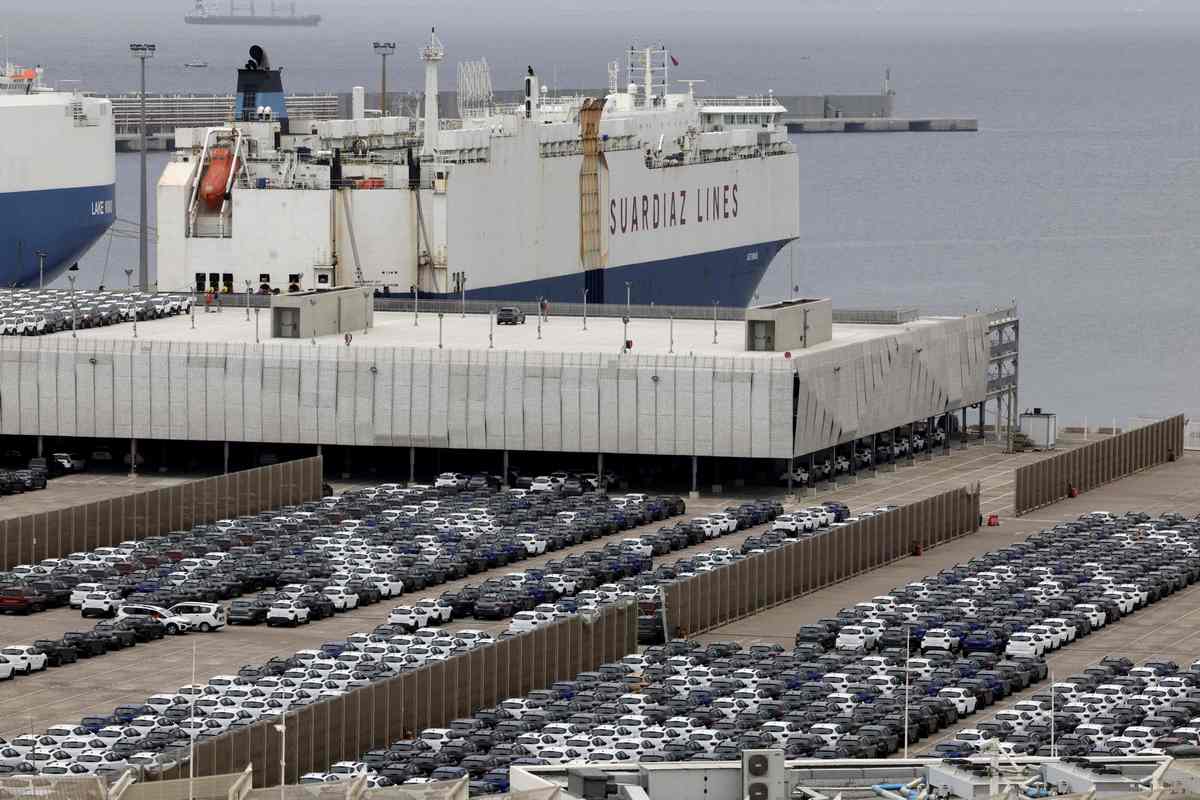
An aerial drone photo taken on July 10, 2025 shows cars park in the Tanger Med port in the northern Moroccan city of Tangiers. Photo: VCG
Editor's Note:
China's cooperation with Morocco under the China-proposed Belt and Road Initiative (BRI) has entered a fast-lane development in recent years, driven by various intergovernmental working mechanisms as well as the Forum on China-Africa Cooperation. On December 16, the 7th meeting of the Morocco-China Joint Economic, Commercial, and Technical Cooperation Commission was held in Beijing, marking a further step in forging closer economic ties between China and Morocco. Against this backdrop, Global Times reporter Li Xuanmin (GT) conducted an exclusive interview with Ryad Mezzour (Ryad), Morocco's Minister of Industry and Trade. He elaborated on how China and Morocco expanded cooperation in various fields under the BRI framework.
GT: How has the economic and trade cooperation between China and Morocco developed in recent years? In which areas do you expect the two countries to deepen cooperation, and what benefits would this bring to both sides?
Ryad: The relations between China and Morocco have experienced a strategic deepening since 2016, when the two countries established a strategic partnership. This momentum was further strengthened when China and Morocco signed a memorandum of understanding to jointly advance the Belt and Road Initiative (BRI) in 2017, followed by the signing of the joint implementation plan of the BRI in 2022, reflecting the trust and
Today, our cooperation is rich, diversified, and concrete, driven by numerous projects in industry and infrastructure. The growing interest of Chinese investors in Morocco is reflected in major initiatives such as the Mohammed VI Tanger Tech City, and Gotion High-Tech in Kenitra, Africa's first electric battery gigafactory, which mobilizes $1.3 billion and creates 17,600 jobs, as well as the BTR cathode factory in Tanger Med, with $300 million in investment and 2,500 jobs being created.
China is our third-largest trading partner, accounting for nearly 7 percent of our foreign trade, and our second-largest supplier, and our main partner in Asia. Bilateral trade continues to grow. In 2024, bilateral trade volume reached $9.4 billion, including $401 million in Moroccan exports to China and $9 billion in imports.
Looking ahead, we aim to further deepen this cooperation in high-potential sectors such as green and renewable energy, infrastructure and logistics, and high-tech industries. For Morocco, this means the creation of skilled jobs, industrial upgrading, diversification of partnerships, and strengthening of export capacities. For China, it provides access to a stable and competitive regional platform, serving as a strategic anchor connecting Africa.
GT: China and Morocco signed a memorandum of understanding to jointly advance the China-proposed Belt and Road Initiative (BRI) in 2017. Could you elaborate on how Morocco's engagement in the BRI has strengthened bilateral cooperation with China, particularly in infrastructure, connectivity, and sustainable development projects?
Ryad: Morocco's participation in the BRI has given new impetus to our bilateral cooperation with China. This approach fully aligns with our strategy to position Morocco as a hub linking Africa, Europe, and Asia, while consolidating structured partnerships in infrastructure, connectivity, and sustainable development.
This cooperation has translated into concrete achievements, notably the strengthening of logistics and industrial infrastructure. The Tanger Med port complex is a central pillar of this dynamic, significantly enhancing Morocco's trade connectivity. In addition, industrial projects, such as the Mohammed VI Tangier Tech City as previously mentioned, contribute to creating integrated industrial ecosystems, enhancing Morocco's attractiveness for Chinese investment in high-value-added sectors.
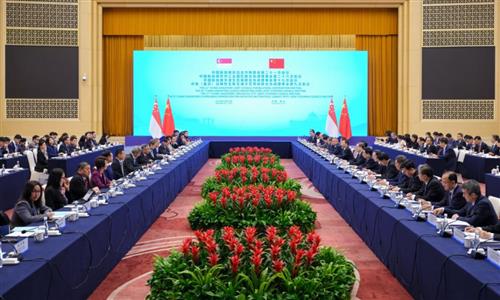
On December 16, the 7th meeting of the Morocco-China Joint Economic, Commercial, and Technical Cooperation Commission was held in Beijing. During the joint committee meeting, we examined the new cooperation prospects under the BRI framework, including the development of joint industrial projects, strengthening co-investments, and deepening cooperation in renewable energy and sustainable industry. These initiatives reaffirm our shared ambition to consolidate a forward-looking strategic partnership and to position Morocco as a regional hub connecting Africa, Europe, and Asia.
GT: What are the key priority areas involved in the technical exchanges and cooperation under the framework of the recent meeting? And what specific projects or agreements have been reached?
Ryad: Investment constitutes a key pillar of our partnership. We seek to attract more Chinese investment in priority sectors such as automotive, aeronautics, textiles, renewable energy, and emerging technologies. We are working on establishing a joint investment task force, upgrading our bilateral agreements, and encouraging reciprocal visits in order to elevate our projects to a more ambitious level.
On the industrial front, we are developing joint value chains and promoting research and development, innovation, and technology transfer. Cooperation also extends to industrial zones and the development of railway, highway, port, and logistics infrastructure to bring our economies closer together.
We are also strengthening customs cooperation, digitalization, and coordination in response to trade defense investigations, while exploring opportunities in water, meteorology, health, justice, logistics, and higher education.
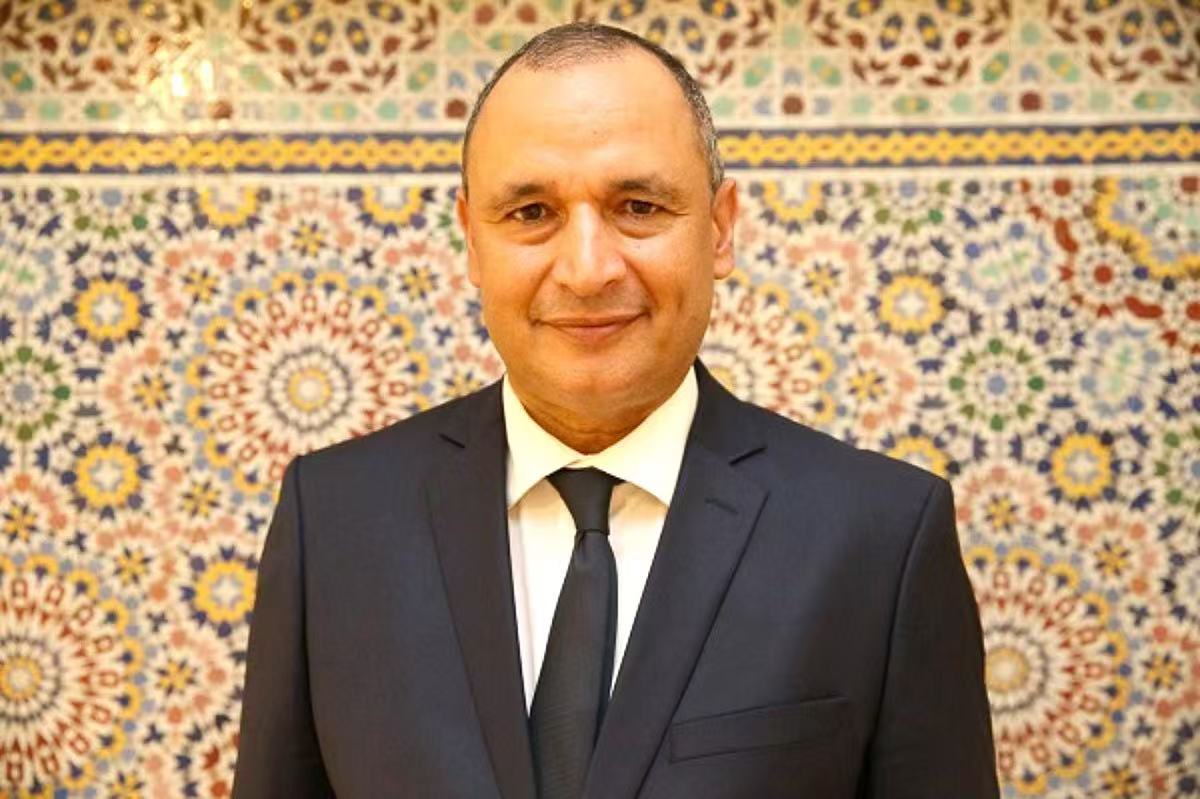
Ryad Mezzour Photo: Courtesy of Ryad Mezzour
GT: Drawing from the discussions of the recent meeting, could you outline the key priority directions and expected objectives for China-Morocco economic and trade cooperation over the coming years? Furthermore, how do you envision these priorities will contribute to high-quality economic development in both nations?
Ryad: The discussions have allowed us to define clear directions for deepening our economic and trade cooperation with China.
A primary focus of the session was addressing the existing trade deficit, so as to have a more equitable and sustainable trade relationship that reflects a true win-win partnership. Strengthening multi-sector cooperation between our two countries by prioritizing collaboration in infrastructure, technological innovation, digital technology and connectivity was another focus of our discussions.
These exchanges highlight the significant opportunities for Morocco. They enable us to diversify our economy, develop new sectors, and explore new markets, thereby reducing our dependence on certain traditional sectors and partners. They also support the modernization of our infrastructure, with efficient ports, roads, and logistics networks that stimulate trade and investment while enhancing the country's overall attractiveness.
Furthermore, this cooperation contributes to sustainable and inclusive growth. It emphasizes the development of renewable energy and the responsible management of resources, addressing the challenges of the 21st century while aligning with China's environmental priorities.
Talking about partnerships, we must highlight the importance of the African dimension in our discussions. Morocco can play a crucial role as a strategic hub and platform for the further development of China-Africa relations, particularly within the framework of the Forum on China-Africa Cooperation (FOCAC).
GT: China has just concluded the Central Economic Work Conference in December. How do you view the opportunities brought by the conference for bilateral cooperation, and for African development?
Ryad: China's Central Economic Work Conference opens up the significant opportunities to strengthen our bilateral cooperation by deepening the strategic partnership and advancing the implementation of the BRI.
For the African continent, the conference helps align China's industrialization priorities with Morocco's strategic role as a regional hub. In this context, and in direct connection with the 9th Ministerial Conference of FOCAC, two priority areas of cooperation have been identified: the automotive sector, with training and research programs to strengthen Moroccan skills, and the textile sector, with integrated projects ranging from spinning to finished products. The objective is to contribute to thewin-win cooperation and to foster the sustainable and inclusive economic development for both our countries and the African continent.
GT: Morocco has been launching numerous initiatives to attract investment. For Chinese enterprises wishing to invest or conduct business in Morocco, what unique advantages does Morocco's investment environment offer?
Ryad: For Chinese enterprises wishing to invest in Morocco, our country offers an attractive environment thanks to its strategic geographic position at the crossroads of Europe, Africa, and the Middle East, facilitating access to major markets. Morocco has always been attractive because of its political and financial stability, which makes any investment secure and safe in the long term. Meanwhile, the country has developed through the years high-quality infrastructure, particularly ports, industrial zones, and transport networks.
One of the most important advantages in Morocco is the talent. We have a skilled human capital base that can adapt and work regardless of a firm's culture. We have also developed specialized competence centers to support the implementation of innovative and sustainable projects in key sectors.
Our membership in the African Continental Free Trade Area further strengthens our role as a regional hub, offering Chinese companies the opportunity to develop exports across the African continent within a secure and competitive framework.
RELATED ARTICLES