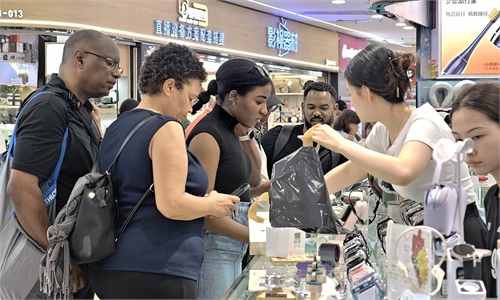
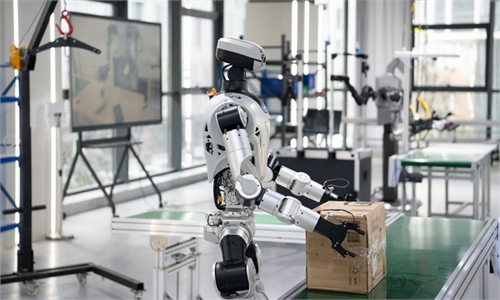
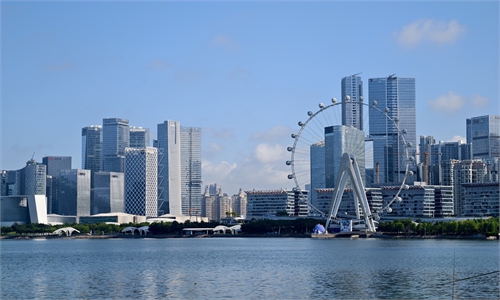
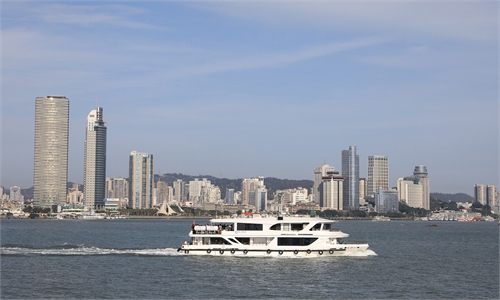
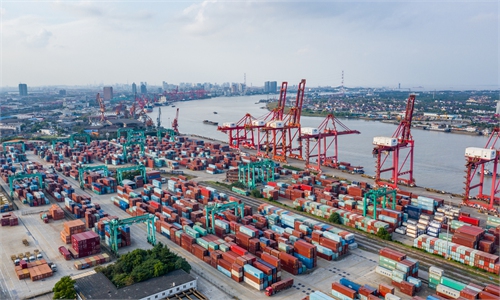
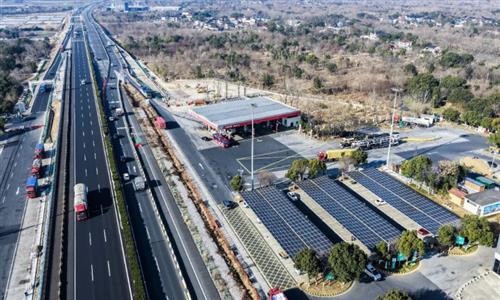
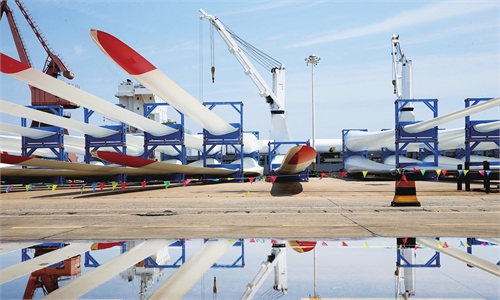
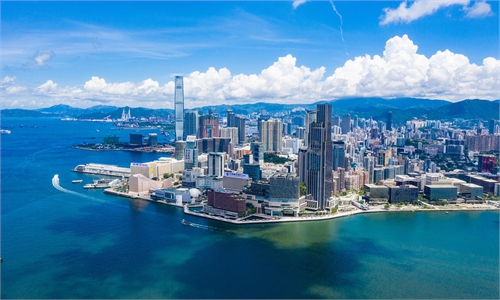
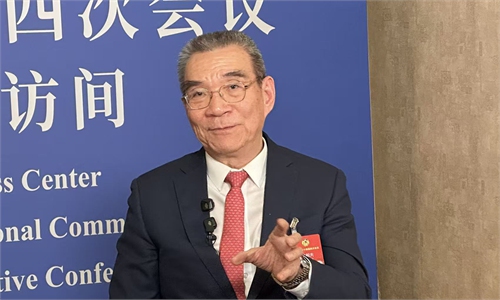
China and Timor-Leste signed a Memorandum of Understanding for cooperation on the Belt and Road Initiative (BRI) during the first Belt and Road Forum for international cooperation in March 2017. Since then, BRI cooperation between China and Timor-Leste has entered a fast lane of development. Against this backdrop, Global Times reporter Li Xuanmin (GT) conducted an exclusive interview with Mariano Assanami Sabino (Sabino), deputy prime minister and coordinating minister for Social Affairs and Minister of Rural Development and Community Housing of the Democratic Republic of Timor-Leste. In the interview, Sabino spoke highly of the BRI's role in Timor-Leste's infrastructure development and economic growth.
From streetwear brands and chocolate marques to fashion labels, foreign companies have been accelerating their entry into China this year, opening their first stores in major cities as a springboard for entering the Chinese market. Experts attribute this trend to the certainty of China's economic growth and the potential of its consumer market.
Chinese Vice Premier He Lifeng met with German Economy and Energy Minister Katherina Reiche in Beijing on Wednesday, where the two sides exchanged views on issues such as deepening China-Germany economic and trade cooperation, according to the Xinhua News Agency.
Chinese authorities have rolled out targeted policies to support the micro drama sector recently, aiming to foster industry growth through stronger cultivation, artificial intelligence (AI) technology integration, and high-quality content creation. Industry observers noted that the industry is transitioning from a quantity-driven model to a quality-oriented one, with policy support, tech empowerment injecting fresh momentum.
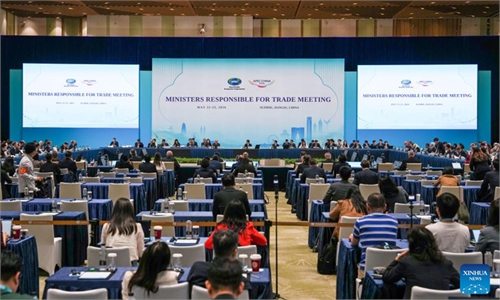
The just-concluded APEC Trade Ministers' Meeting held in Suzhou, East China's Jiangsu Province, achieved multiple results and consensus, with 2026 APEC Ministers Responsible for Trade Joint Statement (Suzhou Statement) and APEC Roadmap for Innovative, Competitive and Resilient Services, achieving fruitful outcomes, an official from the Ministry of Commerce (MOFCOM)'s Department of International Trade and Economic Affairs said on Tuesday, according to the MOFCOM's website.
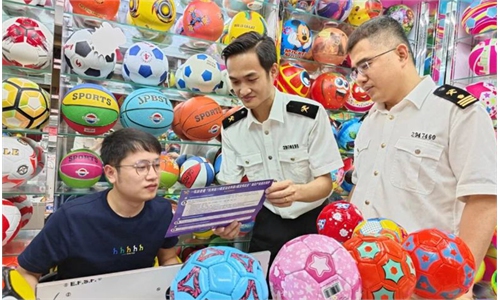
Chinese manufacturers are riding the boom in the sports economy, with goods ranging from footballs to sports shirts and hats as well as vehicles ramping up sales in the international market ahead of the 2026 FIFA World Cup, which is scheduled to kick off on June 11.
As China embarks on its 15th Five-Year Plan (2026-30), some international media are hyping the so-called "modest" economic target. However, viewing this through the lens of traditional GDP metrics is a miscalculation. This target is not a harbinger of decline; it is a deliberate signal of structural transition. Having established a robust foundation of infrastructure, China is now moving to a new stage of economic development - prioritizing domestic demand and achieving institutional autonomy in technology.
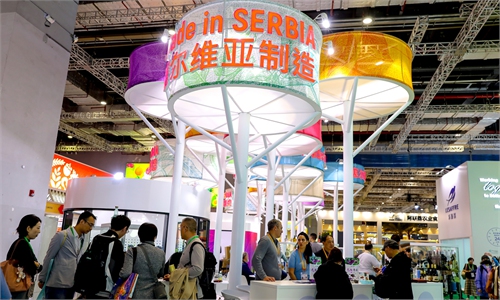
The Chinese market is of exceptional importance for Serbian businesses because of its scale, sophistication and growing demand for quality, specialized and trusted products, Jelena Grubor Stefanovic, director of the representative office of Serbian Chamber of Commerce and Industry in China, told the Global Times in an exclusive interview.
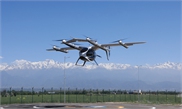
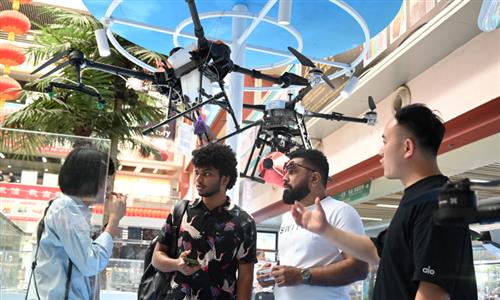
As a major drone and aerial industry exhibition opened in Shenzhen, South China's Guangdong Province on Thursday, visitors crowded the exhibition stands to check out the state-of-the-art aviation products, gathering around a streamlined 2-ton electric vertical take-off and landing vehicle (eVTOL) prototype to experience the vision of future air travel.
In District 2 of the Yiwu International Trade Market, the store of Zhejiang Xingbao Umbrella Co. is filled with thousands of colorful umbrellas — lightweight sun umbrellas, retro long-handle umbrellas, cartoon children's umbrellas, and high-end custom umbrellas — presenting a dazzling array of products. Chairperson Zhang Jiying stands at the counter, skillfully introducing new products to several Middle Eastern merchants in Arabic and English. While 29 years ago, Zhang started with only a 98-centimeter-wide stall in the Yiwu market.
For more than 40 years, Yiwu has stayed true to its blueprint, consistently pursuing the strategy of "prospering the city through commerce" and creating more opportunities for entrepreneurs. The Securities Times launched a series titled "Close-up observations on Yiwu's development experience," exploring the vibrant "world supermarket." Through on-the-ground perspectives and close-up observations, the series delves into the rich essence and enduring vitality of Yiwu's development experience.
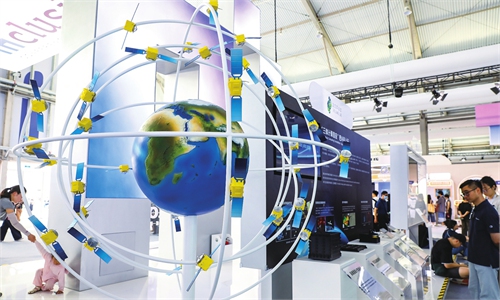
The “FuXi” meteorological artificial intelligence (AI) model, capable of forecasting 60-day weather patterns in three minutes, is processing first-hand meteorological data taken from space in real time. This is made possible by a computing satellite, part of the "Three-Body Computing Constellation" which is operating in Earth's low orbit at an altitude of about 500 kilometers.
Chinese economy is maturing into an economy that is no longer reliant on a low-cost labor model but is instead driven by advanced technological innovations. This model sets an example for other nations, demonstrating how long-term stability and tech investment foster sustainable growth over time.
China's economy has performed well in the inaugural year of the 15th Five-Year Plan period (2026-2030) as shown by steadily rising tax revenue, high-tech products export, and corporate profit margins. Though certain Western media continue to badmouth China's economy, the country will focus on managing its own affairs and push ahead with stable development.
In the first quarter, China recorded better-than-expected GDP growth of 5 percent. This strong performance sends a clear and positive message to the world, effectively refuting the narrative promoted by some Western analysts that China's economy is on the brink of collapse or already in crisis. It is true that China faces certain economic challenges. However, every country encounters its own difficulties and overall, China maintains a very solid and resilient economy.
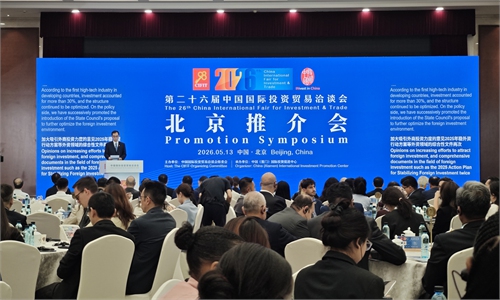
China's Ministry of Commerce (MOFCOM) held a promotion conference in Beijing on Wednesday for the 26th China International Fair for Investment and Trade (CIFIT), sending another positive signal of the country's ongoing commitment to expanding high-standard opening-up and further stabilizing foreign investment and inflows.
At the invitation of Chinese President Xi Jinping, US President Donald Trump will pay a state visit to China from May 13 to 15.
At the invitation of Chinese President Xi Jinping, US President Donald Trump will pay a state visit to China from Wednesday to Friday. This marks the first face-to-face meeting between the two heads of state this year and their first meeting in Beijing in nine years, carrying special and significant meaning. The international community is paying close attention and has high expectations that this meeting will bring stability to a turbulent world and demonstrate the responsibility and strength of major powers in promoting peaceful development.
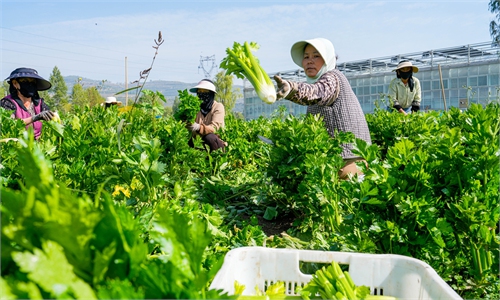
As temperatures begin to climb across much of China in early May, the fields around Xining, capital of Northwest China's Qinghai Province, remain cool.
In its latest push to improve multimodal connections, Beijing launched a pilot program on Sunday allowing passengers to bring compliant bicycles onto the subway, according to the official website of the Beijing Municipality government.
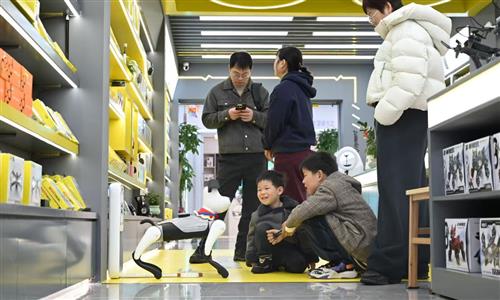
As China's consumption structure continues to upgrade, experiential and technology-driven consumption has become a mainstream trend. A host of AI-themed, experience-focused first stores and exhibitions have debuted across the city during the shopping gala.
Multiple foreign envoys and business representatives have voiced expectations for expanding cooperation with Chinese high-tech companies in artificial intelligence (AI), where China's competitive edge can help boost traditional sectors such as agriculture and education in their countries.
An official of China's Ministry of Finance (MOF) extended appreciation on Monday for Moody's decision to affirm China's sovereign credit rating and upgrade its outlook to "stable," according to the official website of the MOF.
China has stressed that advancing Chinese modernization requires promoting the marine economy's high-quality development and forging a Chinese path of leveraging marine resources to achieve strength. With a mainland coastline stretching 18,000 kilometers and a sea area under its jurisdiction of around 3 million square kilometers, China is a major maritime nation with vast potential for developing its marine economy. To document the high-quality development of China's marine economy, the Global Times is launching the "Blue Momentum" series of in-depth articles from local marine economic powerhouses. The second installment focuses on Qingdao, East China's Shandong Province.
Amid the ongoing reshaping of global food supply chains, China is evolving from a major consumer market into a key supplier of high-quality agricultural products. Chinese analysts say that blueberries are just one example, as more specialty products scale up, standardize and build brands, signaling a deeper shift in China's role in global agriculture landscape.
From forming a health industry cluster centered around a university dedicated to health and rehabilitation sciences, to combining its cruise tours with health and wellness elements, Qingdao in East China's Shandong Province is charting a new course in integrating its coastal resources with the silver economy through the development of a Health Bay.
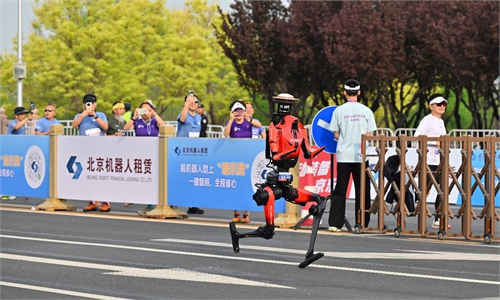
Shares of Chinese robot-related firms rallied sharply at the close on Monday, buoyed by the strong performances of robot runners at the 2nd Humanoid Robot Half Marathon in Beijing on Sunday, with several stocks hitting their daily limit-up. Multiple component suppliers related to the championship robot runner said that their products have already entered mass delivery.
The Chinese nation made the historic choice to pursue its own development goals in strict accordance with the prevailing conditions and objective reality. The fact that Chinese leadership in several decades has managed to advance the once backward country to the undisputed rank of a global power is recognized throughout the world as the most outstanding achievement of the 21st century.
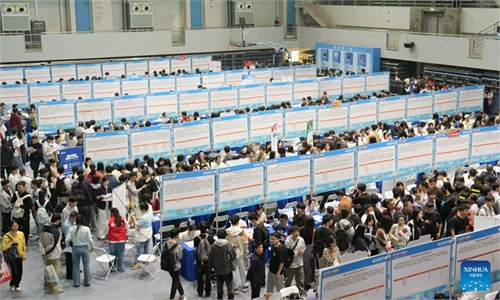
As China's artificial intelligence (AI) sector accelerates, competition for talent is heating up, with local governments, technology firms and the broader market all stepping up efforts - a trend that industry analysts said will help address talent shortages while underpinning the country's push for industrial upgrading and global competitiveness.
A strong start with a steady and promising beginning. On Thursday, the first-quarter report of China's economy during the "15th Five-Year Plan" period was released, showing that GDP grew by 5 percent year-on-year at constant prices. This growth rate reached the high end of this year's full-year target range of 4.5 percent to 5 percent, and ranks among the top major economies in the world. Despite a complex and volatile external environment, major economic indicators exceeded expectations.
The first quarter of 2026 has turned out to be quite a busy season for Chinese new energy firms in overseas markets.
The Hong Kong Stock Exchange (HKEX) market delivered an impressive performance in the first quarter of 2026, with initial public offerings (IPOs) generating HK$110 billion ($13.3 billion) in proceeds, a record high for a single quarter since the second quarter of 2021, according to a Securities Times report on Sunday.
Recently, some foreign media outlets have claimed that, despite the enormous success of China's high-tech industries, traditional sectors, which account for the largest share of the economy, are under pressure. They argue that this economic divergence could intensify during the 15th Five-Year Plan period (2026-30). The rhetoric about China's economy falling into a "hot and cold divide," if not intentionally misleading in an attempt to slow the development of high-tech industries, reflects a failure to understand the internal logic of China's technological progress and ignores the deep connections among traditional, emerging, and future industries.
At a time when protectionism is rising and economic globalization faces growing headwinds, why does China remain committed to expanding opening-up? What does its high-level opening up mean for the world? In a recent interview with the People's Daily (PD), John Ross (Ross), British economist, former director for economic and business policy for the mayor of London and senior fellow at the Renmin University of China's Chongyang Institute for Financial Studies, shared his insights based on more than four decades of research on China's economy.
The US Republican Senator Bernie Moreno claimed on Tuesday that he will introduce legislation next month to expand an existing US government ban on Chinese automakers to more strictly forbid Chinese hardware, software and even partnerships from entering the American market, according to Reuters' report. A Chinese expert said the move reflects a broader tendency among some US officials to stretch the concept of so-called national security as a political maneuver. The proposal would be extremely difficult to implement in practice, as today's global automotive supply chain is deeply interconnected, the experts said.
China's 15th Five-Year Plan (2026-30) is not only a blueprint but also a practical roadmap of opportunities for international investors, Liu Yue, deputy director of the Foreign Economic Research Institute at the Institute of Macroeconomic Research under the National Development and Reform Commission (NDRC), said during a salon discussion held by the China Public Diplomacy Association on China's economic development on Monday.
In the small coastal town of Boao in South China's island province of Hainan, about 2,000 representatives from over 60 countries and regions gathered for the Boao Forum for Asia (BFA) Annual Conference 2026, which runs from Tuesday to Friday.
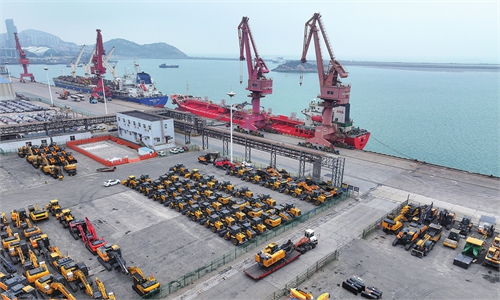
Global orders have been pouring in since the start of the year, with production lines for China-made construction machinery operating at full capacity, according to industry data, business insiders and experts interviewed by the Global Times. This reflects the growing international footprint of Chinese construction machinery.
On Friday, gold dipped below $4,500 a troy ounce, erasing its gains across the past two months. Gold, usually considered a safe haven during periods of economic uncertainty, has slumped. According to a CNN report on Saturday local time, gold dropped 11 percent this week, posting its biggest weekly loss since 1983.
As China enters the first year of its 15th Five-Year Plan period (2026–30), it does so against a backdrop of heightened global uncertainty. Geopolitical tensions, supply chain realignments, and uneven economic recovery have made the external environment more complex than at any time in recent decades. Yet such periods of disruption also create opportunities for economies that combine strategic clarity with policy consistency. China's planning framework is designed precisely for such moments.
In an era shaped by digital technology and evolving consumer expectations, China is transforming how people connect, experience and spend. This shift, termed “new consumption scenarios,” moves beyond traditional retail to integrate digital innovation, emotional engagement, and thematic experiences into many immersive environments. These scenarios emphasize experiential value, shifting focus from goods transactions to selling experiences.
As China enters its 15th Five-Year Plan period (2026-30), its economy showcases a form of resilience that is becoming increasingly rare globally: the ability to convert scale into speed, and speed into competitiveness.
China's development over the next 5 to10 years is expected to play a pivotal role in shaping the trajectory and regional dynamics of the Asia-Pacific and the broader global landscape. For ASEAN countries and others in the Global South, Chinese modernization offers an opportunity to collaborate in achieving shared prosperity without the fear of political interference, which is often a condition set by Western powers.
My engagement with China began in 2005 during my tenure as Egypt's Minister of Transport. At the time, much of the Western narrative portrayed China as a developing country struggling with poverty and lagging the industrialized world. Yet my first visit to Beijing and Shanghai revealed a very different reality.
US technology giant Apple announced on Thursday local time that it is making changes to the App Store in China by reducing commission rate for standard Apple In-App Purchase and paid app transactions to 25 percent from the current 30 percent, according to the company's official statement.
With China's GDP growth rate at 4.5-5 percent, the country's contribution to global economic growth will remain 30 percent every year, which is of confidence, Justin Lin Yifu, a member of the 14th National Committee of the Chinese People's Political Consultative Conference (CPPCC) and dean of the Institute of New Structural Economics at Peking University, told the Global Times on Sunday.
China's 15th Five-Year Plan (2026-30) shows the unique strength of the world's second largest economy in long-term planning. By carefully mapping out multi-year strategies, China not only supports its own economic growth but also provides stability and predictability for the global economy, Simon Lichtenberg, founder of Trayton Group in Shanghai and All China Founding Chairman of the Danish Chamber of Commerce in China, told the Global Times on Friday, on the sidelines of the ongoing two sessions.
Just days after the Chinese Spring Festival, robots are making frequent appearances at offline events. From dancing at shopping malls to greeting guests at brand launches and interacting with visitors in open squares and scenic spots, a wave of "robot fever" has spread beyond the Spring Festival Gala stage, after robot performances on the show drew widespread attention.
On the eve of this year's Lantern Festival, which fell on Tuesday, a 25-year-old consumer surnamed Wen shared her plans aloud to her phone: "I want to see the lantern displays on Lantern Festival night, and maybe visit a theme park." In under 30 seconds, the AI assistant on her device generated a complete, tailored itinerary. This experience is becoming increasingly common among Chinese travelers.
A netizen on People's Daily Online recently raised a question: With the upcoming annual sessions of the National People's Congress (NPC) and the Chinese People's Political Consultative Conference (CPPCC), public attention is turning to key agenda item - the NPC's deliberation on the draft outline of the 15th Five Year Plan (2026-30). The 15th Five Year Plan is closely linked to everyone's daily life - yet how are the voices and concerns of ordinary people incorporated into its formulation?
When you hail a taxi during the bustling Chinese New Year holiday in Shenzhen, a tech and innovation hub in South China's Guangdong Province, you might find that your taxi is driverless. Passengers were able to travel without fare surge or service disruptions.
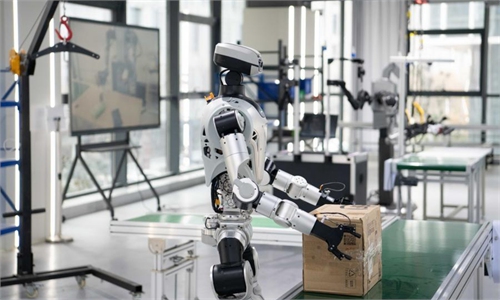
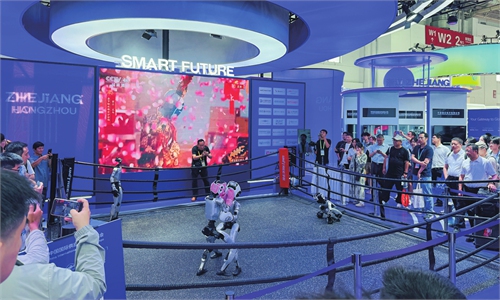
When German Chancellor Friedrich Merz entered the Unitree Robotics exhibition hall in Hangzhou, East China's Zhejiang Province, on Thursday afternoon, he saw a series of constantly changing scenes. In the center of the stage, a humanoid robot performed a set of Chinese kung fu "Drunken Fist"; on the boxing ring, two robots demonstrated a sparring match. Beside the assembly line, humanoid robots were completing sorting tasks.
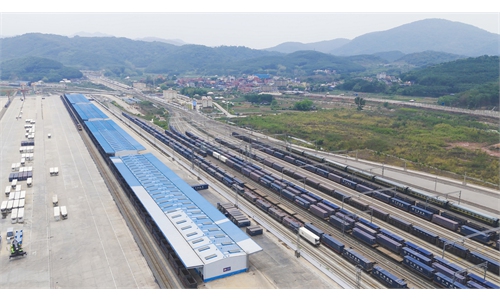
With the sound of a whistle on Thursday, a freight train carrying 55 standard containers of new-energy vehicle (NEV) parts produced by domestic manufacturers departed from the Hefei north railway station in Hefei, East China's Anhui Province, which is a major auto production hub.
China has been a very relevant market for products and services for decades, be it Made in Germany or locally, and now, China is growing increasingly important for German companies as a hub for innovation, research and development and advanced manufacturing, said Executive Director & Board Member of the German Chamber of Commerce in China-North China Oliver Oehms, in an exclusive interview with the Global Times on Wednesday.
China has consistently opposed all forms of unilateral tariff measures and urges the US side to cancel and refrain from imposing any such unilateral tariffs, a spokesperson of China's Ministry of Commerce (MOFCOM) said on Tuesday, noting that practice has repeatedly proven that cooperation between China and the US benefits both sides, while confrontation harms both.
China's low-altitude economy is ushering in new opportunities in the spring of 2026, as a series of eye-catching unmanned aerial vehicle (UAV) shows during the nine-day Spring Festival holidays have allowed hundreds of millions of people to witness how the low-altitude economy has evolved from policy documents into everyday life.
China's much-anticipated Seedance 2.0, the latest AI video model developed by ByteDance, the Chinese parent company of TikTok, made its debut at the nationwide program since its recent launch, contributing to the production of visual content for several segments of China's 2026 Spring Festival Gala as the show lit up screens across the country and beyond.
Editor's Note: This year marks the 105th anniversary of the founding of the Communist Party of China (CPC) and the opening year of the 15th Five-Year Plan (2026-30). A new year begins with new resolve and new momentum. The call to "fight for our dreams and our happiness, and turn our great vision into beautiful realities" continues to inspire actions across China. In the column "New Year on the Frontlines," reporters from the People's Daily traveled to the grassroots to witness the vitality of a vast nation, see its mountains and rivers in motion and its fields in abundance, and listen to the stories of people finding fulfillment in both life and work. Through these stories, the column seeks to present a vivid portrait of Chinese modernization.
In the column "New Year on the Frontlines," reporters from the People's Daily traveled to the grassroots to witness the vitality of a vast nation, see its mountains and rivers in motion and its fields in abundance, and listen to the stories of people finding fulfillment in both life and work.
The signing of the so-called reciprocal trade agreement between China's Taiwan region and the US is a move that constitutes yet another loyalty pledge by the island's Democratic Progressive Party (DPP) authorities to the US, experts said.
With a mainland coastline stretching 18,000 kilometers and a sea area under its jurisdiction of around 3 million square kilometers, China is a major maritime nation with vast potential for developing its marine economy. To document the high-quality development of China's marine economy, the Global Times is launching the "Blue Momentum" series of in-depth articles from local marine economic powerhouses. The first installment focuses on Ningbo, East China's Zhejiang Province.
China should consider launching anti-dumping and anti-subsidy investigations into the EU, particularly French wine or imposing reciprocal tariffs on relevant EU products as part of countermeasures against the proposal of a French advisory body's report for imposing additional 30 percent tariffs on Chinese imports, a Chinese expert familiar with the matter told the Global Times on Wednesday.
Analysts said that the development of the digital yuan is entering a new phase focused on deepening application scenarios and building a broader ecosystem, with the legal tender set to play a greater role in fintech innovation, including cross-border payments. Its future development is expected to become more flexible, focusing on specific areas such as leveraging local advantageous resources or addressing key livelihood-related pain points.
Uncertainties remain as the pace and extent of the potential policy shifts under the new Fed chair nominee remains unclear, experts said.
The UK-based multinational, science-led biopharmaceutical company AstraZeneca on Thursday announced $15 billion investment in China through 2030 to expand medicines manufacturing and research and development, the Global Times learned from a press release that the company shared with the Global Times on Thursday.
British companies see strong prospects for future activity with the China market, highlighting a score of cooperation sectors where businesses from two sides are highly complementary, Tom Simpson, managing director of China Operations and China chief representative of the China-Britain Business Council (CBBC), told the Global Times in an exclusive interview on Wednesday.
China remains an important market for Finnish businesses, said Juha Tuominen, chairman of FinnCham China Beijing, giving examples of the high complementarity between businesses of the two countries in wide sectors such as green energy, innovation, healthcare and sports.
When 23-year-old Wang Jihua spent 260 yuan ($37.3) on a mortise-and-tenon toy building block recreating Xi'an's Bell Tower (Northwest China's Shaanxi Province), he said that he was not just butting a toy.
Observing the historic changes taking place in relations between China and the world from the perspective of the two overall situations, we have reached the following understanding: the great rejuvenation of the Chinese nation is a major driver of the changes unseen in a century in the world, and is a key factor shaping the direction of those changes; and the CPC is an important force in promoting the positive evolution and sound interaction of the two overall situations.
At the beginning of 2026, the global economic and trade landscape remains under strain. Growth forecasts continue to soften across major economies, geopolitical tensions are reshaping trade routes, and fragmentation pressures are testing the resilience of global supply chains.
Over the past decade, the AIIB has fueled trade, infrastructure, and clean energy in Asia, helping countries upgrade industries, manage financial risks, and achieve shared growth.
To address international concerns and clarify the facts, the Global Times examines six key questions, ranging from China's role in the global rare earth industry to the rationale behind export controls. The series provides a systematic analysis of industry realities and the policy context, offering readers an objective guide to understanding rare earth-related issues.
In Kunming, Southwest China's Yunnan Province, where living costs remain relatively gentle compared to megacities, 21-year-old office worker Dong carves out a small but steady space for joy in her monthly budget. Every month, she allocates more than 1,000 yuan ($143) to merchandise tied to her favorite anime characters - figurines, badges, prints, and other collectibles that bring her instant comfort.
The Chinese market is important to Canadian trade, and the upcoming visit by the Canadian Prime Minister to China will not only help recalibrate bilateral ties but also pave way for closer cooperation, Mark Ceolin, founder and chair of the Board of Directors of the Canadian Chamber of Commerce in Shanghai, told the Global Times in an exclusive interview, expressing high expectations for the trip.
China and the EU have agreed on price undertaking guidance for Chinese battery electric vehicles (EVs) makers, China's Ministry of Commerce (MOFCOM) announced on Monday, marking a significant step forward in resolving the two-year-long dispute.
Following China's decision to tighten export controls on dual-use items destined for Japan last week, Japanese Prime Minister Sanae Takaichi, speaking on an NHK program aired on Sunday, criticized China's move to strengthen export controls on military-civilian dual-use items to Japan, a move that a Chinese expert said shows that the Japanese political figure's latest claims once again expose "her lack of sincerity and the dangerous nature of her approach to foreign affairs, as well as her failure to reflect on her erroneous words and actions."
The implications of China's four global initiatives - the Global Development Initiative, the Global Security Initiative, the Global Civilization Initiative and the Global Governance Initiative, in my opinion, are to be understood within the conceptual Chinese idea of "all people under heaven are of one family".
The Chinese market offers tremendous opportunity for Irish businesses, and although competition is intense, it could help companies become stronger and more capable, Tadhg O'Callaghan, China Director, Enterprise Ireland, who is also the Commercial Counselor, said in an interview with the Global Times.
Irish educational institutions have voiced strong interest and high expectations for deepening cooperation with their Chinese counterparts at an education cooperation and promotion event held in Beijing on Tuesday, where over a dozen partnership projects were signed or announced.
China announced on Tuesday the decision to strengthen export controls on dual-use items destined for Japan, in accordance with the relevant provisions of laws and regulations including the Export Control Law of China. The announcement takes immediate effect. The decision was made in order to safeguard national security and interests and fulfill international obligations such as non-proliferation, said China's Ministry of Commerce (MOFCOM) on Tuesday.
The Chinese market is very important, particularly for Irish food and drinks industry, and life sciences and technology will be strong components of our trading relationship with China, Micheal Martin, Taoiseach of Ireland, told the Global Times on Monday in a group interview in Beijing during his official visit to China from January 4 to 8.
How does an 80-something elderly surnamed Liu begins her day with robot companions in a nursing home in Shenzhen, South China's Guangdong Province? These scenes once confined only to the sci-fi film Robot & Frank, are now a reality. They also represent yet another milestone in Chinese innovation this year, a period marked by successive key technological breakthroughs rapidly translating into tangible applications.
History often becomes clearer with the passage of time. The far-reaching significance of China's victory in the battle against poverty is becoming increasingly evident. It marks a major milestone in the path to Chinese modernization, represents a decisive step toward common prosperity for all people, and carries profound implications for world modernization.
As the year 2025 approaches its end, the prices of precious metals such as gold and silver continue to set new record highs.
China's pursuit of shared benefits with the world has yielded concrete results worldwide. From high-quality daily products to green goods that support the global fight against climate change, and to artificial intelligence tools such as DeepSeek that empower users and businesses around the world -- many of them are free to use -- this increasingly fruitful partnership is driven by strong complementarities, analysts said.
Morocco's participation in BRI has given new impetus to our cooperation with China. This approach fully aligns with our strategy to position Morocco as a hub linking Africa, Europe, and Asia, while consolidating structured partnerships in infrastructure, connectivity, and sustainable development, Morocco's Minister of Industry and Trade Ryad Mezzour told the Global Times.
China's National Development and Reform Commission (NDRC) and the Ministry of Commerce (MOFCOM) have unveiled the 2025 version of the Catalogue of Encouraged Industries for Foreign Investment, outlining key measures to attract and use foreign capital with greater efforts. The move signals China's commitment to expanding high-level opening-up and could help support market expectations and confidence, according to the commission.
Editor's Note: As 2025 draws to a close, the Global Times is releasing a series of in-depth reports focusing on China's economic governance. Through concrete case studies and data analysis, the series explores the broader macroeconomic trends reflected in micro-level narratives, showcasing China's new achievements and insights in 2025 under the stories of the new development philosophy featuring innovation, coordination, green development, openness and shared benefits. The series review key hot-button issues of the year while reflecting on long-term strategic thinking: How China's governance offers the world the solutions and an anchor of stability. This is the second installment of the series.
Now, with the historical launch of Hainan FTP on Thursday, Yangpu Port is poised to embark on another golden chapter of development. Local officials and port authorities told the Global Times that leveraging the FTP policy tailwinds, the port is set to seize this historical opportunity, further expanding both capacity and customs efficiency to elevate its role as a higher-level “gateway of opening-up” for China and the world.
Recently, the "three 30-million milestones" in the automotive industry have drawn attention. These milestones offer a clearer view of China's economic potential. By grasping developmental trends, strengthening confidence in development, and focusing on managing our own affairs well, we can surely transform boundless economic potential into surging developmental momentum. A strong start in 2026 will help achieve new leaps during the 15th Five-Year Plan period (2026-30).
India has reformed its business visa regime to ease movement of foreign engineers and technicians including those from China, according to media reports. The move, if confirmed, could offer a boost for the sustained improvement of bilateral relations, a Chinese expert said on Friday.
The launch of Hainan's island-wide customs operations carries particular significance against a backdrop of rising global protectionism and increasing geopolitical uncertainty. In such an environment, regional, rules-based hubs can help stabilize commerce by offering alternative routing options, diversified sourcing channels and predictable regulatory arrangements: Ong Tee Keat, president of the Belt and Road Initiative Caucus for Asia Pacific
China's tech innovation, economic flexibility and openness to cooperation provide convincing evidence that the country will continue to succeed in 2026 despite challenges, said Hans-Peter Friedrich, former vice president of German Bundestag and chairman of the German-Chinese parliamentary group, in an interview with the Global Times.
China's homegrown C909 aircraft has safely transportedmore than 30 million passengers, with a total of 175 aircraft delivered to date, accounting for 60 percent of China's regional jet market, and it is also operating in 12 countries overseas, reported thePeople's Daily on Monday, citing data from the Commercial Aircraft Corporation of China.
Editor's Note: China's trade surplus exceeded $1 trillion in the first 11 months of 2025, eliciting mixed response globally. On the one hand, the world has witnessed the resilience of China's exports amid global headwinds, a testament to the country's competitiveness as a major manufacturing and exporting power. On the other hand, the US and some European countries continued their usual double standards, selectively presenting China's foreign trade data and deliberately associating it with labels such as "dumping," "overcapacity" and "threat." Starting from today, the Global Times launches the in-depth series "Understanding China's Trade Surplus." Over two installments, the series will analyze the true picture of China's foreign trade data, examine the fundamental causes and influencing factors behind the trade surplus, and explore the contributions of China's foreign trade to global economic and social development. While the US and some European countries adopt double standards and restrictive measures, undermining global trade balance and trade order, only in an open global market and a friendly trade environment can economies jointly ensure long-term trade balance and shared benefits.
China's core artificial intelligence (AI) industry scale is expected to exceed the 1-trillion-yuan ($140 billion) benchmark in 2025, according to industry data, a trend that experts said highlights the vast potential of the country's AI development, driven by broader application scenarios, technological progress and policy support.
When South Korean office worker Park Ji-hoon touched down in Haikou, South China's Hainan Province, he had one goal: to catch the final show of Katy Perry's China tour.
The annual Central Economic Work Conference was held in Beijing from Wednesday to Thursday as Chinese leaders decided priorities for the economic work in 2026, according to the Xinhua News Agency. The meeting comes at a critical point, as 2025 marks the completion of the 14th Five-Year Plan (2021-25) and 2026 will be the start of the 15th Five-Year Plan (2026-30). These graphics illustrate the great achievements over the past several years, the blueprint for sustained, high-quality growth, as well as growing global confidence in China's development.
“I believe that given China's 8 percent growth potential, achieving average annual growth of 5–6 percent before 2035 is realistic. Using the same analytical framework, China should retain around 6 percent growth potential between 2036 and 2049, enabling 3–4 percent annual growth. If achieved, China's per capita GDP could reach half that of the US by 2049,” Justin Yifu Lin, former chief economist and senior vice president of the World Bank, told the Global Times.
The predictability of the Chinese economy is encouraging, said Chris Torrens, Chair of the British Chamber of Commerce in China, in an interview with the Global Times, commenting on the Chinese economic prospects.