Former Japanese PM Ishiba again criticizes official's 'nuclear possession' rhetoric: media
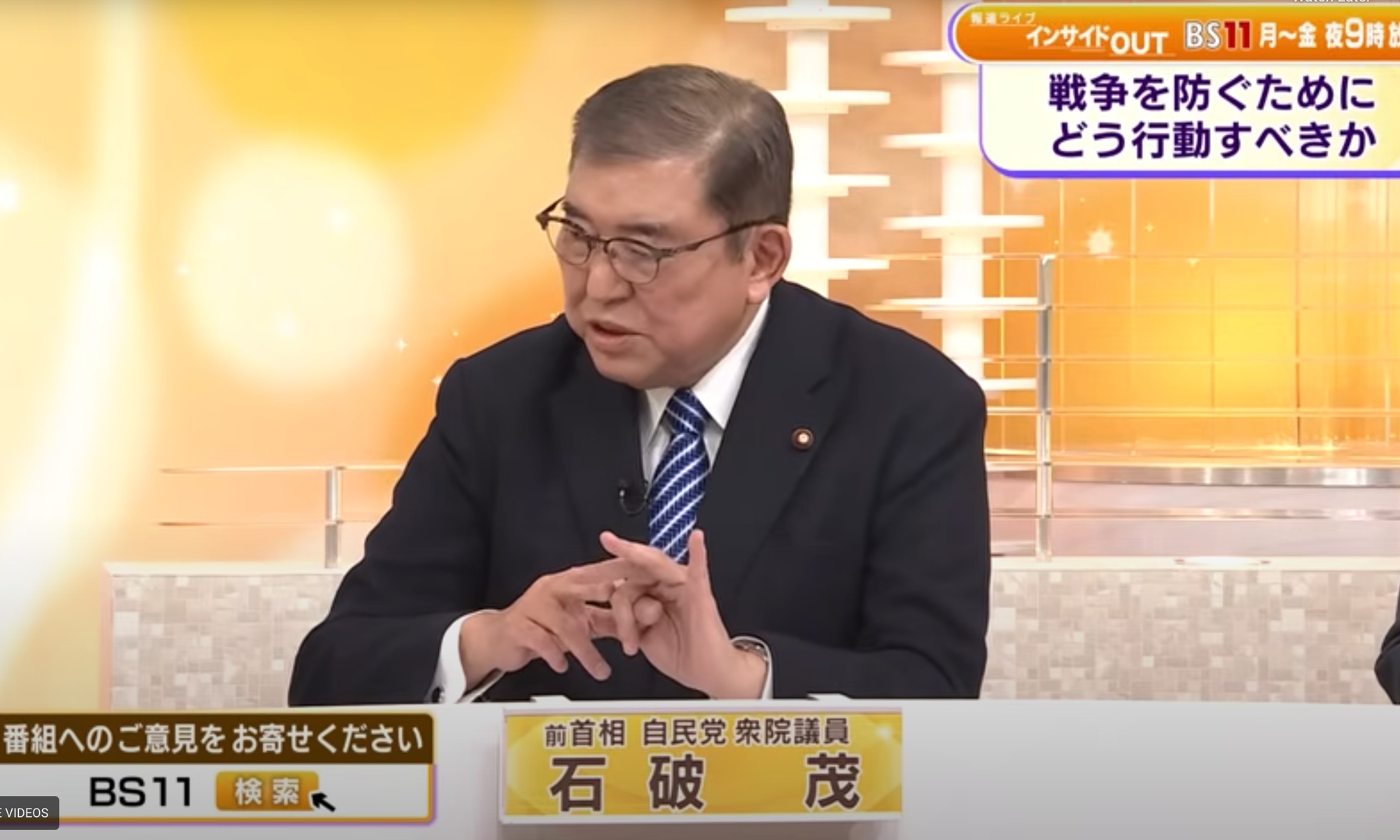
Former Japanese prime minister Shigeru Ishiba on December 26, 2025 once again criticizes the “nuclear possession” rhetoric by an official responsible for security policy under the Sanae Takaichi administration. Photo: screenshot from Japan's BS11 television channel
The "nuclear possession" rhetoric by an official responsible for security policy under the Sanae Takaichi administration continues to draw backlash. Former Japanese prime minister Shigeru Ishiba on Friday once again criticized the rhetoric, according to Japanese media.
On a program aired by Japan's BS11 television channel on Friday, Ishiba stated that "As the only country to have suffered atomic bombings, Japan's position is to prevent nuclear proliferation. We must not say things that negate this. This also leads to the question of whether the Japan-US alliance is unreliable." Japan's Kyodo News also covered Ishiba's remarks made on the program.
Ishiba explained that the debate over nuclear possession involves multiple aspects, including the Nuclear Non-Proliferation Treaty (NPT) and nuclear cooperation agreements. "If we skip all these issues and jump straight into discussing nuclear possession, it will result in conveying misinformation," he pointed out.
On December 18, an unnamed official was quoted as saying in the Asahi Shimbun that he personally believes that "Japan should possess nuclear weapons." The official is responsible for advising Takaichi on security policies and related matters, according to the report.
Japanese media Shukan Bunshun reported on December 24 that the anonymous official from the Prime Minister's Office is Oue Sadamasa, a special advisor to Takaichi, whose portfolio includes nuclear disarmament and non-proliferation.
At a press conference on December 19, when Japanese Defense Minister Shinjiro Koizumi spoke about a possible review of the Three Non-Nuclear Principles, he claimed that in order to fully protect the lives of Japanese citizens and their peaceful way of life, it is necessary to discuss all options without excluding any, Jiji Press reported.
The reckless and provocative words have drawn a backlash both within Japan and from the international community.
Ishiba commented on December 20 that acquiring nuclear weapons would "absolutely not benefit Japan," Japanese media reported.
Apart from China, two other countries neighboring Japan, Russia and North Korea, also voiced opposition, with Russian Deputy Foreign Minister Andrey Rudenko telling state news agency Tass that "Our attitude is absolutely negative," and that the militarization of Japan will only make the situation in Northeast Asia worse.
Commenting on the Japanese official's rhetoric under the Takaichi administration, Lin Jian, spokesperson for the Chinese Foreign Ministry, stated on December 24 that "It's by no means an isolated incident that a senior official from the Japanese Prime Minister's Office made such remarks. In recent years, Japan has removed the ban on exercising the right to collective self-defense, developed intermediate-range offensive weapons, increased military deployment, restructured the command systems, and expanded the area and scope of Self-Defense Forces activities. This amounts to a severe violation of provisions in instruments with legal effect under international law, including the Cairo Declaration and the Potsdam Proclamation, and of Japan's own Constitution. "
Lin stated that those remarks of the Japanese official—supposedly someone close to Prime Minister Takaichi—came on the heels of her erroneous remarks on Taiwan. This is yet another attempt of the Japanese side to intentionally test the bottom line of the international community and reveal the long-standing wrongful proposition and ambition of Prime Minister Takaichi and Japanese right-wing forces to keep remilitarizing Japan. It sends an extremely dangerous signal. These moves challenge the post-war international order, threaten regional peace and stability, and do not serve the interest of the Japanese people. China and all other peace-loving countries will respond to those developments together and firmly prevent the resurgence of Japanese militarism, according to Lin.
Global Times
RELATED ARTICLES