ARTS / CULTURE & LEISURE
Ethnic music awakens with modern vitality amid green mountains, clear waters
By Published: Dec 28, 2025 10:01 PM

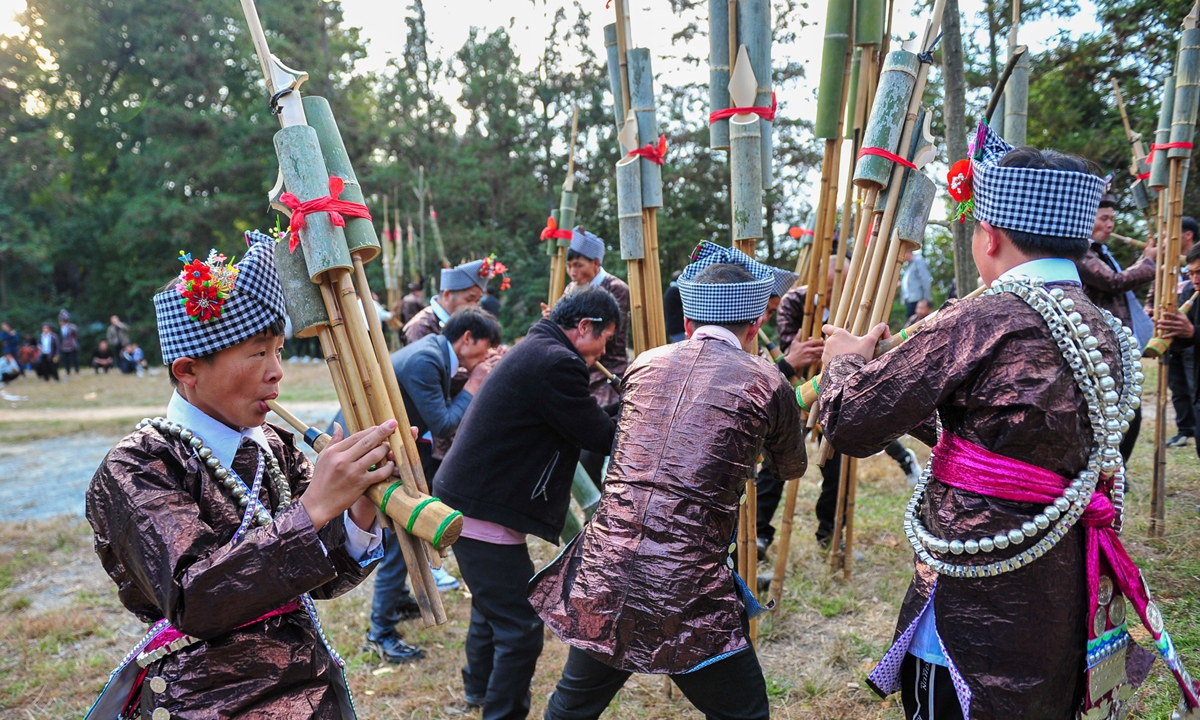
Photo: VCG
Deep in China's mountains, ancient melodies echo once more, intertwining with contemporary rhythms. In villages and fields, rustic folk chants collide and fuse with digital innovation. Ethnic music is shedding its image as a "living fossil" to emerge as a vibrant "new voice of the era," composing a moving symphony of cultural continuity and bold creativity across the nation's vast landscape.As a profound carrier of Chinese civilization, the preservation and renewal of ethnic music go beyond safeguarding cultural roots - they form a vital practice for strengthening cultural confidence and fostering dialogue among global civilizations.
At the Ethnic Music Dialogue held on Friday in Xichang, Southwest China's Sichuan Province, Mo Jiashan, director of the China National Opera and Dance Drama Theater, said that breathing new life into melodies born in remote mountains and rural landscapes has become a key focus of contemporary cultural exploration.
Innovation springs from ethnic music's distinctive cultural DNA and profound regional identity. As soprano Wan Shanhong insightfully noted, "Only by safeguarding the genes of our national culture and thoughtfully incorporating modern elements can ethnic music resonate with audiences worldwide." This balance is vividly illustrated by the enduring international appeal of classics like "River Water" and "Jasmine Flower," which demonstrate the seamless unity between deep national character and universal resonance.
Wu Yongbo, vice chairman of the Sichuan Musicians' Association, likened outstanding ethnic music to premium ingredients that need little embellishment - the true essence lies in faithfully protecting its cultural core. From the ancient Dong Grand Songs, dating back to the Spring and Autumn Period (770BC-476 BC), to century-old folk tunes, these melodies - forged amid green peaks and crystal-clear waters - embody the emotional memory and spiritual essence of the Chinese nation. Only by staying true to this heritage can innovation gain authentic direction and enduring power.
In the face of balancing tradition with market demands, a "multi-dimensional development" approach provides a promising path for ethnic music's contemporary vitality. Wang Xianyan, associate professor at the China Conservatory of Music, outlines a comprehensive framework with four key directions: authentic preservation and digital archiving, market-oriented composition, development of symbolic works, and professional refinement of musical creation. Digital technology plays a pivotal role as a powerful enabler. Advanced sampling precisely captures the unique timbres of ethnic instruments, while AI composition tools and electronic synthesizers allow traditional melodies to be reimagined and restructured. A striking example is the Shanghai Chinese Orchestra's pioneering AI concert Zero / One: Colors of China, which premiered nine original works blending technology with tradition.
The China National Traditional Orchestra has pushed boundaries further, merging traditional music with the metaverse in the conceptual piece Sanxingdui: Divine Bird - a "digital-physical integration" vinyl record that revives the ancient Sanxingdui civilization through sound, revealing the limitless potential of technology in empowering ethnic heritage.
The modern revival of ethnic music shines through its creative fusion with other cultural forms, transcending boundaries to reach broader audiences. On new media platforms, the China National Traditional Orchestra has built a dynamic presence on WeChat and the Chinese version of TikTok, Douyin, dismantling barriers between elite and popular culture and transforming niche folk traditions into trendy experiences for younger generations.
In film and television, the soundtrack of Ne Zha 2 masterfully weaves the playful suona, soulful erhu, and crystalline flute with modern symphonic and electronic elements, vividly portraying characters while infusing a distinctly Chinese essence. Similarly, the pristine, sacred timbre of Dong Grand Songs bring the mystery of Eastern mythology to life, captivating domestic and international viewers alike.
This is not mere juxtaposition but a deep-rooted creative transformation that preserves national characteristics while expanding artistic expression and dissemination channels - from the professional stage to everyday life.
By honoring its cultural roots, ethnic music retains its authentic soul; by embracing technological empowerment, it evolves with the times; and through diverse integration, it connects ever more closely with the public. Far more than cultural nourishment for the nation's spirit, ethnic music now serves as a global ambassador - transcending language barriers to share the distinctive charm and enduring vitality of Chinese civilization with the world.
The author is a reporter with the Global Times. life@globaltimes.com.cn
RELATED ARTICLES