Those in positions of responsibility for diplomacy shouldn't shout loudly about a 'Taiwan contingency,' says former Japanese FM Iwaya in interview
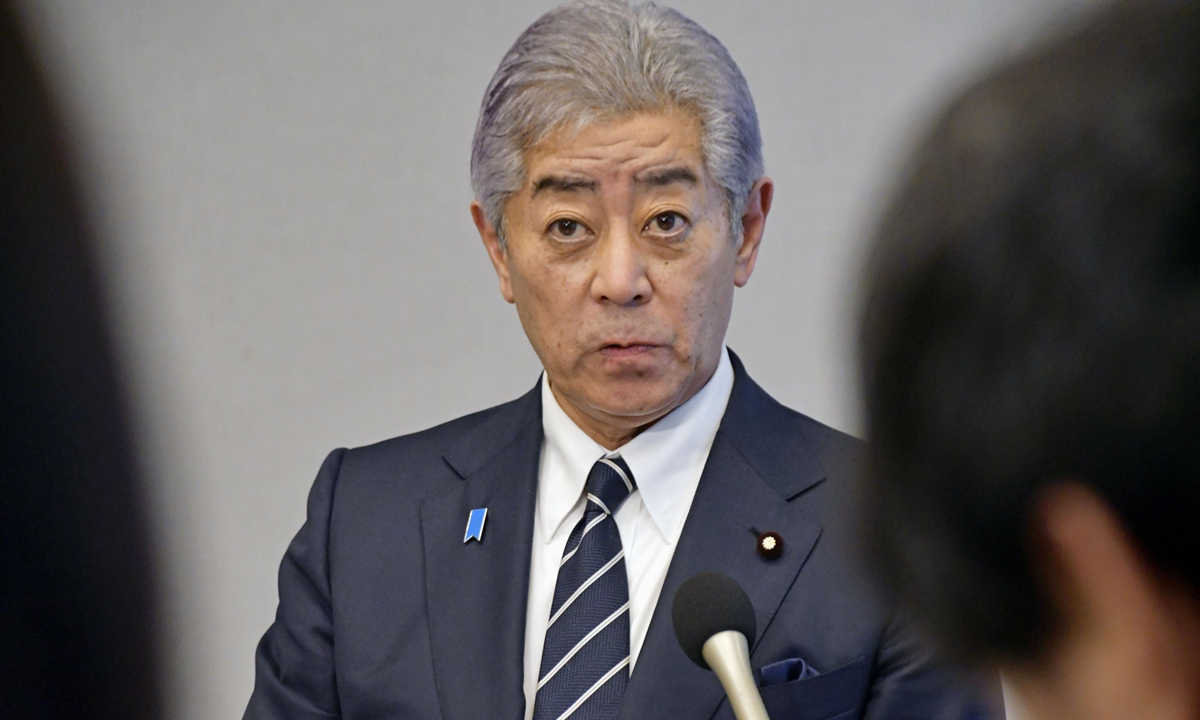
Takeshi Iwaya File Photo: VCG
Since Japanese Prime Minister Sanae Takaichi's erroneous remarks on the Taiwan question have exerted a major impact on China-Japan relations, former Japanese foreign minister Takeshi Iwaya, during an recent interview with a Japanese student journalist, emphasized that those in positions of responsibility for diplomacy should not shout loudly about a "Taiwan contingency" and unnecessarily heighten regional tensions, Japanese media reported Sunday.
Japanese media outlet News Post Seven reported that during the interview with a 15-year-old junior high school journalist Daiji Kawanaka, Iwaya, also a member of House of Representatives of Japan, made comments on topics including how he would evaluate the Takaichi's Taiwan-related remarks that have shaken China-Japan relations, on "the true essence of conservatism" and on "concerns over the government's right-leaning drift".
Recalling that the so-called rhetoric that "a Taiwan contingency is a Japan contingency" was made by Shinzo Abe in 2021 after he stepped down as prime minister, Iwaya told the student journalist that "I believe that those in positions of responsibility for diplomacy should not shout loudly about a 'Taiwan contingency' and unnecessarily heighten regional tensions."
For the island of Taiwan, "what matters above all is not a 'contingency,' but maintaining a state of peace and stability," Iwaya continued as saying. "Therefore, the most desirable outcome is for the status quo in the Taiwan Straits to be maintained and for both sides of the Straits to resolve their differences peacefully through dialogue and negotiation. I hope for this outcome, and I believe Japan's role is to strive to create a favorable environment to achieve this goal," he claimed, according to the report.
The consistent government stance has been to never state outright, no matter what is asked, something like "if this happens, we will deem it a survival-threatening situation and Japan will use force," Iwaya said when commenting on Takaichi's Taiwan-related remarks.
"I believe the prime minister should explain the true intention behind her remarks. She should solemnly and carefully state that 'Japan's basic stance on the survival-threatening situation is to make judgments in light of the individual and specific circumstances at that time, and this core principle has never changed'. Only by issuing such a statement to dispel China's misunderstandings can Japan take a crucial step toward improving bilateral relations," Iwaya claimed.
"I believe the top priority now is for Japan to avoid being swayed by emotions, respond calmly and soberly, and maintain the stable development of Japan-China relations under the framework of the Japan-China strategic and mutually beneficial relationship," Iwaya said.
Iwaya also elaborated on his views regarding right drift in Japan's politics, emphasizing that conservatism must never be aggressive or xenophobic.
He noted that a warning should be issued against any administration if it drifts to the right.
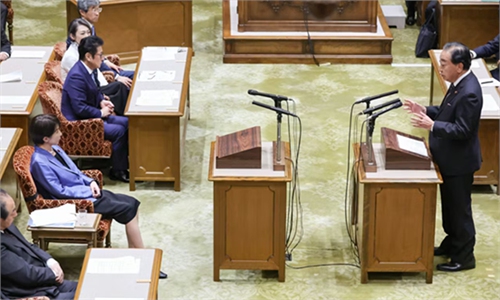
Takaichi claimed at a Diet meeting on November 7 that the Chinese mainland's "use of force on Taiwan" could constitute a "survival-threatening situation" for Japan. She refused to retract her remarks which imply the possibility of armed intervention in the Taiwan Straits.
In a regular press briefing, Chinese Foreign Ministry spokesperson Lin Jian stated on December 4 that China's stance is very clear: We urge the Japanese side to reflect on and correct its wrongdoing, and retract Prime Minister Takaichi's erroneous remarks.
Lin said, if the Japanese side's fundamental position on Taiwan is indeed as stated in the 1972 Sino-Japanese Joint Statement, can Prime Minister Takaichi accurately and fully articulate that position? Why is the Japanese side unwilling to clearly state the commitments it has made and its legal obligations? What is the logic and motive driving this attitude? The Japanese side owes China and the international community an explanation.
Global Times
RELATED ARTICLES