China South Korea Photo:VCG
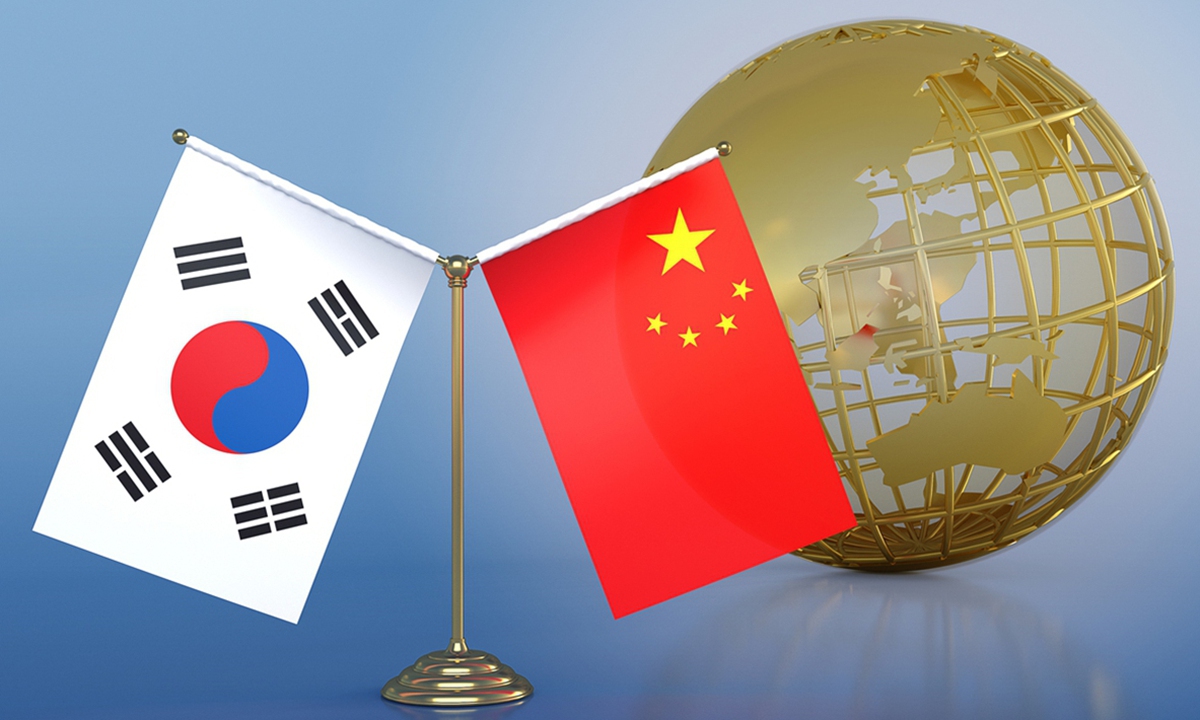
As the China-South Korea free trade agreement (FTA) marks its 10th anniversary, figures released by South Korea's Ministry of Trade, Industry and Resources could serve as a testament to the pact's achievements. Bilateral trade increased from $227.4 billion in 2015 to $272.9 billion in 2024, up about 20 percent, the Yonhap News Agency reported on Sunday.
The growth is not just a vivid reflection of the resilience of China-South Korea economic and trade relations amid multiple challenges such as global economic volatility and geopolitical headwinds over the past decade. It also demonstrates the profound foundation of high economic complementarity and the institutional dividends of the FTA.
With global economic uncertainties likely to persist into 2026 and regional volatility remaining a concern, the hard-won growth, underpinned by the FTA and driven by complementary strengths, should be cherished. The agreement lays a more solid foundation for further deepening China-South Korea economic and trade collaboration.
For a long time, South Korea's technological advantages in semiconductors, automobiles, high-end manufacturing and other fields have formed a precise alignment with China's vast market space and complete industrial chain. China's rich and diversified commodity supply has also continuously met the diverse needs of South Korean consumers, enabling win-win results in bilateral economic and trade exchanges. This complementarity has driven the expansion of trade and brought tangible development dividends to both countries.
But the increasing presence of Chinese products in the South Korean market has triggered mixed reactions within South Korea's industrial sector. A pivotal shift drawing market attention is that in 2023, South Korea's trade balance with China recorded its first deficit since the establishment of diplomatic relations in 1992, according to the Yonhap News Agency. A deficit of about $10 billion is expected this year, which would be the third consecutive deficit year, according to South Korea's Ministry of Trade, Industry and Resources. This turning point has sparked discussion on structural changes within the bilateral trade pattern.
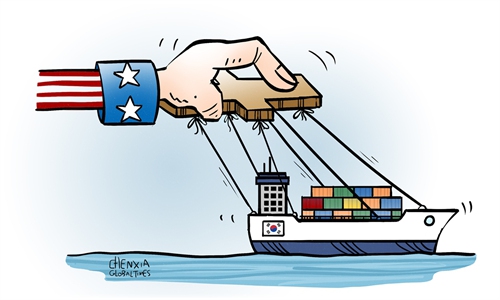
This change is the result of the combined effect of multiple factors. For starters, it reflects the objective outcomes of China's high-quality manufacturing development and industrial upgrading. Also, this shift in the trade structure, compounded by global supply chain realignment and geopolitical volatility, has collectively contributed to the narrowing of South Korea's trade surplus with China and the eventual formation of a deficit. External factors, such as the disruption and pressure on global high-tech chains from certain US policies, have also affected the export space for relevant South Korean products to China, contributing to the change in trade dynamics.
For an export-oriented economy such as South Korea, securing stable and broad overseas demand is paramount amid rising protectionism and supply chain uncertainty. China, as the world's most promising large market with its super-sized domestic demand and continuously upgrading consumption, offers a market dividend that is difficult for any other to match.
In this context, exploring new growth opportunities within the deep-rooted China-South Korea economic and trade cooperation is a strategic imperative. Both China and South Korea have shown willingness to promote the upgrading of cooperation, and accelerating negotiations on the second phase of the FTA is a key step focusing on the long term and addressing the current bottlenecks in economic and trade development.
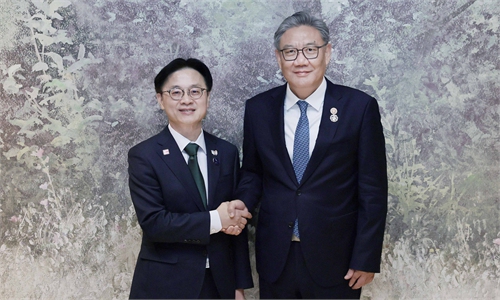
On December 12, Chinese Commerce Minister Wang Wentao met with South Korean Minister of Trade, Industry and Resources Kim Jung-kwan in Beijing and the two exchanged views on implementing the important consensus reached by the two countries' leaders, the Ministry of Commerce said in a statement posted on its website. The two sides need to accelerate the second-phase negotiations of the China-ROK Free Trade Agreement and strive for an early conclusion, said Wang.
This ongoing process signals that the focus of China-South Korea cooperation is gradually extending from traditional commodity trade to emerging fields such as finance, logistics, culture, medical care and the digital economy. These fields have stronger complementarity and greater growth potential, which can effectively hedge against volatility risks in traditional trade fields.
Against the backdrop of increasing global economic uncertainties in 2026, this upgrading of cooperation will also inject strong impetus into the stability and development of regional trade in East Asia.
RELATED ARTICLES