Ice-and-snow tourism ignites China’s winter consumption during New Year’s Day holidays
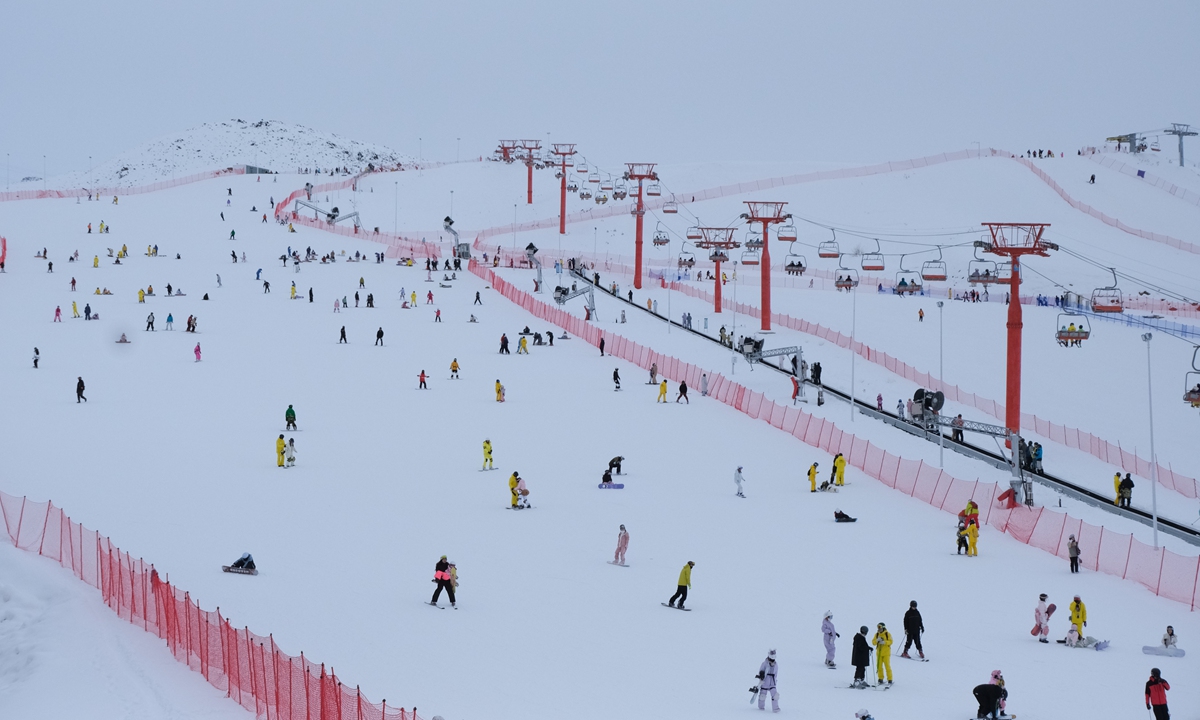
The Jiangjunshan Mountain International Ski Resort in Altay, Northwest China's Xinjiang Uygur Autonomous Region Photo: Li Yawei/GT
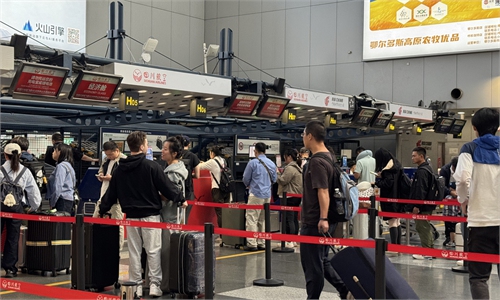
China's ice-and-snow economy kicked into high gear during the New Year's Day holidays, as surging travel demand, packed ski resorts and soaring bookings underscored the sector's growing role as a new engine of winter consumption.During the ongoing three-day New Year's Day holidays, ice-and-snow tourism heated up across China, with big data showing sustained growth in both rail and civil aviation passenger traffic, CCTV News reported on Saturday. Ticket bookings for "Snow Town" and the Yabuli Ski Resort in Harbin, Northeast China's Heilongjiang Province, surged by 2.7 times and two times, respectively. Online search interest related to "Harbin" jumped more than fivefold year on year.
Search volume for train and air tickets around the New Year's Day holidays rose more than threefold year-on-year. During the holidays, only a limited number of tickets remained available on routes from Beijing to northeastern cities including Harbin, Shenyang in Northeast China's Liaoning Province and Changchun in Northeast China's Jilin Province, while return tickets from the three cities to Beijing on January 3, the last day of the holidays, were largely sold out. Railway authorities plan to add multiple conventional and high-speed ice-and-snow tourism charter trains, according to the report.
Big data analysis shows that hot spring short breaks, ice-and-snow tourism and winter escape travel have become the dominant consumption themes during this year's New Year's Day holidays. Since the start of winter, visitor flows at key hot spring resorts and facilities nationwide have continued to rise, according to a Friday report by CCTV News.
Visitor numbers rose by about 50 percent year on year, Liu Yu, a public relations manager at the Wanlong Ski Resort in Chongli district, Zhangjiakou, North China's Hebei Province, told the Global Times on Saturday, noting that even without a two-day extended holiday last year, visitor traffic was still at least 20 percent higher than in previous years with such breaks.
He added that around 12,000 visitors entered the venue on January 2 alone, and while totals are still being tallied, overall traffic is conservatively estimated to be up by 30 to 40 percent or more. Liu also said the visitor mix has shifted, with sharp increases from southern China — especially the Pearl River Delta, the Yangtze River Delta and Wuhan in Central China's Hubei Province — alongside solid growth from the Hong Kong and Macao special administrative regions, Southeast Asia, and parts of Europe and the US.
According to the CCTV News report, ice-and-snow tourism remained strong, with Harbin leading the market. Destinations including Altay in Northwest China's Xinjiang Uygur Autonomous Region, Huludao in Liaoning and Aba in Southwest China's Sichuan Province saw notable growth, with visitor numbers rising by more than 12 percent year-on -ear.
South China's Hainan Province has long been a top winter escape destination. With the island-wide special customs operation fueling duty-free shopping tourism, travel demand surged sharply during the New Year's Day holidays. According to a report by Tongcheng Travel, booking interest for inbound and outbound flights at Hainan's three major airports during the holidays rose 76 percent month-on-month.
Data released by Haikou Customs on Friday showed that on the first day of the New Year's Day holidays, offshore duty-free sales in Hainan reached 148,000 items, up 30 percent year-on-year. The number of shoppers totaled 32,000, an increase of 45.8 percent year-on-year, while total sales value hit 251 million yuan ($35.89 million), surging 93.8 percent from a year earlier.
RELATED ARTICLES