Hainan’s special customs operations fuel commercial launch hub boom
Gateway to space
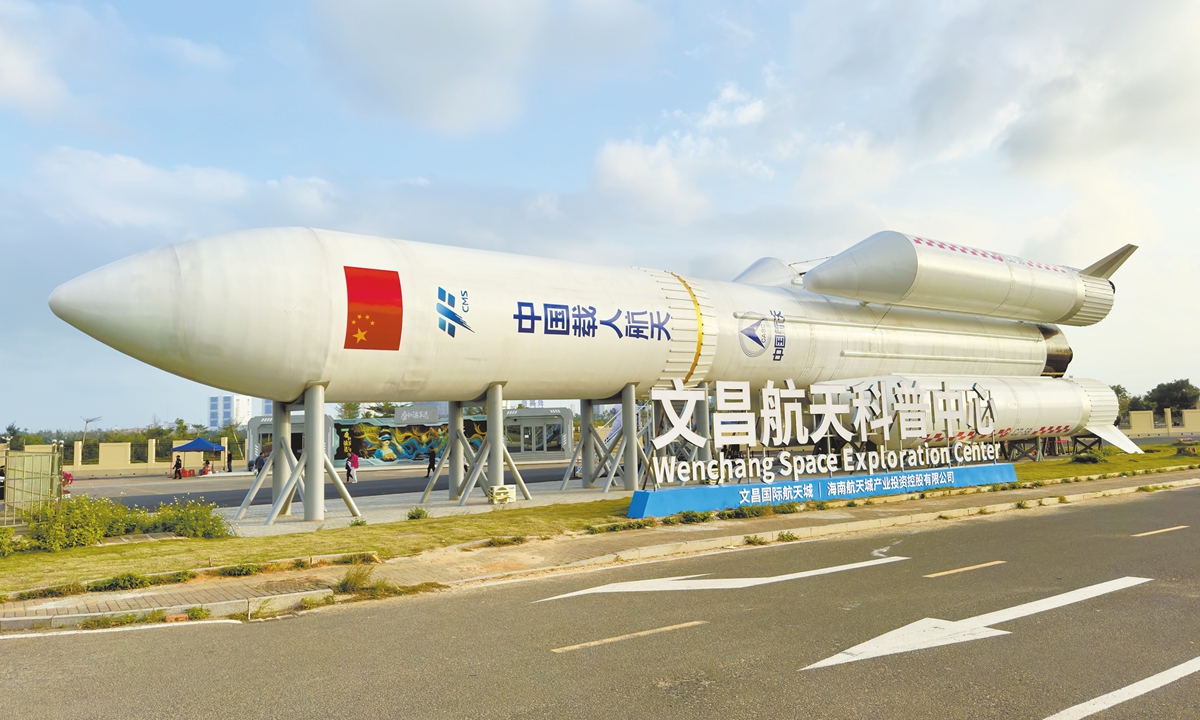
A view of Wenchang Space Exploration Center in South China's Hainan Province, on December 12, 2025 Photo: VCG
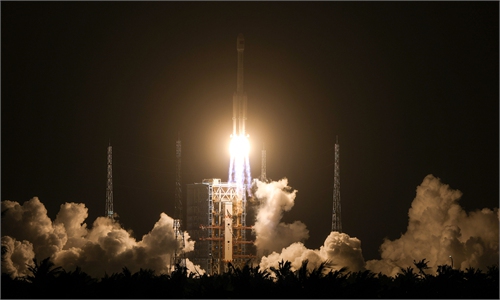
At 7:26 am on December 26, 2025, a Long March-8A carrier rocket took off from the Hainan commercial spacecraft launch site as a column of fire and smoke billowed into the morning sky, before successfully delivering the 17th group of low-orbit internet satellites into their planned orbit.
The launch marked the 10th successful mission conducted by the Hainan commercial launch site in South China's Hainan Province. As China's first launch site dedicated to commercial space missions, construction of the facility began in July 2022 and was completed in 2024. It took just 13 months from its first launch to reach the milestone of 10 missions, highlighting the rapid development of its operational capacity.
With total investment exceeding 40 billion yuan ($5.72 billion), the launch site is located at 20 degrees north latitude, allowing it to benefit from low-latitude advantages that increase payload capacity and reduce rocket fuel consumption.
While hardware infrastructure and location advantages continue to strengthen, institutional opening-up is providing sustained momentum for Hainan's commercial space sector.
On December 18, China launched island-wide special customs operations in the Hainan Free Trade Port (FTP), the world's largest FTP by area, allowing free entry of overseas goods, expanding zero-tariff coverage and introducing more business-friendly measures. The move is widely seen as a landmark step in China's ongoing efforts to promote free trade and expand high-standard opening-up at a time of rising protectionism worldwide, according to Xinhua.
At a recent commercial space forum in Wenchang, local officials said Hainan is mobilizing province-wide resources to accelerate the development of the Wenchang International Aerospace City, home to the commercial spacecraft launch site located, with the aim of attracting global aerospace talent and positioning the island as a new hub for international space connectivity.
Momentum of opening-up
The 2025 Wenchang International Aviation & Aerospace Forum was held from December 21 to 23 in Wenchang under the theme "Exploring New Industrial Models to Energize the Emerging Space Economy." About 500 participants, including aerospace experts, government officials and business representatives, discussed commercial space opportunities amid global industry transformation and Hainan's FTP special customs operations, the Global Times learned from the aerospace city authority.
Hainan Governor Liu Xiaoming said in his opening speech that the FTP's special customs operations align closely with the nation's grand goal of becoming a space power, and create unprecedented opportunities for commercial space development, according to the official WeChat account of the Wenchang International Aerospace City.
Located off the coast of Wenchang, the launch site allows large rockets to be transported by sea, making launches safer and more cost-effective than inland alternatives - an advantage particularly important for commercial launch services. The Hainan provincial government is also planning a purpose-built port to support space logistics.
Li Zhongbao, chief engineer of China Aerospace Science and Technology Corporation (CASC), said that FTP special customs operations will facilitate cross-border flows of innovation resources, giving the aerospace industry a unique edge. Leveraging Hainan's location and policy advantages, CASC plans to expand integrated "space+" industries, including space tourism, satellite data services and the low-altitude economy.
The Recommendations of the Hainan Provincial Committee of the Communist Party of China for Formulating the 15th Five-Year Plan for Economic and Social Development call for accelerating the systematic development of the commercial launch site and using it to drive growth across rocket, satellite, data and space-enabled industries.
Pan Helin, a member of the expert committee of the Ministry of Industry and Information Technology, told the Global Times that island-wide FTP special customs operations will attract more investment and talent to the aerospace city, while lowering barriers for private and foreign companies to participate in commercial space launches and increasing factor supply for China's space industry.
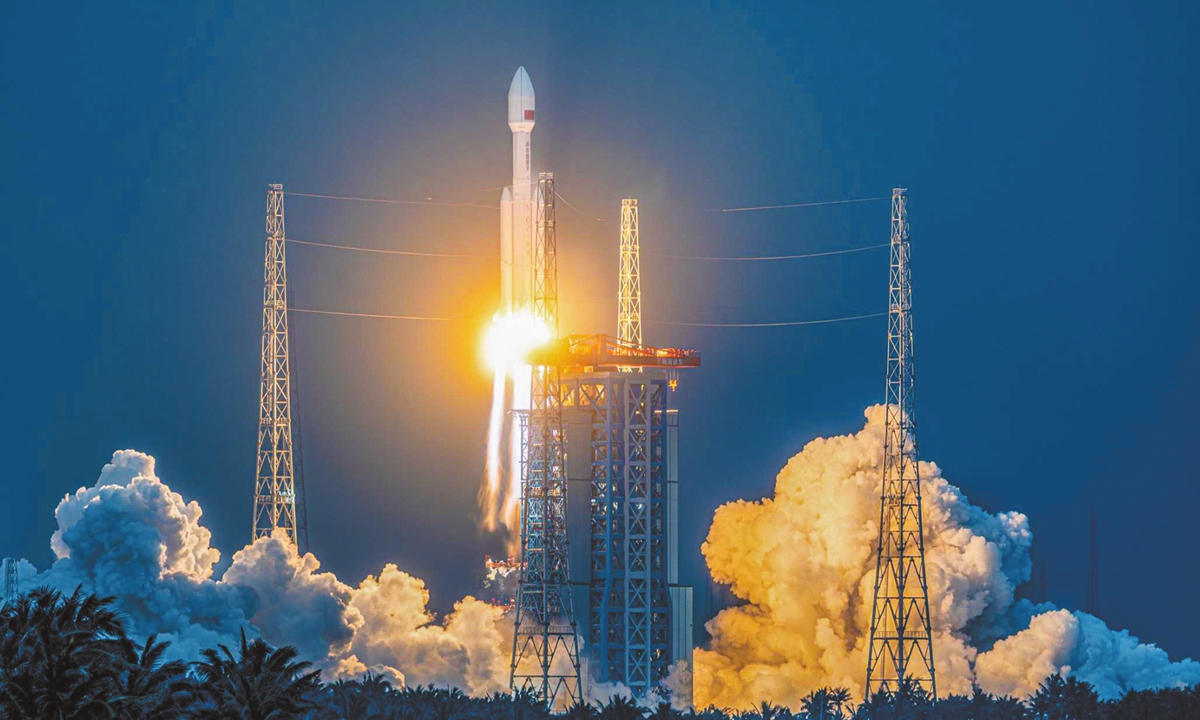
The Long March-8A carrier rocket lifts off from Commercial Launch Pad 1 at the Wenchang Commercial Space Launch Site, on December 26, 2025. Photo: VCG
Expanding global reachThe recommendations for the country's 15th Five-Year Plan (2026-2030) list the aerospace sector among its strategic emerging industries, according to Xinhua.
Following the successful initial launches from its No. 2 launch pad in late November 2024 and No. 1 launch pad in middle March 2025, the Hainan commercial launch site has achieved dual-pad launch capability. Phase II of the project officially began on January 25, 2025, and will add two more liquid-propellant launch pads, the Global Times learned.
The Wenchang International Aerospace City is advancing its "launch-driven industry" strategy to build a complete ecosystem spanning rockets, satellites, data applications and space-related industries.
A super factory capable of producing 1,000 satellites annually is set to begin operations, enabling seamless "factory-to-launch" integration, and more than 20 upstream and downstream companies have already signed agreements to locate in the area, forming a comprehensive industrial chain spanning research and development, manufacturing, launch and tracking, according to a report by the People's Daily on December 17.
Chu Guoqiang, deputy general manager of Beijing-based R.SPACE, a key component provider for commercial launch vehicles, said that the Hainan FTP's special customs operations will lower operating costs and create favorable conditions for Chinese space companies to expand overseas.
Such policy support is already enabling domestic firms to take on more ambitious international projects.
On December 10, Kinetica-1, also known as the Lijian-1 Y11, a launch vehicle developed by Chinese commercial aerospace firm CAS Space, carried nine satellites on board, including three international payloads for the United Arab Emirates, Egypt and Nepal, delivering them to their preset orbits. The company has now provided launch services to clients across China, Europe, North America, South Asia, the Middle East and North Africa, according to the CAS Space.
Wang Peng, an associate researcher at the Beijing Academy of Social Sciences, said that given its geographic location, Hainan is a key node in the Belt and Road Initiative. "As demand for satellite communications and remote sensing grows in neighboring regions, Hainan's commercial space hub is expected to help build a regional aerospace cooperation network through capacity sharing and technology collaboration," he noted.
RELATED ARTICLES