Ningbo-Zhoushan Port hits 1.4 billion tons of cargo throughput in 2025, becoming the world’s 3rd largest container port
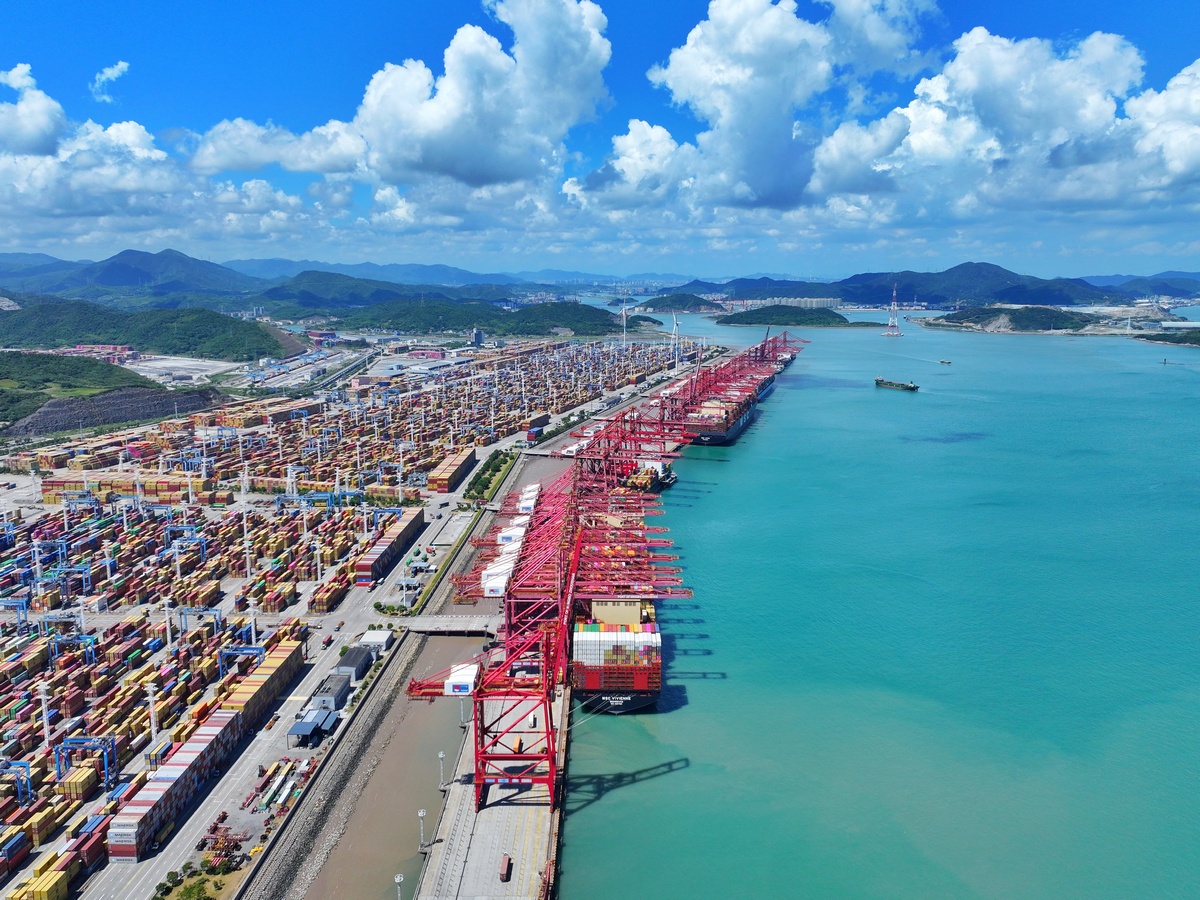
An aerial view of the Chuanshan port area of Ningbo-Zhoushan Port in East China's Zhejiang Province, on January 5, 2026. Photo: Courtesy of Ningbo-Zhoushan Port Group Co
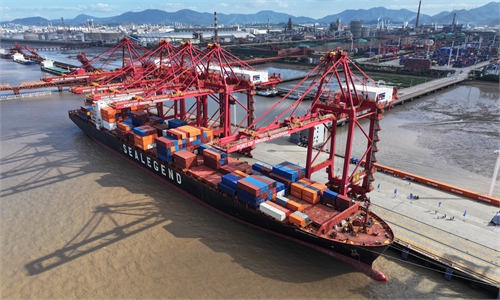
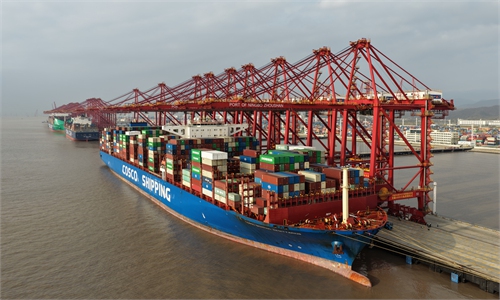
Ningbo-Zhoushan Port in East China's Zhejiang Province reported cargo throughput of 1.4 billion tons and exceeded 43 million TEUs in container traffic — milestones that position the port to extend its global lead in total cargo volume for a 17th consecutive year and cement its status as the world's third‑largest container port.
Despite a challenging international backdrop marked by slower global trade growth and geopolitical volatilities, the port recorded a leap in comprehensive operational capacity in 2025.
An industry expert said the bustling scene at the port signals broader momentum across China's port sector and reflects the resilience and vitality of the Chinese economy, displaying the "hard-core strength" of Chinese trade.
According to a statement sent to the Global Times on Monday, the port's container throughput topped 43 million TEUs for the first time, while cargo throughput hit 1.4 billion ton, reflecting broad gains in terminal capacity, openness and service efficiency.
As a key node of the 21st Century Maritime Silk Road, Ningbo-Zhoushan Port has kept expanding its global network, upgrading its level of opening-up and serving as a vital link in China's dual-circulation strategy, port authorities said.
Network expansion and faster services have underpinned this growth. By the end of 2025, Ningbo‑Zhoushan operated 309 container services connecting with about 700 ports in more than 200 countries and regions, with nearly 300 vessel calls per day.
In September 2025, the port launched the world's first China‑Europe Arctic container express route, extending its network into the Arctic and offering an alternative to traditional Europe-bound services.
It marks the first extension of Ningbo Zhoushan Port's route to the Arctic Ocean which will further support Chinese enterprises in addressing global trade uncertainties and exploring new international logistics channels, the Ningbo-Zhoushan Port Co told the Global Times.
All 11 container berths in the Chuanshan port area entered full operation in 2025, providing 3,740 meters of active quay and additional deep water capacity for international vessels. Overseas logistics infrastructure expanded as well, with overseas warehouses in Germany and Dubai serving as regional hubs and new service points established in Singapore and Japan, accelerating the port's global operating footprint.
Port authorities said the achievements would bolster the Belt and Road Initiative, the Yangtze River Economic Belt and Yangtze River Delta integration, while strengthen China's domestic international "dual circulation" strategy.
Other Chinese ports have also reported strong data during the New Year holidays. The Port of Tianjin said in a statement sent to the Global Times on Monday that its production got off to a strong start in 2026, with cargo throughput rising 6.4 percent year-on-year and container throughput increasing 3.8 percent during the New Year holidays.
Global Times
RELATED ARTICLES