ARTS / CULTURE & LEISURE
Surprise of Chinese animation continues
By Published: Jan 05, 2026 10:56 PM

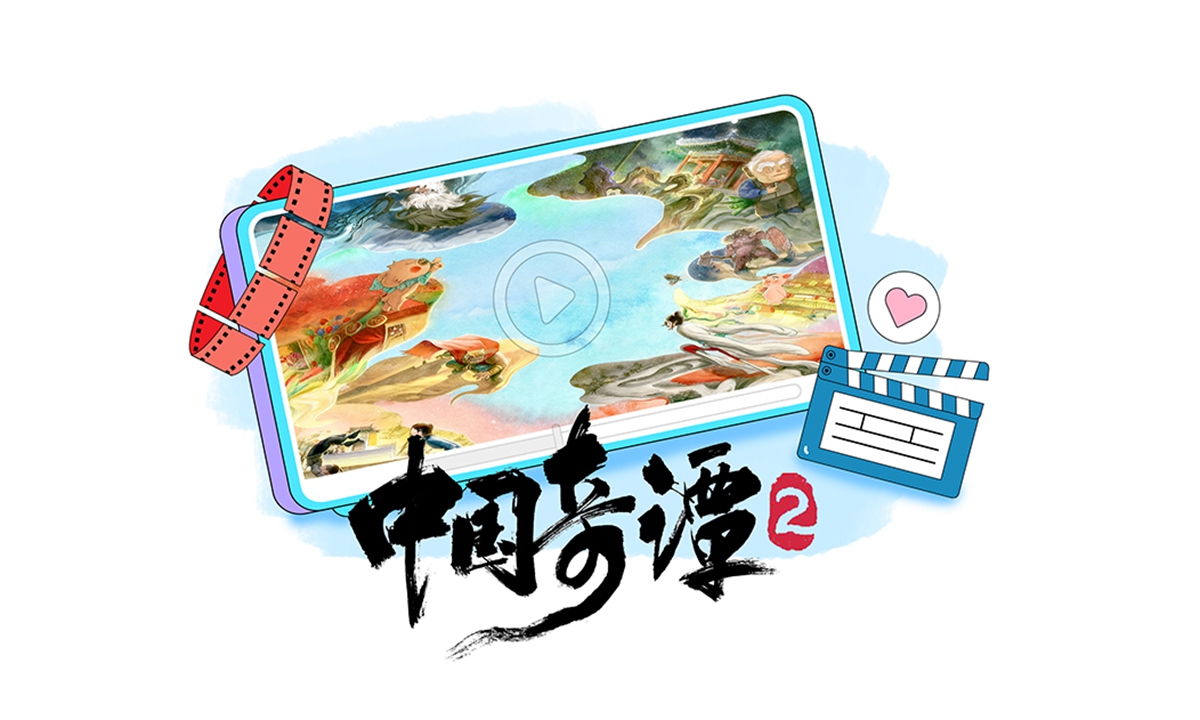
Illustration: Liu Xiangya/GT
The highly anticipated Yao-Chinese Folktales 2, produced by the Shanghai Animation Film Studio and Chinese streaming site Bilibili, premiered on New Year's Day, gaining wide and significant attention. Three years ago, the first season of the show became the phenomenon of the year with its eight short films, achieving a score of 8.7/10 on media rating platform Douban and reaching 360 million views on Bilibili.Its derivative animated film Nobody, adapted from the short film of the same name, emerged as a dark horse during the 2025 summer film season and set a new box-office record for 2D animated films in China.
By delving deep into the resources of traditional Chinese culture and employing pioneering artistic expression, the series has not only achieved phenomenal attention domestically but also stands as a successful cultural endeavor, offering global audiences a vivid case study for understanding China's contemporary creative industries.
From Season 1 to Season 2, the series' path of exploration clearly reflects Chinese animation's cultural self-consciousness, innovative confidence, and communicative wisdom in the new era.
First and foremost, the series has successfully constructed a "contemporary expression system" for traditional cultural genes, breaking the international community's stereotypical perceptions of Chinese art as it does not merely rely on widely recognized visual symbols such as ink painting or paper-cutting.
Instead, it delves into deeper levels - from traditional folklore to local customs and even philosophical concepts - to carry out a creative transformation. Faced with the challenge of sustaining the success of the first season and surpassing it, chief director Chen Liaoyu said that the team constantly reminded themselves to "start from scratch."
This "back-to-zero" mind-set pushed the creators to return to the essence of art and explore the possibilities of Chinese style. "In the past, when we talked about Chinese style, it seemed to always involve traditional painting or ink brushstrokes, but in fact, the style itself is also evolving," Chen said.
This exploration of contemporary aesthetic expression is strikingly embodied in the works of Season 2. For example, director Du Pengpeng employed a style reminiscent of woodblock printing in the episode Bigger Bird, with brushstrokes inspired by the "dry brush" and "burnt ink" techniques of traditional Chinese painting. The core of the story is rooted in personal memory, and the key motif of "feathers" draws inspiration from his grandmother's real-life experience of collecting duck feathers by the river.
Secondly, the creative process highlights how the spirit of Chinese animation - "never imitate others, never repeat ourselves" - has been inherited and elevated. The mentorship between veteran artists of the Shanghai Animation Film Studio and the new generation of directors, characterized by a "passing down, helping, and guiding" approach alongside "reverse inspiration," forms an especially valuable model of cultural transmission. Many of the young directors have international educational backgrounds, blending a global perspective with local cultural roots.
In the episode How To Become Loongs, director Yang Mu innovatively employed the cunfa technique from Chinese painting to depict parched land, drawing inspiration from the artistic conception of painters like Lin Fengmian.
This inter-generational relay and cross-disciplinary integration ensure the vitality of the creative ecosystem. Even more commendable is the adherence to the "painstaking effort" of craftsmanship. In an era that prioritizes digital efficiency, the team still upheld a "handicraft spirit" that spared no cost to achieve the right artistic effect.
Furthermore, the narratives of the works strike a balance between "national character" and "universal appeal," offering global audiences a unique pathway to understanding Chinese wisdom. While deeply rooted in Chinese cultural motifs, the series explores themes common to all humanity, such as "self-growth," "understanding desire," and "the quest for identity."
How To Become Loongs takes the Eastern mythological concept of snakes transforming into dragons as a starting point, cleverly mapping it onto the issue of identity formation. Through the premise of "a little snake scrutinizing the Loong King," it conveys a profound message about respecting individuality and breaking the shackles of growth. The choice of a snake as the protagonist stems precisely from its cultural symbolism as a nascent form of a Loong. The core of the story expresses that true growth begins with accepting and cultivating one's ordinary self. This inner conviction may well be the most precious "path to becoming Loongs."
Meanwhile, Man In The Ear, based on the short story collection Strange Tales from a Chinese Studio by Pu Songling (1640-1715), breaks free from the original narrative framework by materializing "inner desires" as an ear-dwelling imp. Through the struggle between the scholar and this "little man in the ear," the story achieves a process of facing, talking with, and ultimately reconciling with one's own desires.
The essence of the work transcends "desire" itself, pointing instead to the life question commonly faced by people today: "How to accept ourselves?"
The creative team showed no fear in exploring complex narratives and employing a degree of "open-endedness," trusting in the audience's ability to interpret their work.
Such a creative stance demonstrates the composure and confidence fitting for a major cultural power.
The exploration in Yao-Chinese Folktales 2 epitomizes the broader upgrading of the Chinese animation industry. From Ne Zha 2 setting a global box-office record for animation to the international acclaim for technically aesthetic works like Deep Sea, and the rise of Yao-Chinese Folktales as a cultural phenomenon, a diverse array of productions is forming a dynamic and multi-dimensional landscape where traditional culture, science fiction, and realistic themes brilliantly converge and enhance one another.
The author is a reporter with the Global Times. life@globaltimes.com.cn
RELATED ARTICLES