The rise of Nanfan 'Silicon Valley'
Powering China’s seed industry and global cooperation
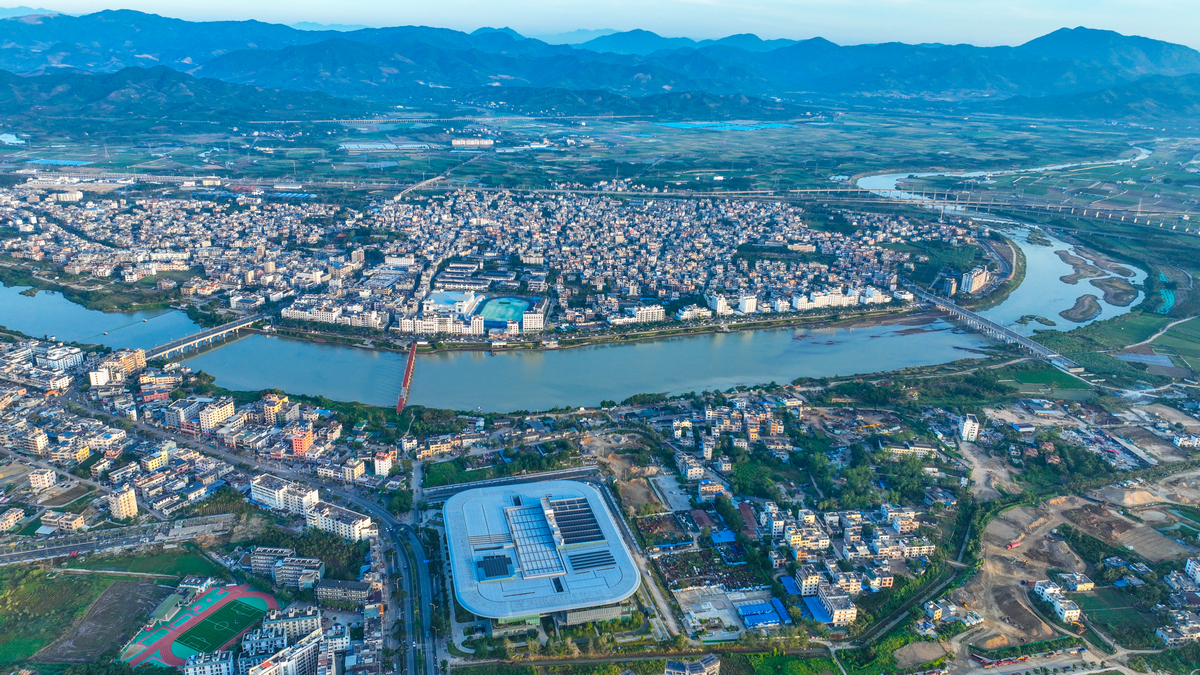
A view of Yazhou Bay Science and Technology City in Sanya, South China's Hainan Province on December 9, 2025 Photo: VCG
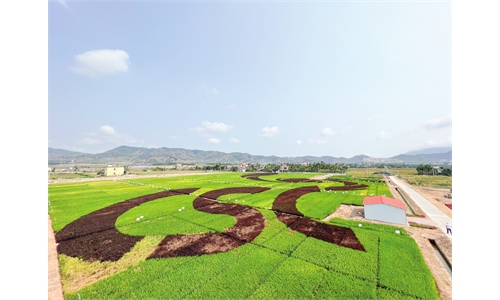
Under the tropical sun at 18 degrees north of the equator, a patch of salt-tolerant rice plants drinks in sunlight and sea breeze in an experimental plot inside the Yazhou Bay Science and Technology City.
On just 23.54 square kilometers of land beside the deep sea off the southwestern Sanya in South China Hainan Province, a compact high‑tech park has quietly become a strategic hub for China's seed industry and an emerging bridgehead for global agricultural cooperation.
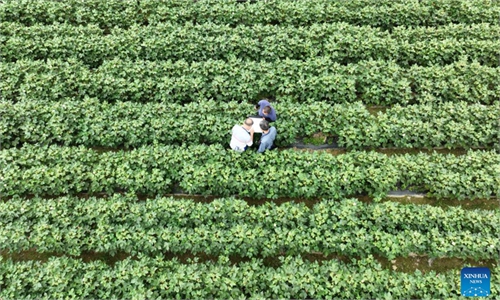
In winter, while much of northern China shivers, soybean breeders here in Sanya are in full swing. Tian Zhixi, chief scientist of the soybean seed innovation team at Yazhou Bay National Laboratory in Sanya, bends over a plot of soybeans flowering for the third time in 2025.
"Most regions in China grows only one season of soybean a year. Growing an extra one or two seasons in Hainan drastically accelerates the breeding process," Tian said. "That is the speed of the Nanfan 'Silicon Valley'."
"Nanfan" refers to the practice of using the warm southern climate to grow multiple generations of seeds per year, thereby shortening the breeding cycle. Built on that legacy, the breeding bases in Hainan have evolved into what researchers and industry leaders now call the Nanfan "Silicon Valley."
Tian's team has already developed more than a dozen high-yield, high-quality soybean varieties as it hunts for the "genetic codes" that will boost China's soybean yields toward those of global counterparts such as the United States and Brazil.
A seed innovation cluster
Since the inauguration of the Hainan Yazhou Bay Seed Laboratory at the breeding bases on May 12, 2021, a cluster of top research institutes and industry leaders, including the Chinese Academy of Sciences, the Chinese Academy of Agricultural Sciences, China National Seed Group, and Longping Biotechnology (Hainan) Co, have set down roots. Together they have formed a collaborative ecosystem for breeding innovation, bringing advanced tools, talent and investment to the field, the Xinhua News Agency reported. Longping Biotechnology is named after China's "Father of Hybrid Rice" Yuan Longping.
Thanks to the unique natural conditions and favorable policies under the Hainan Free Trade Port (FTP), the cluster has attracted more than 20 seed academicians, gathered over 2,800 innovative enterprises, and generated annual industrial output in excess of 18 billion yuan (about $2.5 billion). It has played a crucial role in safeguarding national food security, driving to strengthen seed breeding through joint research and ensuring self-sufficiency in seed sources, and has boosted international cooperation in seed science, according to the Xinhua report.
Tian is one of the researchers who had flocked to the high-tech park since Hainan began preparing for the island-wide special customs operations that formally took effect on December 18, 2025. Leveraging Hainan's unique climate and policy advantages, Yazhou Bay Science and Technology City has become the country's core hub for seed technology innovation.
"The unique nature of breeding lies in the fact that it requires both technological breakthroughs in the laboratory and experiments in the field," said Zhang Xiaoqiang, deputy general manager of China National Seed Group. Since relocating its headquarters to Yazhou Bay in 2021 and collaborating with local research teams, the company has filed 28 patents, applied for 12 plant variety rights, and seen 14 field crop varieties approved — the tangible proof of the speed enabled by the Nanfan model.
The development of China National Seed Group is a microcosm of the continuous innovation of Chinese seed companies driven by the seed industry vitalization campaign. Zhang said that, guided by the seed industry vitalization campaign, FTP policies will create a high ground for the open cooperation in the seed industry, enhance the international competitiveness of China's seed industry, and contribute to the sustainable development of the global agriculture.
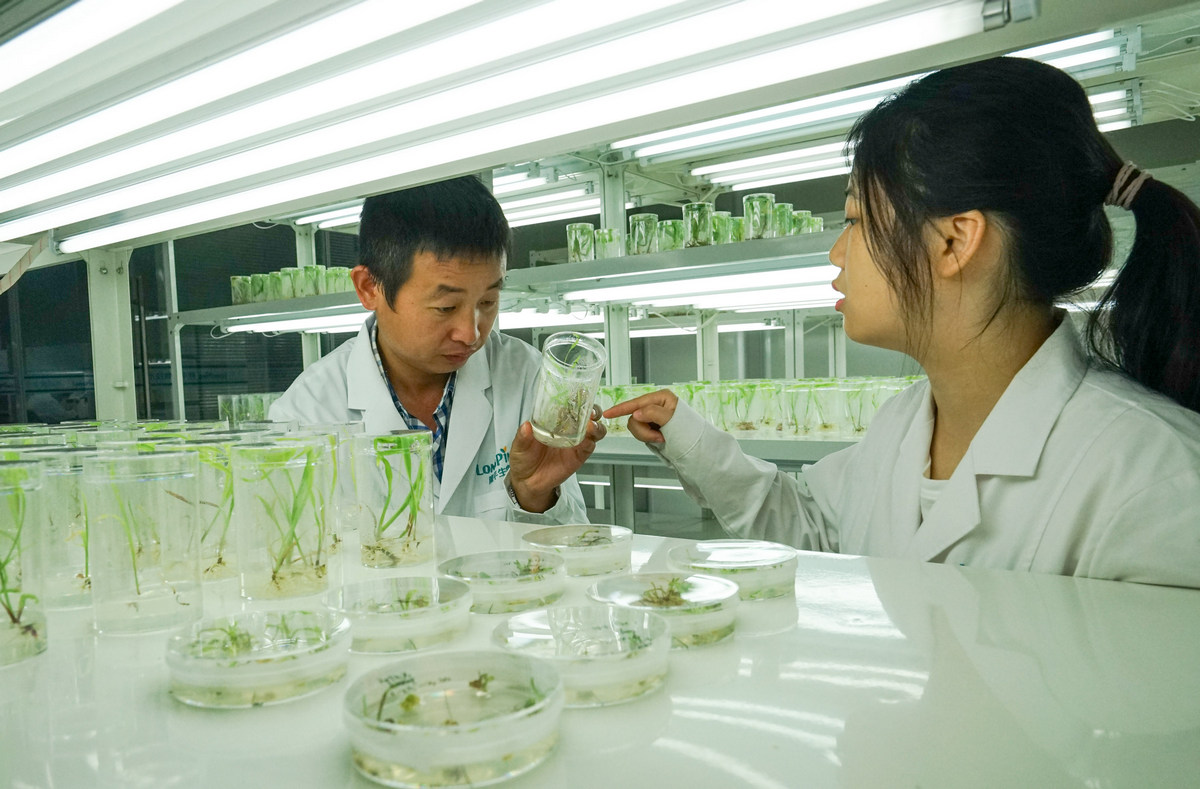
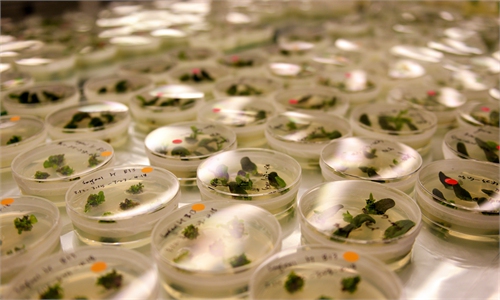
Researchers conduct research at a laboratory of Longping Biotechnology (Hainan) Co in Yazhou Bay Science and Technology City in Sanya on December 9, 2025. Photo: VCG
Policies under Hainan FTP
Policy innovations tied to the Hainan FTP have played a significant role. Hainan's island‑wide special customs operations have turned the province into a logistics and regulatory test bed for accelerated germplasm exchanges.
Simplified procedures for importing and transiting germplasm, fast‑track approvals for incoming propagation materials, rapid customs clearance and exemptions from routine sampling have made it easier for world‑class genetic resources to flow into China's breeding pipelines. These measures are accelerating international exchanges and cooperation in seed science, according to a note sent to the Global Times by the Nanfan Offshore Science and Technology Innovation Center for Global Animal and Plant Germplasm Resources.
"High-level opening-up is written into the Hainan FTP's DNA," an official from the provincial agriculture department told the Global Times. "For the seed industry, it means every new gene developed here can reach global fields faster and at lower cost."
Those policy measures have helped accelerate Hainan's transformation into a global center for tropical agriculture and a bridgehead for China's agricultural opening-up.
Boshou Seed Industry's representative Zhang Xiaosheng describes Nanfan as an "accelerator" and Hainan's free trade port as a "launch pad." Relying on the construction of the Nanfan "Silicon Valley" of China's seed industry, Boshou Seed Industry has established a branch in Hainan, breeding tomato and pepper varieties that meet the needs of the Middle Eastern and Southeast Asian countries.
He said that riding the wave of the construction of the Hainan FTP, the company is also gaining more cooperation opportunities through an increasing number of exchange and cooperation platforms.
Export procedures that once took six to eight weeks have been compressed to 10 working days under the island-wide special customs operations policies, a radical reduction that helps turn incubated varieties into exportable products to Belt and Road partner countries almost as fast as they are harvested, he told the Global Times.
Meanwhile, the Chinese Academy of Tropical Agricultural Sciences headquartered in Haikou has been promoting new cassava varieties in the Republic of Congo, significantly increasing yields and ensuring that more people in Africa have enough to eat and eat well.
Hainan's training programs have hosted more than 5,000 trainees from 99 countries and regions on grain crops, and agricultural demonstration parks such as the Cambodia‑China Tropical Ecological Agriculture Cooperation Demonstration Zone now under construction are meant to translate Hainan's lessons into locally adapted practice abroad.
Despite these advances, the sector faces persistent challenges. Tian told the Global Times that China's seed industry still faces under-utilization of germplasm resources, a relatively small share of imported elite germplasm, limited breakthrough varietal innovations, and gaps in home-grown breeding tools, digital equipment and original algorithms.
Closing those gaps, he said, will require sustained investment in basic research, stronger international collaboration, and policies that encourage two‑way exchanges rather than one‑sided transfer.
Looking ahead, one could say the strategy is twofold: to accelerate the conversion of breeding gains into commercial varieties and to internationalize Chinese seed innovation, Tian said.
Policies that support domestic seed companies in establishing overseas breeding centers, conducting localized research and building global brands will raise the competitiveness. Deeper engagement with international organizations and active participation in shaping global seed‑industry rules will help ensure that breakthroughs born in Nanfan can travel safely and equitably across borders, according to the Nanfan Offshore Science and Technology Innovation Center for Global Animal and Plant Germplasm Resources.
By combining a unique climate advantage with concentrated scientific capacity and special customs policies to shorten the path from gene to field, the Nanfan model has created a fast, efficient pipeline for agricultural innovation, according to the high-tech park administration.
Yazhou will also seek to pass the capability assessment of the International Seed Testing Association (ISTA) within four years and become an ISTA member to provide internationally recognized testing services for the import and export of germplasm resources as well as seeds, the administration said.
RELATED ARTICLES