ARTS / THEATER
National efforts breathe new life into folk performing arts
Melodious storytelling
By Published: Jan 06, 2026 10:30 PM
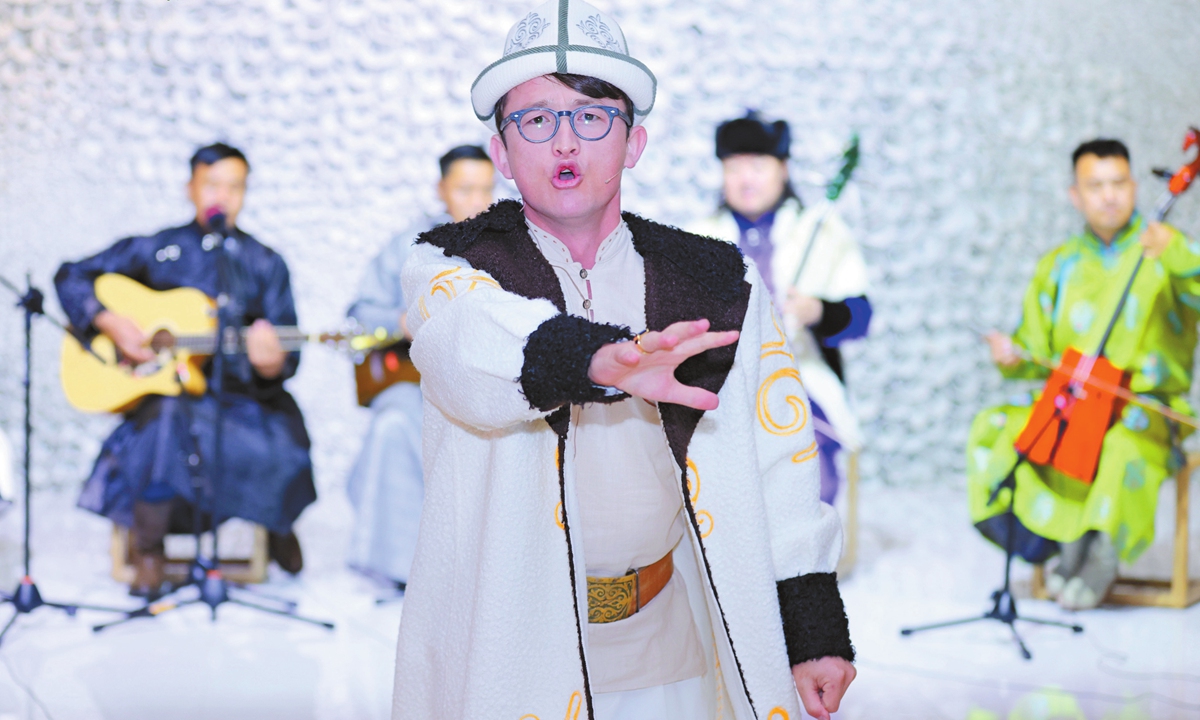
Tuohenali Tuxunnali, inheritor of the Epic of Manas, performes with music artists Photo: Courtesy of Tuohenali Tuxunnali
At the beginning of 2026, China officially launched a nationwide survey of quyi (traditional Chinese folk performing arts) and the construction of a quyi database. According to the plan, this five-year project will conduct a comprehensive survey of quyi across the country, systematically organizing the history, current status, artistic characteristics, and representative inheritors of each performing art. The project will also collect and archive classic works, documentary materials, performance videos, oral histories, and other resources to establish an authoritative and standardized national quyi database.In addition to widely recognized art forms like Chinese folk crosstalk and "Jingyun dagu," or known as Beijing drum singing, this initiative creates new opportunities for preserving quyi traditions that originate from China's border regions, such as the Kirgiz Epic of Manas and the Tibetan epic of The Epic of King Gesar. When talking with the Global Times, the inheritors of these folk arts expressed that they are now racing against time to protect and pass on these art forms. A nationwide coordinated database is undoubtedly a powerful tool in this effort.
"The cataloging of quyi genres are aimed at protecting the uniqueness of each art form. The unique qualities of each quyi art form give local culture a distinct advantage in artistic expression," Wang Jinjing, an assistant researcher at the Institute of Drama, Chinese National Academy of Arts, told the Global Times.
Passing on ancient art
Among many folk stories and epics passed down within Chinese ethnic groups, the story of King Gesar, a deified hero who saved all living beings, has always been one of the most popular. As an ancient folk tale, The Epic of King Gesar was inscribed on the Representative List of the Intangible Cultural Heritage of Humanity of UNESCO in 2009 and has been seen as the longest and most voluminous "living" epic that humanity has ever possessed.
The Epic of King Gesar was not written with a pen but sung by many folk singers and storytellers. Generations of master singers and storytellers have passed on the story for thousands of years and spread it far and wide. During its circulation, the epic has been constantly enriched.
To pass on the hero's story to wider range of people, Samdrop Lhom, a Tibetan inheritor of The Epic of King Gesar, brought the dramatic reversal section of the epic, which shows how a poor child becomes a king, to the stage with his troupe, integrating the traditional Gesar epic storytelling into the form of an opera, and came up with diverse innovations to improve the stage setting.
He changed the style of the traditional costumes, such as heightening the shoulders of the costumes of generals to highlight their imposing nature. The stage setting, usually just large paintings on paper, was changed to a dynamic LED screen to make scenes feel more real.
"All members of our performing troupe are local shepherds who deeply admire King Gesar and grew up listening to his story. Based on the traditional story, we have made some innovations when it comes to costumes, stage setting and music. The results stunned us as most local audiences said that they felt they were finally seeing the real Gesar on stage," Samdrop told the Global Times.
The Kirgiz Epic of Manas has also been developing from a single oral tradition to a stage creation. In 2023, the newly built Manas Epic Theater in the Kizilsu Kirgiz autonomous prefecture, Northwest China's Xinjiang Uygur Autonomous Region, officially opened and has since staged over 750 performances, attracting about 90,000 theatergoers. During the 2024 The Year of Dragon Spring Festival Gala of CCTV, the epic was featured on the main stage in Beijing as local Manas performers sang a rock version of the epic for a global audience.
With 20 million words, the Epic of Manas is an intangible cultural heritage singing art. It is also a special type of Chinese oral performing art that takes "a lifetime to learn," Tuohenali Tuxunnali, an inheritor of it, told the Global Times.
After inheriting the epic, Tuohenali truly felt the race against time to save the work. He is aware that the limitation of the ethnic art is its "lesser-known" nature. Thus, he also endeavors to bring it to diverse stages, including through collaborations with artists from countries like Kyrgyzstan and Kazakhstan.
New momentum
While the national quyi survey is underway, a new young talent creative camp initiative has also been launched. Focusing on the organizational and systematic cultivation of young quyi talent, this program aims to nurture a cohort of virtuous youth who fully embody the vitality and charm of quyi in the new era.
Both Tuohenali and Samdrop recognize the importance of training the next generation of inheritors. They train local herders, inspiring their performing potential, or offer online classes to popularize their ethnic quyi knowledge among beginners. The launch of the new talent cultivation program has provided them with more ideas and opportunities.
They have been well aware that although the preservation and transmission of quyi is gradually receiving more attention, challenges remain. Tuohenali noted that mastering the Epic of Manas is no easy feat, as it is a semi-improvisational art form. Performers' gestures and emotions are based on their understanding of the story, rather than simple imitation.
Another challenge for artists is performing the full-length epic, which is 10 times longer than the Homeric epics, entirely from memory and without a prompter. After 25 years of study, Tuohenali can now perform continuously for nine hours - but this still represents only a small portion of the entire epic.
"All quyi forms face creative challenges, and the core issue is how to meet the needs of the times," Wang pointed out. The emphasis on cultivating young talent in the new quyi training program shows that quyi education should be prioritized, even extending into early childhood education, the researcher emphasized.
At the same time, Wang also cautioned that innovative protection of quyi must be based on discovering the characteristics of the times and deeply exploring the spirit of the era, rather than blind fusion. Artistic creators must continue to cultivate their own character and enhance their insight into society. This, Wang said, is the core vitality of quyi.
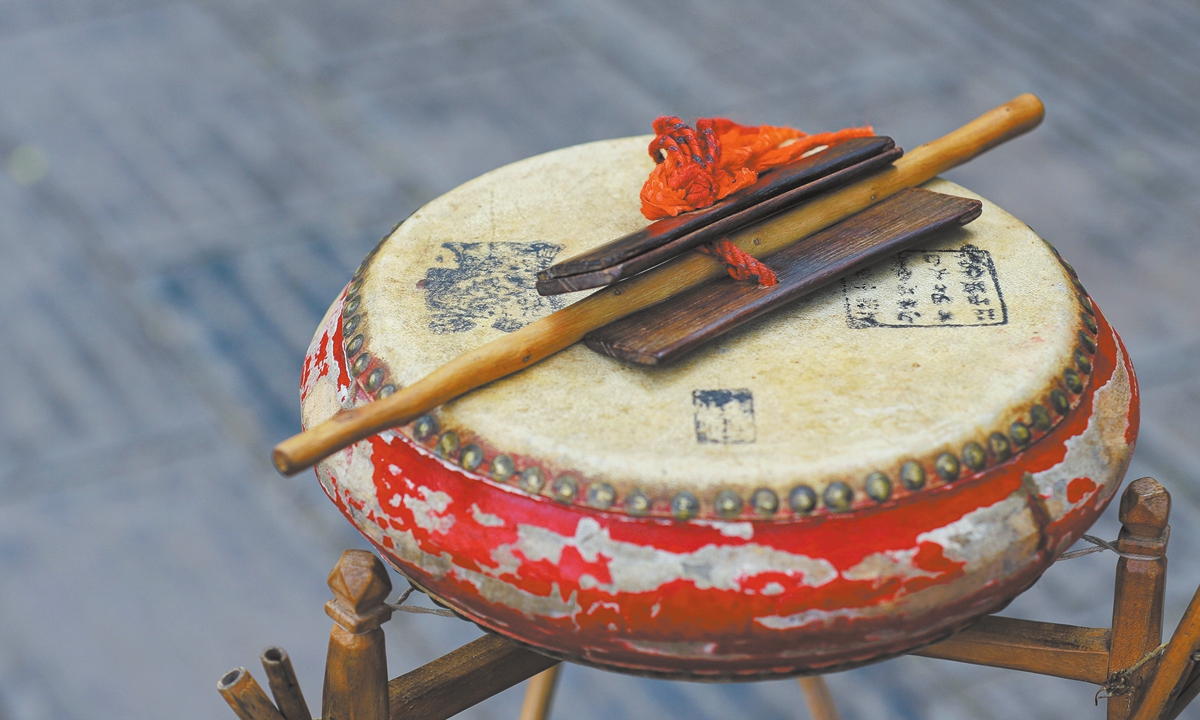
A drum set for performing "Jingyun dagu" (Beijing drum singing) Photo: VCG
RELATED ARTICLES