GT on the spot: Provisional Government of Republic of Korea site in Shanghai draws interest from Chinese and S.Korean tourists, local residents, amid President Lee Jae-myung’s visit
By in Shanghai and Sun Langchen in Beijing Published: Jan 07, 2026 05:40 PM

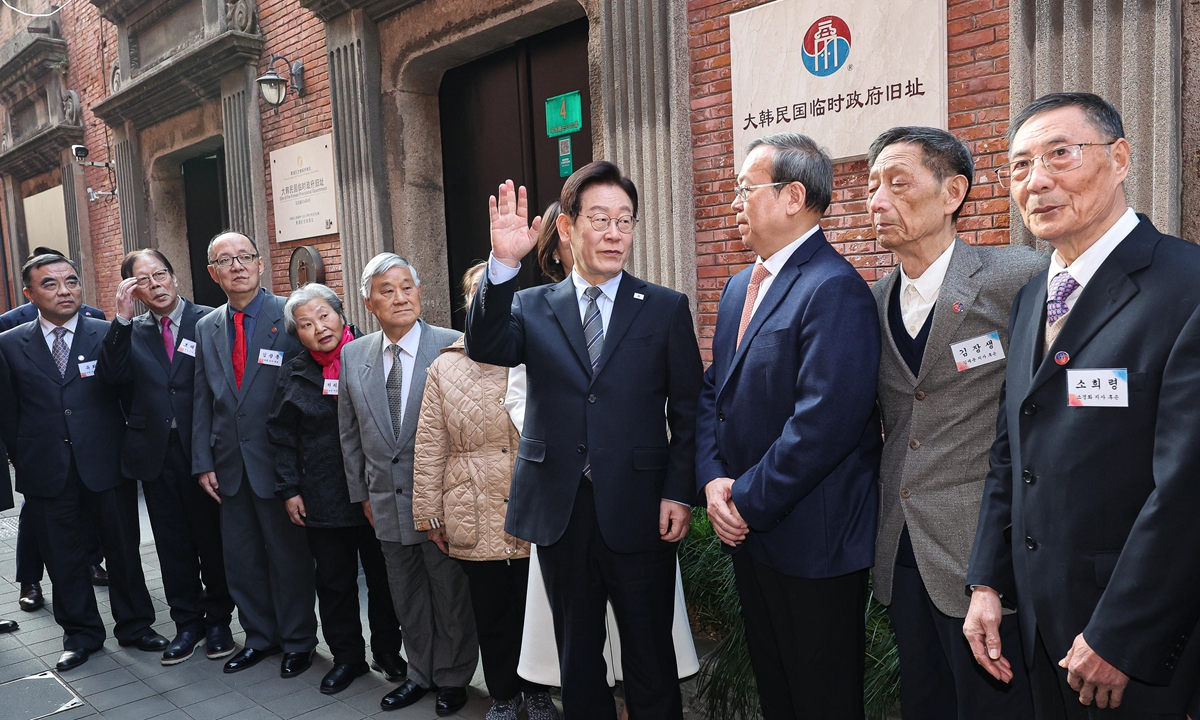
President of the Republic of Korea (ROK) Lee Jae-myung visits the historical site of the Provisional Government of the Republic of Korea in Shanghai. Photo: VCG
President of the Republic of Korea (ROK) Lee Jae-myung visited the historic site of the Provisional Government of the Republic of Korea in Shanghai on Wednesday afternoon, drawing hundreds of Chinese and South Korean tourists and local residents.
The site, located in a Shikumen alley in downtown Shanghai's Huangpu district around Xintiandi, was bustling under the afternoon sunshine, with the Global Times reporters seeing visitors walking around the historic buildings and stopping to take photos.
This year marks the 100th anniversary of the establishment of the current site in Shanghai, as well as the 150th anniversary of the birth of Kim Koo, a leading founder of the provisional government and a prominent Korean independence activist.
Joeng Kyung Hyun, a South Korean who has lived in Shanghai for more than 10 years, came to wait at the site. He told the Global Times that he had visited the location many times. "Our government right now started here," he said, "this is not only about the history of Korea, but there is also history of your Chinese government."
He went on to explain that he recognizes this place as bearing the shared history of China and South Korea's resistance against Japanese aggression. "It is a meaningful visit for him[Lee]," he said, "we always remember this place, this place is always in the center of our heart [and] of our korean history. So I'm very happy to see many Chinese people waiting for our president and then by the chance to see him."
The Provisional Government of the Republic of Korea bore witness to the shared history of the Chinese and Korean peoples in resisting Japanese aggression. The current site served as the office of the provisional government of Republic of Korea from 1926 to 1932. Since the establishment of diplomatic relations between China and the ROK in 1992, several South Korean presidents have visited the location, according to media reports.
The site of the Provisional Government of the Republic of Korea in Shanghai holds profound historical significance for Koreans. Therefore, since the establishment of diplomatic relations between China and South Korea in 1992, many South Korean presidents have visited this site to pay their respects, an act that has become almost a diplomatic convention, Dong Xiangrong, a senior research fellow at the National Institute of International Strategy under the Chinese Academy of Social Sciences, told Global Times in a previous interview.
At the scene, a South Korean tourist named Jay used a Korean-Chinese bilingual translator to display a message to people around him. It read: "The friendship and civic spirit shown by the Chinese people today deeply moved me. Thank you very much. I hope Korea-China cooperation will continue, and I wish everyone peace and happiness."
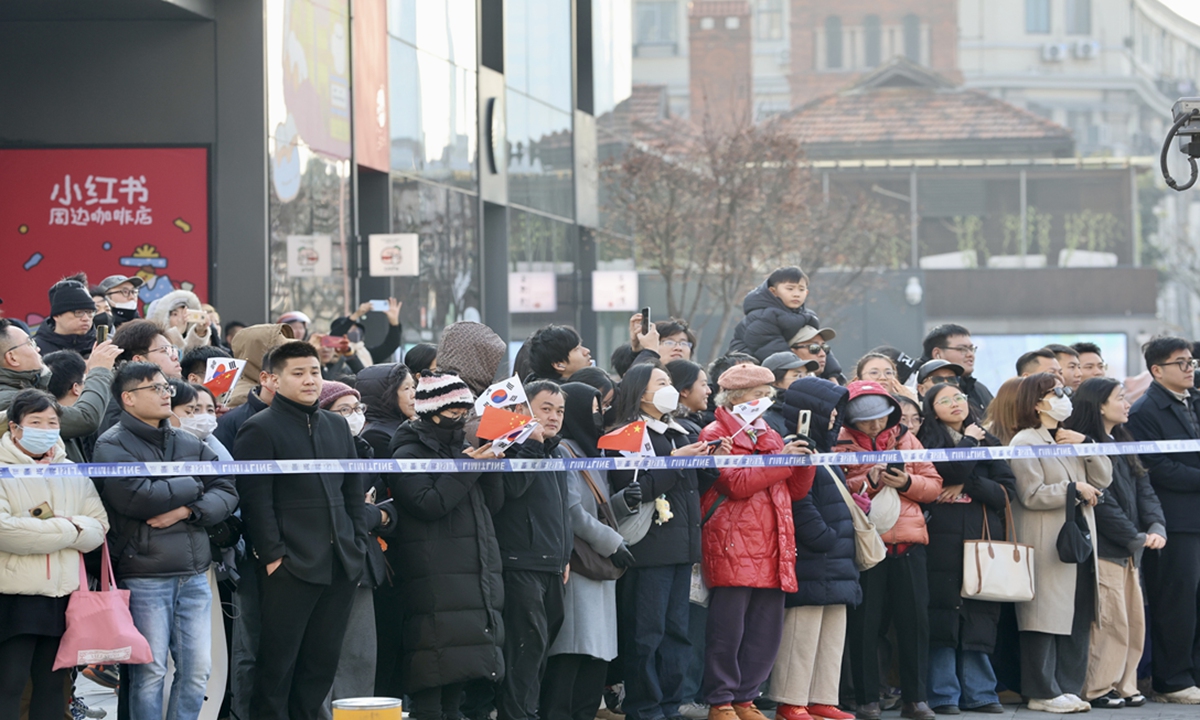
Tourists and local residents wait nearby as ROK President Lee Jae-myung visits the historical site of the Provisional Government of the Republic of Korea in Shanghai. Photo: Chen Xia/GT
Particularly since China introduced a visa-free policy for South Korean travelers in late 2024, a trend known in South Korea as "heading to Shanghai after work on Friday" has gained popularity, making the historic site and the nearby Xintiandi commercial district frequent stops for Korean tourists, according to media reports.
Yang Sanggyu, a 33-year-old Korean who works in trading business between China and South Korea in Shanghai who came to the site on Wednesday told the Global Times that Shanghai is "convenient," with "amazing food," and "as safe as Korea," expressing hope that President Lee would visit the city again. They said they hoped more Chinese tourists would also visit South Korea.
Cao Zhouyanger, a Chinese senior student who has long followed Korean culture told the Global Times they had not previously visited the provisional government site but planned to do so after work on Wednesday. They said they would recommend that Korean friends come visit the Bund and the site of the Memorial Hall of the First National Congress of the Communist Party of China so they could better experience Chinese culture.
According to a People's Daily commentary, international media interpreted Lee's choice to visit provisional government site as a place to "trace historical memory" as sending a clear signal that "historical issues have not yet turned the page." As nations that both made great sacrifices during World War II, China and South Korea should work together to safeguard the fruits of victory in the war and jointly safeguard peace and stability in Northeast Asia, the commentary said. This is necessary to defend historical justice and to build a peaceful future for the region.
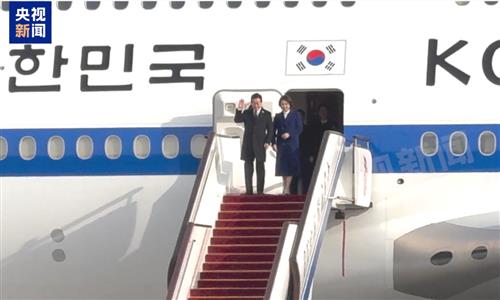
Lee arrived in Beijing on Sunday for a state visit to China from January 4 to 7, and Shanghai is second leg of his visit.
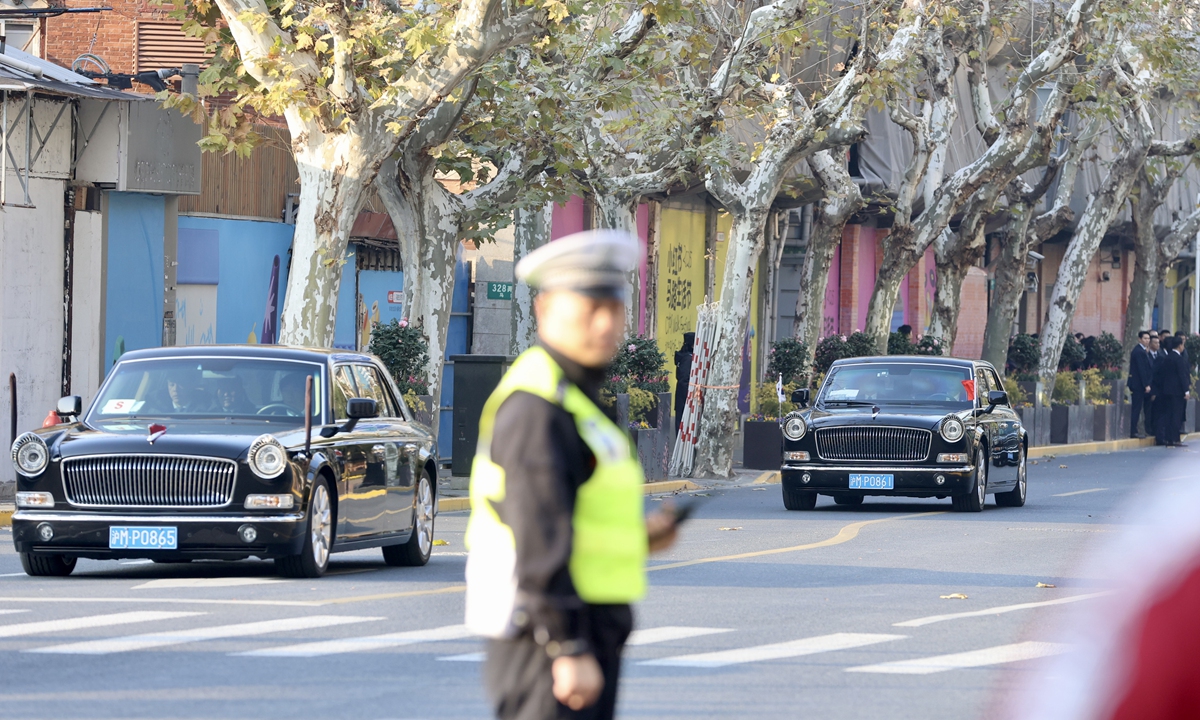
Motorcade of ROK president Lee Jae-myung Photo: Chen Xia/GT
RELATED ARTICLES