ARTS / CULTURE & LEISURE
'Where A Fleeting Life, Once Lived' – Zili Diaolou’s vibrant new exhibition in Kaiping
Century-old roots, transoceanic love
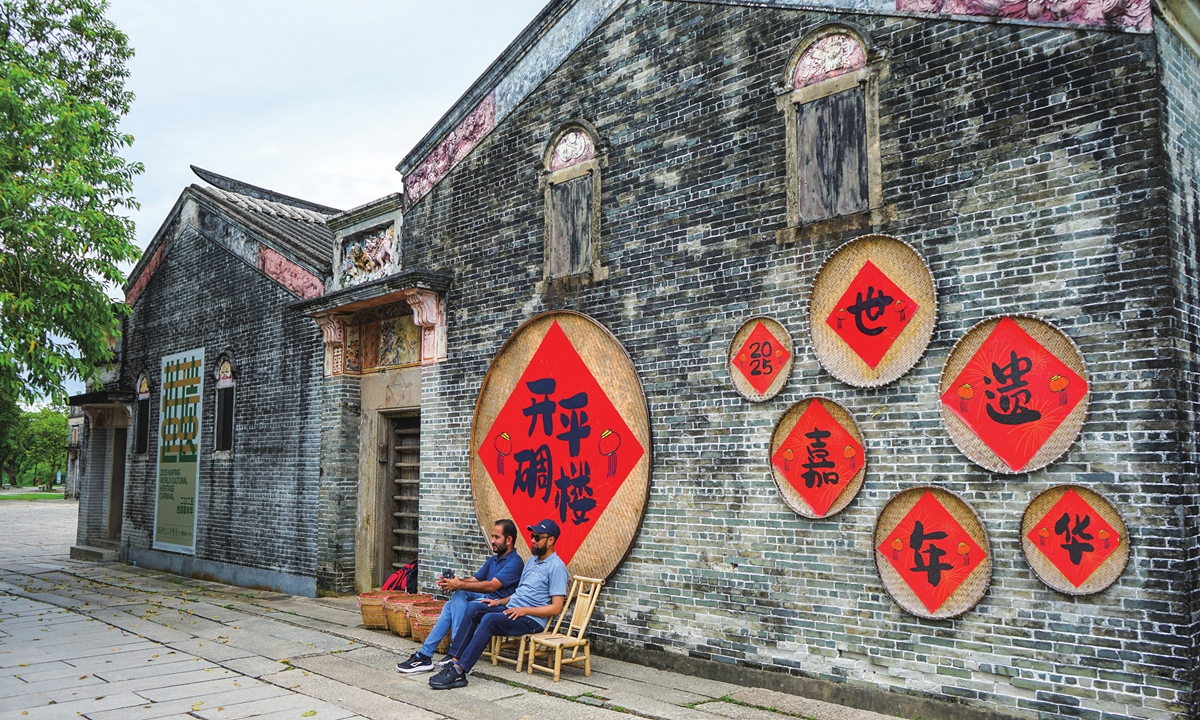
Visitors take a break outside a Kaiping Diaolou in Kaiping, South China's Guangdong Province, on August 24, 2025. Photos: VCG
This is an inspiring exhibition in the heart of southern Guangdong's Kaiping, famed for the Diaolou watchtowers, linked to old overseas Chinese communities in North America. Where A Fleeting Life Once Lived, a thematic exhibition of Yinonglu, on 5 floors of Yinonglu Diaolou, in the beautifully restored Zili scenic village, centers on how families, though oceans apart ultimately united, found the strength to survive through wars and upheavals, to support each other, building and now renewing century-old family homes and ties across the world.How can this long history across the seas holding so much loss be captured, so much we may never know? Families separated for decades, broken hearts; once beautiful houses built in the 1930s or earlier that our grandfathers never got to return to live in, abandoned after wars and revolutions, disrupted dreams.
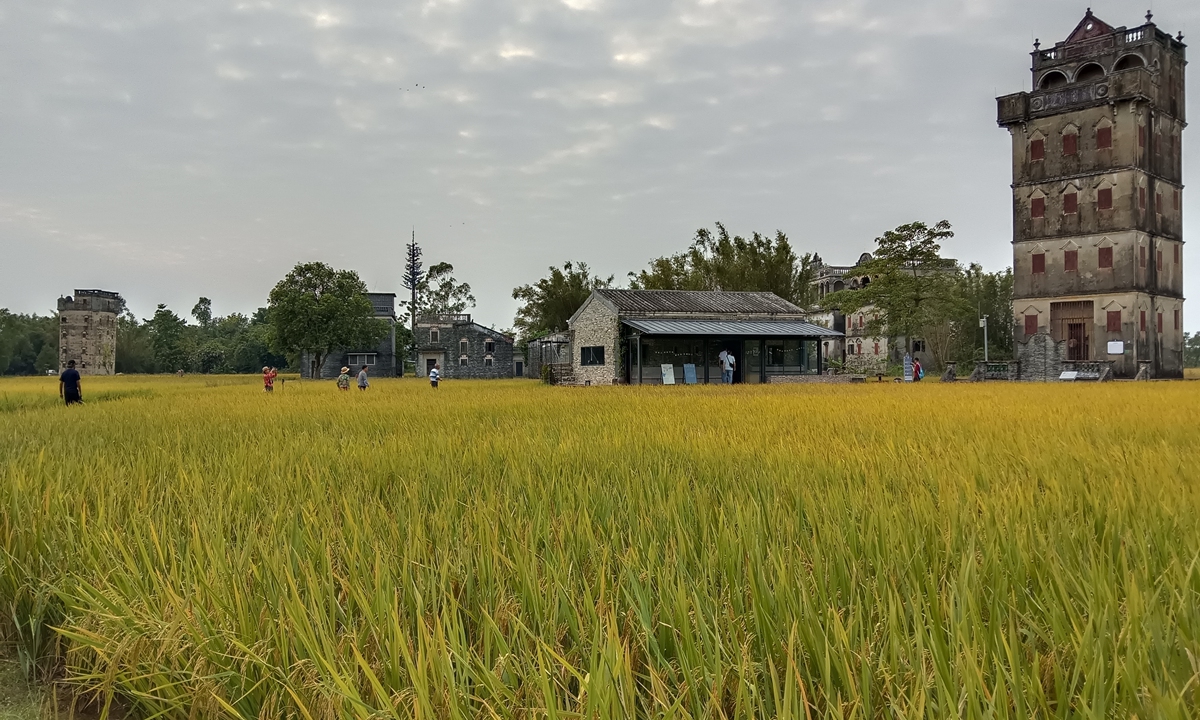
Kaiping's fortified Diaolou, hundreds of towers long deserted still standing strong, in old villages surrounded by green rice fields, representing the "Fleeting Life" of overseas Chinese whose backbreaking work in North America (to forge railways and tunnels through Rocky Mountains, in farms, family laundries, restaurants) built these remarkable, unique structures. These Diaolou and homes have been mostly empty for a long time.
The old villages like Zili restored to such beauty, and find an exhibition that powerfully, compassionately and exquisitely capture the heart of this complex history in this residential Diaolou.
I first held back tears, recognizing daily items like Chinese cookie tins (which looked exactly like those of my aunt and uncle's Toronto Chinatown shop), and reading a moving poetic description in English so even the foreign-born generations can understand. Through every room and display, I kept saying, oh wow, I can relate to that… those old photos like our family photos (which we had few of)… that's what I always wanted to say, but could never quite find the words (heartfelt dialogues between Gordon Fong, wife Clare and their Canadian/Hawaiian grandchildren). It was like a 60-year-old dam finally burst, letting us finally weep… but also just marvel at the simple yet profound expressions of love and resilience through history across separated generations.
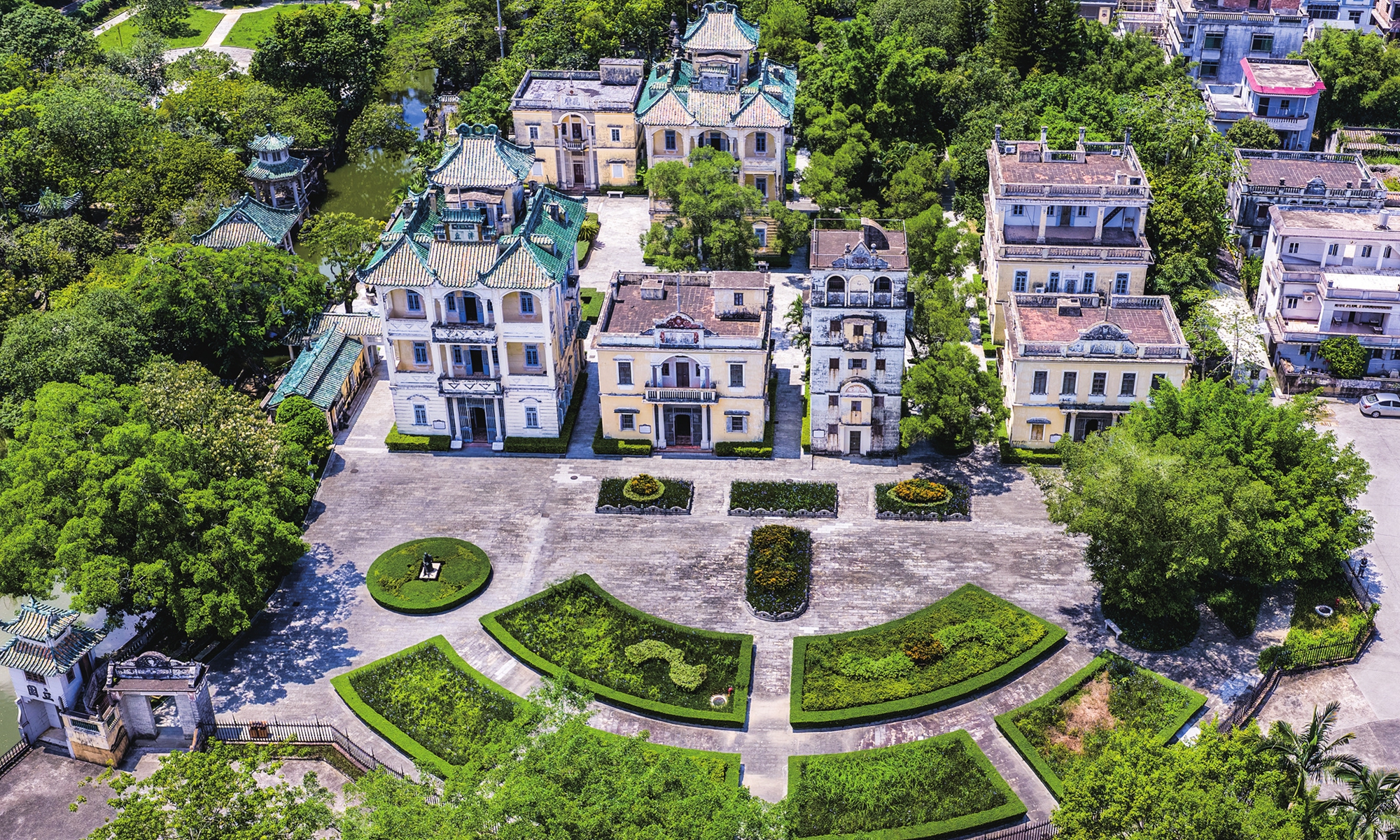
An exterior view of Kaiping Diaolou
Once livedIt was like hands reached across what I once thought was an unbridgeable, unfathomable divide, saying: Here, we're all like you, our families, full of love, and yes pain... While growing up torn between two worlds we could often find no words, or afraid to voice like breaking glass or ice, or only too late… Across 100 years of history our lives have brought us back here. This exhibition is a must see, for its simple truths linking family and history with such love. It should be put online, for those who can't make the over-16-hour flights - but there's nothing like being here, even touching the interactive displays, seeing it within this lovely land of green rice fields and hills. So accessible now, an hour train ride from Guangzhou, the capital of South China's Guangdong Province, 2 hours from the Hong Kong Special Administrative Region.
Co-curators Liu Yang Luya, and Fu Zhengchao shared, "We tried not to tell history from an elite perspective, but instead through the stories of ordinary families. This exhibition presents the marriage stories of several generations: filled with warmth and hardship, the awakening of women in the villages, how overseas Chinese took root in foreign lands. Ultimately, we explore the question of what 'roots' mean and understand our heritage." The beautiful translations were done by Vancouver's University of BC grad Cheng Sijia.
An exterior view of Fong's Café Photo: Courtesy of May Yee
Each floor/room of the Diaolou represents a family, different eras and lands, their work and love, from caring for babies to finally for aging parents, as the youngest Fong son did, returning to live on the top floor. The well-designed displays are thought-provoking, making visitors think hard yet tenderly about the actual lives of past residents, and our own lives, most of us coming from cities with our parents linked to villages like these. Unexpected glimpses of the Fong grandchildren's lovely Chinese opera paintings or Canadian landscapes, are mirrors that allow visitors to see themselves in living history. After the exhibit, nearby Fong's Café, named from the 1930s Montreal family restaurant, provides the perfect place to relax and enjoy the scenery.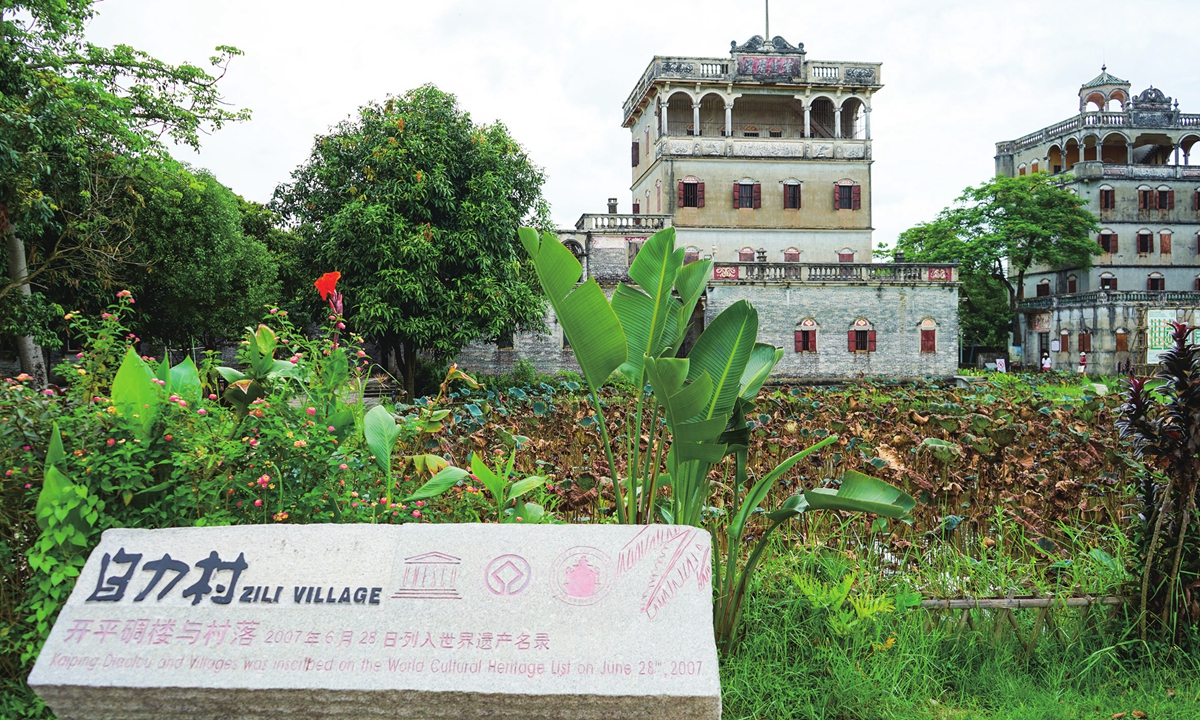
Zili village
Zili as our own power?In this quickly changing world we might all feel like migrants seeking roots across the turbulent seas of history, beyond the control of our seemingly powerless hands. Yet this exhibition shows ordinary people's real struggle to survive, ultimately thriving, helping us understand the forces that our parents and all who came before us had to confront… First unsure about the title, I then realized how aptly "A Fleeting Life" encapsulates what this exhibition beautifully captures, within this Diaolou, in this small village linked to big cities in Canada, in this region still steeped in rural living with ancient rituals venerating ancestors.
A Fleeting Life, with its familiar everyday artifacts of our family lives and heartfelt poetic words, reminds us of ordinary people's extraordinary strength and humanity. In an uncertain world, it's important to ground ourselves, remembering the countless generations of ancestors buried here - holding onto the power of collective historical memory.
This exhibition renews traditions while honoring the great sacrifices and often unspoken love of our fathers, mothers and great/grandfathers who crossed oceans, back and forth, to work so hard for families left at home, of great/grandmothers who earlier stayed to raise children from these deep roots. It's a tribute to these beautiful if broken homes, still here, that villagers spread across the world once built with love.
Especially for those of us growing up forever being asked, Where are you from? - here we can finally find a deeper wider answer.
The author is an English book editor based in Toronto and Sri Lanka.
RELATED ARTICLES