ARTS / CULTURE & LEISURE
Museum exhibitions herald cultural start to 2026 across China
By Published: Jan 05, 2026 10:30 PM

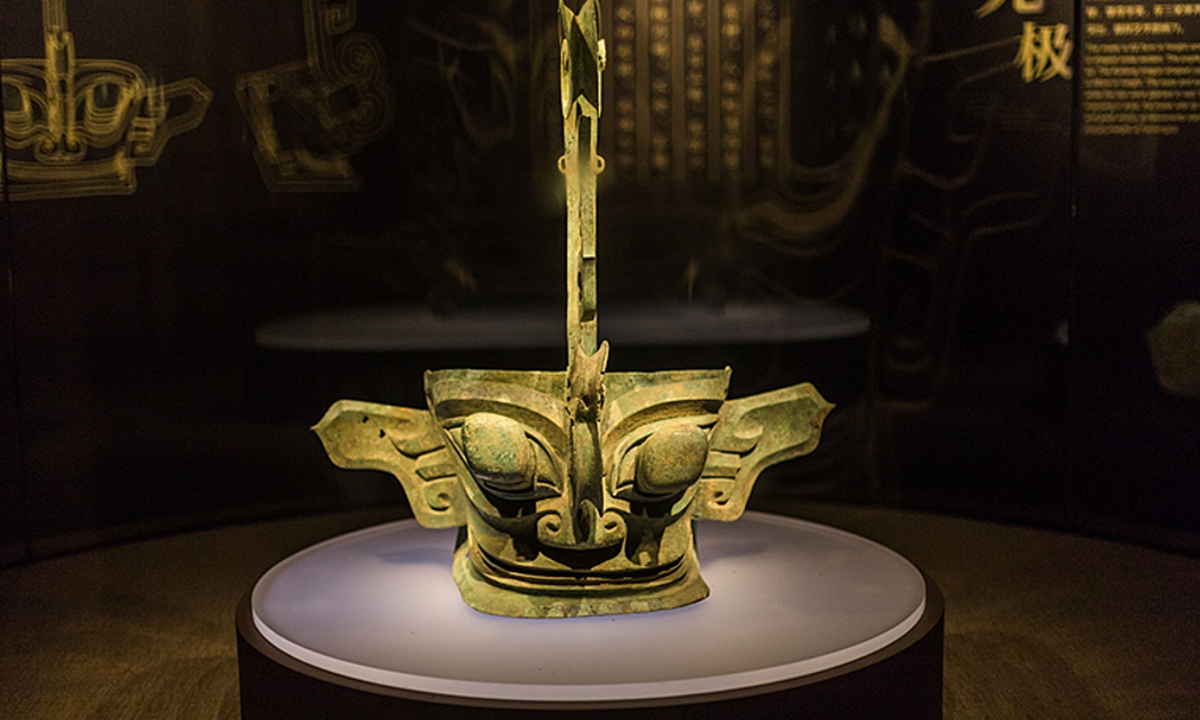
A bronze mask from the Sanxingdui ruins Photo: VCG
As 2026 begins, China's leading museums and cultural institutions are unveiling ambitious exhibition schedules, promising art and history enthusiasts a feast of showcases throughout the year. The emergence of high-quality exhibitions is a reflection of the public's enhanced demand for culture and an active return to their cultural roots, experts noted.One of the most anticipated centers on the cultural relics of the ancient Shu civilization that were unearthed from the Sanxingdui and Jinsha ruins. It is scheduled to open in January at the National Museum of China in Beijing and run through August.
This exhibition brings together over 200 artifacts from the renowned Sanxingdui Museum and Jinsha Site Museum in Southwest China's Sichuan Province, including many "star relics" of the ancient Shu Kingdom. Highlights include the iconic golden mask, gold crown band, the crowned bulging-eyed mask, a bronze figure with gold face covering, bronze masks, standing bronze figures, and the gold sun and immortal bird emblem - an artifact that will be shown for a limited time only.
These treasures, emblematic of the mysterious and advanced civilization that flourished in China's Sichuan Basin over 3,000 years ago, are set to offer visitors a glimpse into the artistry and technological achievements of the ancient Shu people, according to information on the website of the National Museum of China.
The Shanxi Ancient Architecture Museum welcomed 30 representative statues in the new year, showcasing their artistic charm and cultural spirit from the perspective of religious aesthetics. Among them is a masterpiece of Tang Dynasty (618-907) Taoist art - a statue over 2.6 meters tall, carved from white marble, with an imposing presence. The exhibition also features two Tang Dynasty four-sided statue steles, both rare Buddhist stone carvings with clear inscriptions of their dates, according to information provided by the museum.
These exhibits have brought many surprises to researchers. A staff member with the museum told the Global Times on Monday that a stone tower, previously placed in the corner of the duty room, turned out to be from the Tang Dynasty. It also features a rare coiled dragon pillar and a figure of a guardian. Additionally, new inscriptions were deciphered on the four-sided statue stele that was originally stored in a cave dwelling.
Elsewhere, the Hong Kong Palace Museum has announced an ambitious lineup of nine new exhibitions for 2026. These include four newly curated special exhibitions in collaboration with the Palace Museum in Beijing, as well as three international joint exhibitions. Additionally, the museum will present two new thematic exhibitions, one featuring multimedia works by Hong Kong artists inspired by Chinese mythological creatures, highlighting the city's thriving contemporary art scene, according to the museum.
During the New Year's holidays, museums across the country, such as the Shanghai Museum, welcomed tens of thousands of visitors. Cultural venues like museums and archaeological parks continued to experience high popularity, with large crowds choosing to celebrate the New Year at such locations.
Zhang Peng, a cultural researcher and associate professor at Nanjing Normal University, told the Global Times on Monday that the historical depth and cultural solemnity embodied in exhibitions provide a more profound anchor of meaning for the start of the New Year. This is why more people are inclined to spend the holiday at cultural venues.
"The growing cultural demand has spurred the creation of more high-quality exhibitions. In these new exhibitions, traditional culture is being creatively transformed in ways that are younger and more relatable to everyday life," Zhang noted.
RELATED ARTICLES