ARTS / CULTURE & LEISURE
Pictorial stone carving inscribed with place name ‘Lishi’ discovered for first time in Shanxi
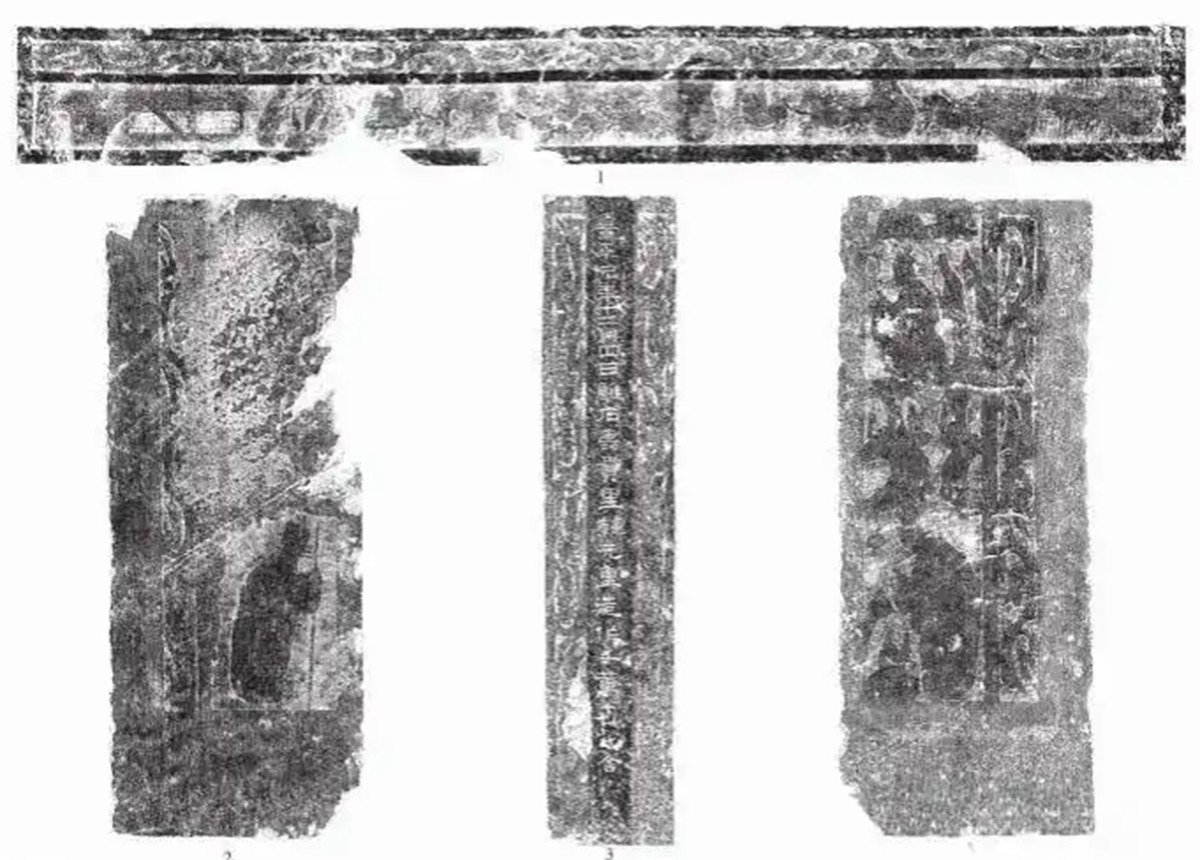
Photo: web
Archaeologists in North China's Shanxi Province have announced the first-ever discovery of a Han Dynasty (206BC-AD25) pictorial stone carving bearing the county name "Lishi," referring to present-day Lishi district in Lüliang, Shanxi, a finding that offers rare physical evidence for understanding political change and social life in the region nearly 2,000 years ago.Pictorial stone carvings were primarily part of funerary architecture, appearing not only in tombs but also in ancestral halls and other ritual sites, making them essentially a form of ritual funerary art, Zhang Liang, professor at the School of Archaeology and Museology of Shanxi University, who led the archaeological research, told the Global Times.
Four relatively well-preserved Han Dynasty pictorial stone carvings were collected in 2022 from a local village. Subsequent research determined that the stones originally belonged to a single tomb, according to the Shanxi Provincial Institute of Archaeology.
The four pictorial stone carvings are all made of locally sourced reddish-brown sandy shale. "This relatively soft and easily quarried stone not only provided an abundant and convenient material for making pictorial stone carvings, but also naturally encouraged a carving technique dominated by shallow relief, supplemented with inked outlines," noted Zhang.
One of the stones bears an inscribed text in Han clerical script that clearly records the tomb owner's name, place of origin and the date of the tomb's construction. Most notably, the inscription includes the name "Lishi," marking the first time the toponym has been found on a Han Dynasty pictorial stone in the Lüliang area.
Lüliang is currently the only known region in Shanxi Province where Han Dynasty pictorial stone carvings have been found, and it is considered one of China's important distribution areas for such artifacts. Since the first discovery in 1919 at Mamaozhuang village in Lishi county, nearly 300 Han pictorial stone carvings have been unearthed or collected.
According to Zhang, Lüliang was a key northern military stronghold of the Han Dynasty. This strategic position brought continuous population movement, troop deployments, and the flow of goods, creating a dynamic social foundation that supported cultural exchange and the development of burial customs. To strengthen border defenses, the Eastern Han (25-220) government implemented large-scale military-agricultural settlements in the north. This policy directly promoted agricultural development and economic accumulation in Lüliang, providing the material resources necessary to support lavish burial practices, such as the construction of tombs with pictorial stone carvings.
Previous inscriptions on Han Dynasty stone reliefs unearthed in Lishi record two types of toponymic information. One type specifies both the tomb occupant's place of origin and the location of official service, whereas the other records only the place of origin. According to existing research, most of these places of origin are located in what is now northern Shaanxi Province.
Under the Han funerary convention of burial in one's native place, officials who served away from home would normally have been returned to their place of origin for interment. Contrary to this practice, however, these tombs are found to be densely concentrated in Lishi.
"The inscription on the pictorial stone carving helps explain why the artistic style of Han pictorial stones in Lüliang closely resembles that of northern Shaanxi. The style was not indigenous to the area but was brought by migrants, making it a vivid example of cultural transmission and the blending of communities in China's border regions," Zhang told the Global Times.
The newly collected stone reliefs share the style and themes of earlier Lüliang Han reliefs while showing some unique features, providing valuable material for studying the region's Han-era political and social culture, noted Zhang.
RELATED ARTICLES