ARTS / ART
Reimagining couplets for modern expression
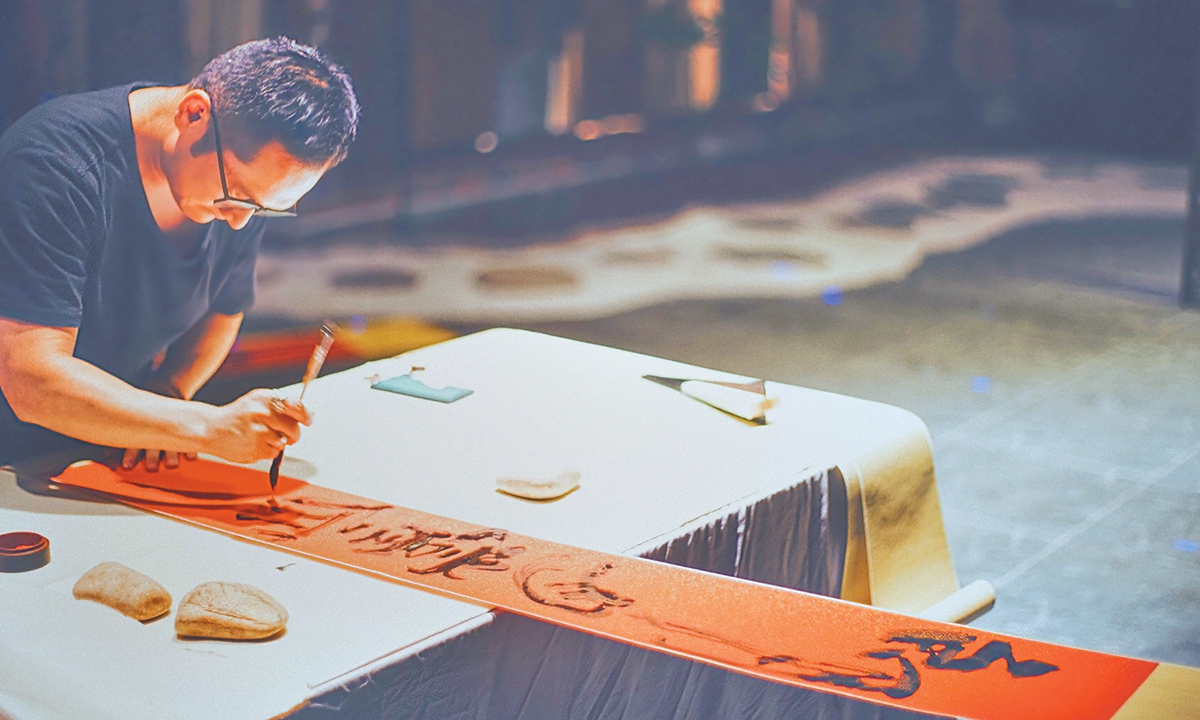
Huang Xinping, a couplet creator Photo: Courtesy of Huang Xinping
As residents across China are handwriting festive couplets and the character fu (fortune) to ring in the Chinese New Year, new content and creative designs have breathed new life into the tradition as topics related to the ingenuity on display have also gone trending on social media recently.Couplets (chunlian or duilian in Chinese) are traditional Chinese poetic verses, usually written on red paper, featuring two parallel lines that express good wishes and are often hung on the door during the Spring Festival in anticipation of a prosperous new year.
The earliest couplets date back to the Five Dynasties and Ten States (902-979), according to the Xinhua News Agency.
Bu Xiting, an associate researcher with the School of Cultural Industries Management at the Communication University of China, told the Global Times that Spring Festival couplets are a treasured gem of traditional Chinese culture that integrates elements of history, literature, art, and philosophy.
Currently, the couplets flanking doorways are no longer limited to familiar auspicious phrases. Hand-drawn illustrations blended with calligraphy, animated and rotating digital couplets, and playful wordings built around the zodiac animal of the year have all emerged as alternatives, Huang Xinping, a designer and member of the Hunan Designers Association, told the Global Times.
These "creative Spring Festival couplets" are becoming a new medium through which younger generations articulate their wishes for a new year and personal outlook on life, Huang said.
Chang Jiang, a couplet creator and culture blogger from Northwest China's Shaanxi Province, told the Global Times that today's Spring Festival couplets, while preserving the traditional elements of red paper, black ink, and balanced rhymed lines, have seen breakthroughs in both content and form.
"The wording is more concise. It is more visually and emotionally expressive, resonating with the younger generation by addressing their emotional needs. This evolution reflects a broader shift in how people understand and relate to Chinese New Year customs," said Chang, who has crafted couplets for eight years.
Heartfelt emotion
In addition to hanging it besides doors, designers and artists have transformed couplets into dynamic visuals, interactive formats, and shareable content for social media, while also adapting them into phone wallpapers, door stickers, and small decorative objects for everyday use.
Huang noted that this creative leap allows a centuries-old tradition to circulate far beyond the threshold of the home, demonstrating how a few lines of text can evolve into a flexible cultural medium.
"For example, by incorporating traditional patterns, we have introduced new elements such as illustrations and English into the couplets, making them feel more fashionable and engaging to young people and international users," said the designer.
In Chang's view today's couplets have broken free from the traditional two-line format, offering more playful options - for example, inserting five smaller characters between two large ones. Some of these creative ideas are not planned in advance but emerge spontaneously through interaction with users.
Both Huang and Chang emphasized the importance of preserving the practice of handwriting couplets, viewing it as a warmer and more emotionally resonant form of expression in a digital age where the act of writing has nearly been forgotten.
"Although the handwritten traces may sometimes be imperfect, people value them for the vivid, tactile quality they leave on paper - one that conveys authenticity and natural, heartfelt emotion," Chang noted.
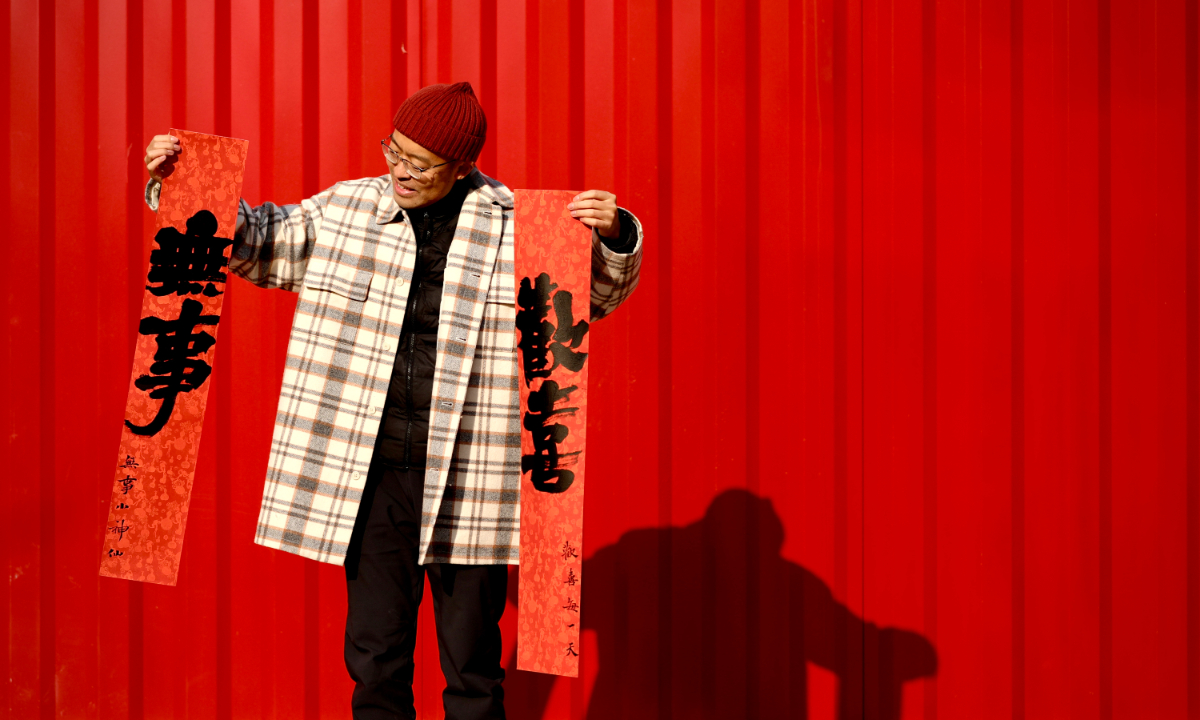
Chang Jiang shows his couplet. Photo: Courtesy of Chang Jiang
Continued renewal
Anchored in the classic red-and-black palette, today's couplets are being reimagined through experiments and expanded uses. Some museums and cultural institutions have turned the calligraphy work into cultural and creative products.
In the Chinese New Year gift box rolled out by the Palace Museum, Spring Festival couplets were designed with typefaces and patterns drawn from those preserved in the Palace Museum's collection.
With lotus motifs unfolding gracefully and auspicious clouds swirling, colors and patterns drawn from Dunhuang Academy murals have also been transformed into Spring Festival couplets and presented as Chinese New Year gifts.
"Driven by the call for creative transformation and innovative development, the "living inheritance" and modern reinterpretation of traditional couplet culture have become both a growing trend and an inevitability of our time," said Bu.
As exploration of Spring Festival couplet-themed cultural products continues to deepen, precise contemporary expression and emotional connection are enabling this ancient festive tradition to continue to renew itself and flourish in modern life, Bu added.
Huang said that each year he explores new approaches to designing Spring Festival couplets, such as experimenting with more colors and integrating AI. His goal is to use couplets to spark interest in traditional Chinese calligraphy among young people and international audiences, applying more fashionable designs across a variety of settings.
From the warmth of handwritten brushstrokes to embracing the possibilities of digital technology, both traditional and experimental creators are navigating a delicate balance between preservation and reinvention. Rooted in the cultural logic of symmetry, rhythm, and calligraphic beauty, today's couplets are infused with symbols of the present day.
In this ongoing process of renewal, Spring Festival couplets are no longer merely seasonal decorations, they have become a living cultural language, capturing how modern Chinese society understands the festival, tradition, and everyday life itself.
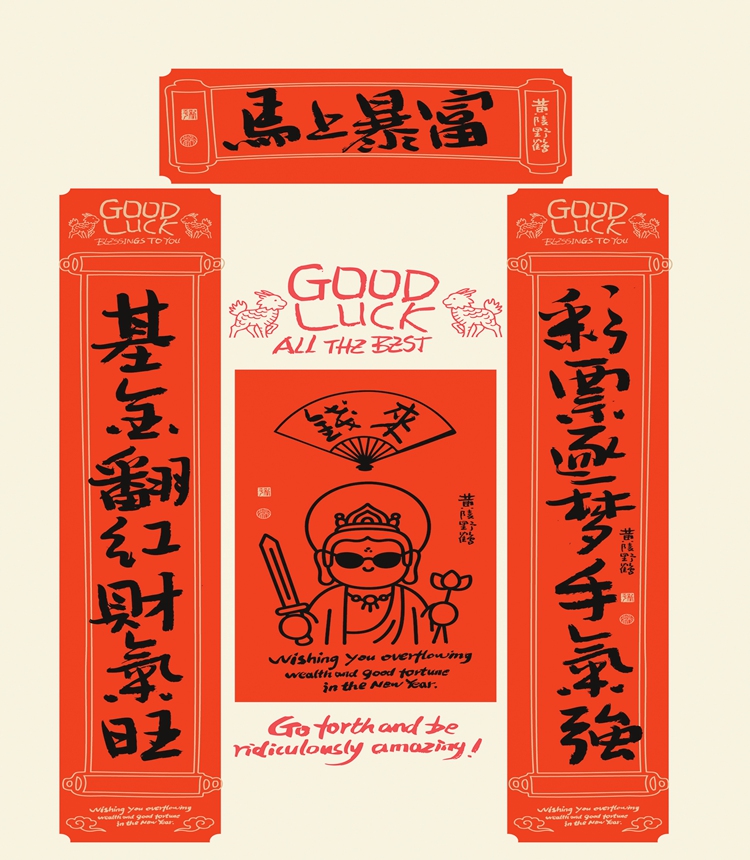
Huang Xinping's creative couplets Photo: Courtesy of Huang Xinping
RELATED ARTICLES