Made in China, delivered to Europe in 35 days: how a vacuum robot reaches the world
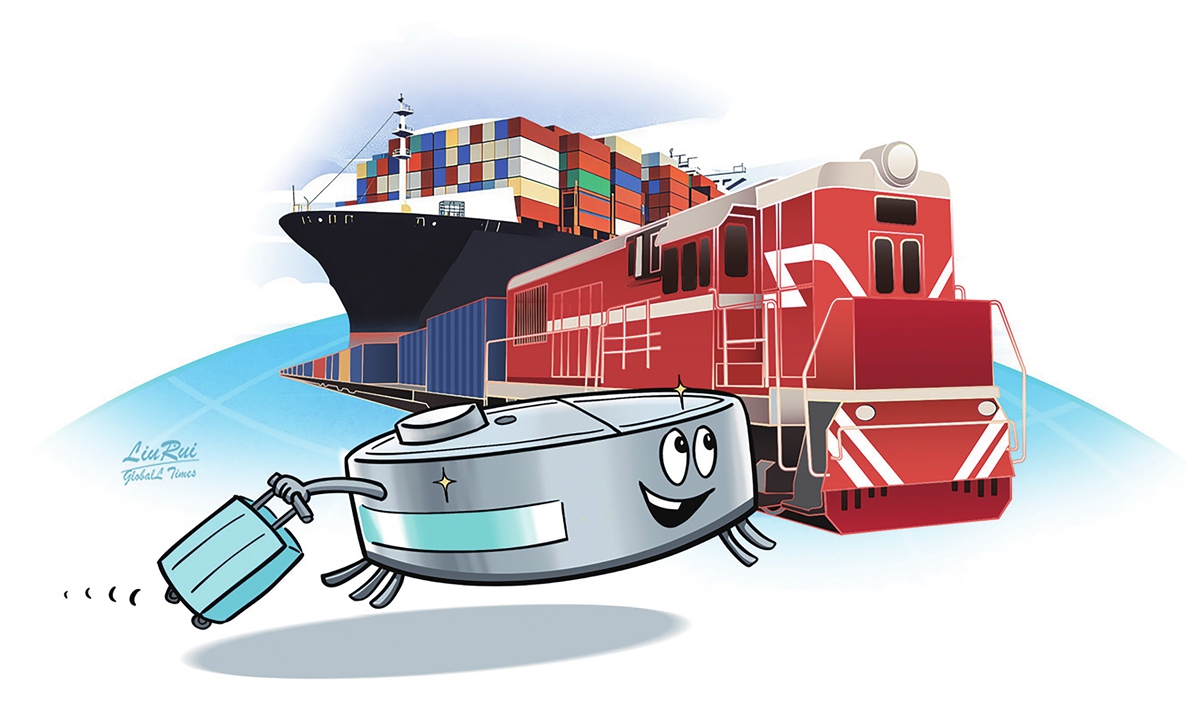
Photo: Liu Rui/GT
Robotic vacuum cleaners produced in South China's Guangdong Province can now reach European ports in roughly 35 days, according to media reports - an unremarkable statistic that offers a revealing glimpse into China's trade links with the rest of the world. In an era increasingly defined by stable supply chains, delivery time has emerged as one of the clearest indicators of manufacturing efficiency.
Citing officials at Shenzhen customs, China's state broadcaster CCTV News reported on Sunday that exports of robotic vacuum cleaners and other types of vacuum cleaners from Shenzhen reached 11.12 billion yuan ($1.59 billion) in the first 11 months of 2025, rising 71.8 percent year-on-year. Growth was uneven across major markets: exports to the EU jumped 121 percent, while exports to the US rose by 5.4 percent, and exports to the ASEAN increased by 50.2 percent.
On the manufacturing side, robotic vacuum cleaners demonstrate the growing maturity and prowess of China's industrial sector. Their production involves precise assembly and coordination, reflecting the operational sophistication that underpins the broader smart appliance industry.
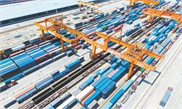
On the delivery side, the journey from the factory floor to overseas consumers involves a complex logistical chain. According to CCTV News, containers at Shenzhen's Yantian Port are being systematically loaded onto vessels bound for Europe. Through the "Yantian Port-Europe" express corridor and a set of streamlined procedures, the overall logistics cycle has been cut by more than 30 percent, highlighting the contribution of efficient delivery networks to China's strong trade resilience.
Looking at the bigger picture, China's delivery networks are evolving rapidly across multiple modes of transport. A report in the People's Daily noted that China-Europe (Changsha) freight trains ran 1,037 services in 2025, exceeding 1,000 for the fifth consecutive year, and bringing the cumulative total to more than 6,500. The figures point to both the scale and growing efficiency of those rail corridors, forming an integral part of a more diversified and resilient logistics system.
Beyond rail and maritime transport, road, air, and multimodal logistics are increasingly integrated into the broader delivery network. The expansion of these complementary channels reflects a wider trend: China is gradually strengthening connections not only with Europe but also with other major economies, creating a more complex and adaptable logistics network.
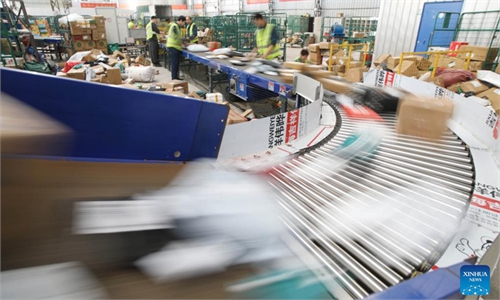
Improvements extend beyond the transport modes themselves. Regional distribution hubs, streamlined customs processes, and more efficient storage practices all contribute to shortening delivery time and reducing uncertainties. Together, these incremental developments illustrate a logistics ecosystem that is progressively more responsive and robust, underpinning the stability of China's trade flows without relying on any single route or mode.
Returning to robotic vacuum cleaners, the evolution of the delivery networks allows Chinese manufacturing plants to connect more efficiently with overseas consumers. By positioning stock in advance in foreign markets, companies can ensure that new products reach customers promptly and reliably. This logistical capacity helps explain the growth of Shenzhen's exports of robotic vacuum cleaners over the past year.
The delivery networks that support China's exports play a positive role in facilitating imports too. By shortening transit time and enhancing predictability, they enable foreign goods to reach China's home market more efficiently, backing up inventory management and a more responsive supply chain.
Several elements of this system contribute to the efficiency. Streamlined customs procedures, integrated logistics hubs, and multimodal transport help move goods quickly and at lower cost. The mechanisms broaden the range of products available to Chinese consumers and allow companies to respond more nimbly to domestic market demand.
These networks also link foreign manufacturers directly with China's huge market. Their speed and reliability support emerging business models, including cross-border e-commerce, which relies on the rapid delivery of low-cost shipments. In doing so, logistics improvements affect not only trade flows but also consumption patterns and commercial sector innovation.
The 35-day journey of a robotic vacuum cleaner from a Guangdong factory to a European port illustrates the tangible impact of these networks. Behind that statistic lies a sophisticated system of transport, warehousing, and coordination, creating greater opportunities for both exporters and importers.
The author is a reporter with the Global Times. bizopinion@globaltimes.com.cn
RELATED ARTICLES