Chinese government unveils 14 new measures to boost high-quality growth of ‘silver economy’
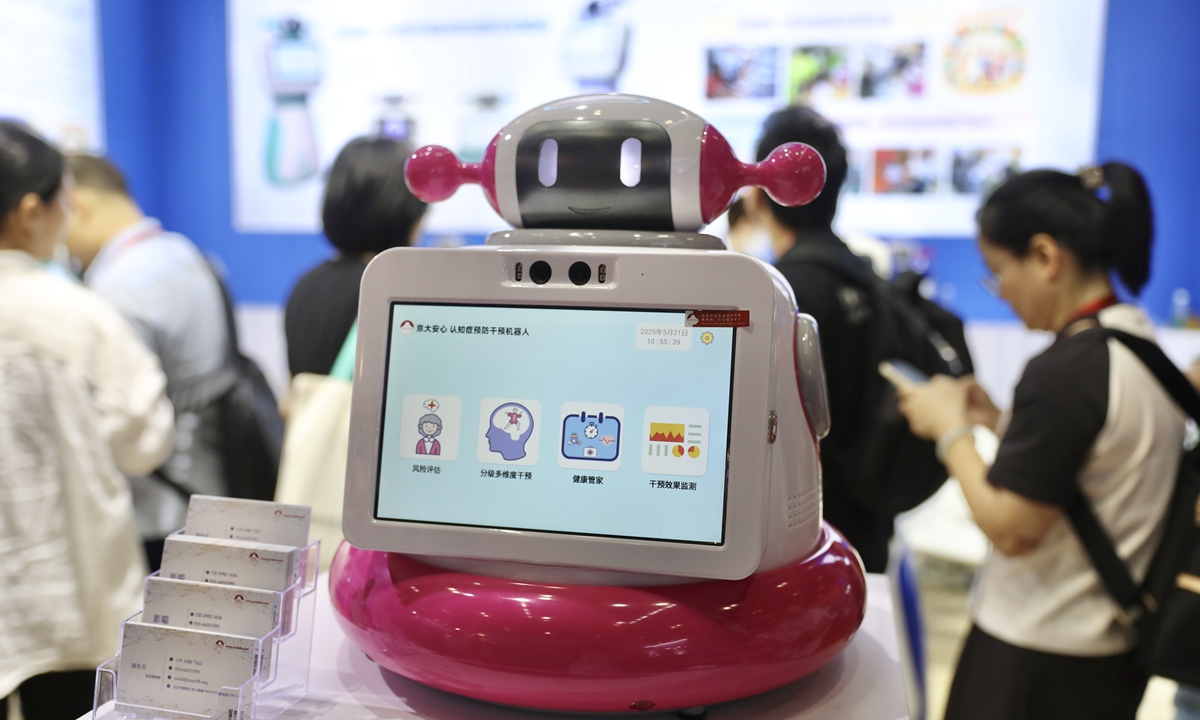
A service robot welcomes visitors at an eldercare service expo in Beijing on May 21, 2025. The expo displays a variety of products, including companion robots and smart household products. Photo: VCG
Eight Chinese government agencies, including the Ministry of Civil Affairs (MCA), the National Development and Reform Commission (NDRC), and the Ministry of Commerce (MOFCOM), on Tuesday unveiled 14 measures on cultivating eldercare service entities and promoting the development of the silver economy, aiming to boost the high-quality development of China's eldercare services and the silver economy, according to a document on the MCA's website.
"Currently, China's population aged 60 and above has reached 310 million. Promoting the construction of an eldercare service system suitable for China's national conditions and vigorously developing the silver economy is not only necessary for actively responding to population aging and enhancing the well-being of the elderly, but also an important lever for cultivating new economic drivers and expanding domestic demand," Li Banghua, an official of the MCA, said on Tuesday at a press conference on the release of the document.
According to the document, efforts will be made to support chain-based eldercare service entities in accelerating brand building, promote market-oriented supply-demand alignment in eldercare services, strongly support technology empowerment in eldercare services, optimize the development environment for eldercare services, and increase the intensity of factor support.
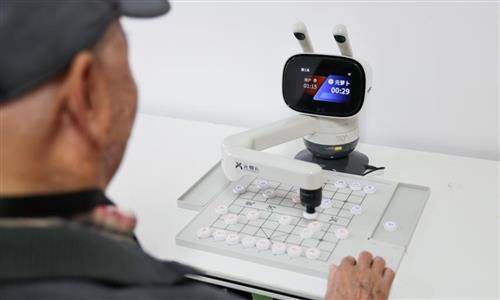
As for the integration of technology into eldercare services, the document stressed that efforts should be made for digital and intelligent upgrading within the industry, integrating frontier technologies such as big data, cloud computing, artificial intelligence (AI) and China's self-developed BeiDou navigation technology into health monitoring, safety alarms, and personalized customized services for seniors.
These government agencies also encouraged the development of the eldercare robot industry, while calling for the acceleration of research and development of products such as embodied intelligent technology, emerging material technology, and gene technology, and actively exploring technologies such as brain-computer interfaces, exoskeleton robots, and muscle exoskeletons to provide technological support for the elderly with declining physical functions.
"The release of the document marks part of the country's overall efforts to boost the high-quality development of the eldercare service sector. Along with the expansion of China's elderly population and the transformation of concepts of eldercare consumption, the enormous market potential of eldercare service consumption will be continuously unleashed," Li Changan, a professor at the Academy of China Open Economy Studies under the University of International Business and Economics, told the Global Times on Tuesday.
It has been estimated that China's silver economy is currently worth about 7 trillion yuan ($989 billion). By 2035, it could reach 30 trillion yuan and account for 10 percent of the country's GDP, the Xinhua News Agency reported in November.
The silver economy is expected to give rise to new industries on the trillion-yuan scale such as health care and smart eldercare. Meanwhile, the development of the silver economy will boost technologies such as AI and the Internet of Things in reshaping eldercare models, enhancing the efficiency of eldercare services, and comprehensively improving the well-being of seniors, Li noted.
In recent years, Chinese technology firms have accelerated integration into the eldercare service industry. For example, Chinese AI company iFlytek has rolled out AI home-based wellness care service, which provides health and medical care services for the elderly in areas such as heart rate detection, online medical consultation, and health records based on TV screens.
To address the care needs of a domestic wellness group, Shenzhen-based PaXini Tech can tailor and develop a comprehensive solution for its humanoid robot, TORA-ONE. Across various aspects such as daily care, health management, and medical rehabilitation, the humanoid robot TORA-ONE can efficiently assist healthcare professionals in fulfilling tasks based on specific scenarios, ensuring better recovery and wellness outcomes for patients and the elderly, according to the company.
Wang Bo, deputy director of the department of trade in services and commercial services of the MOFCOM, highlighted the ministry's efforts in multiple aspects in increasing the supply of high-quality eldercare services and promoting the development of the silver economy.
The official stressed that efforts will continue to expand opening-up. "The MOFCOM is actively expanding comprehensive pilot programs to accelerate the services industry's opening-up and it encourages pilot provinces and cities to conduct explorations in relevant fields. In collaboration with the NDRC, we have unveiled the 2025 version of the Catalog of Encouraged Industries for Foreign Investment, which newly includes encouraged categories such as 'manufacturing of elderly supplies and related products'," Wang said.
RELATED ARTICLES