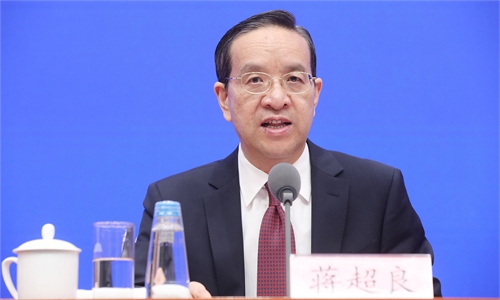
Anti-corruption documentary exposes bribery case involving former Hubei Party chief Jiang Chaoliang
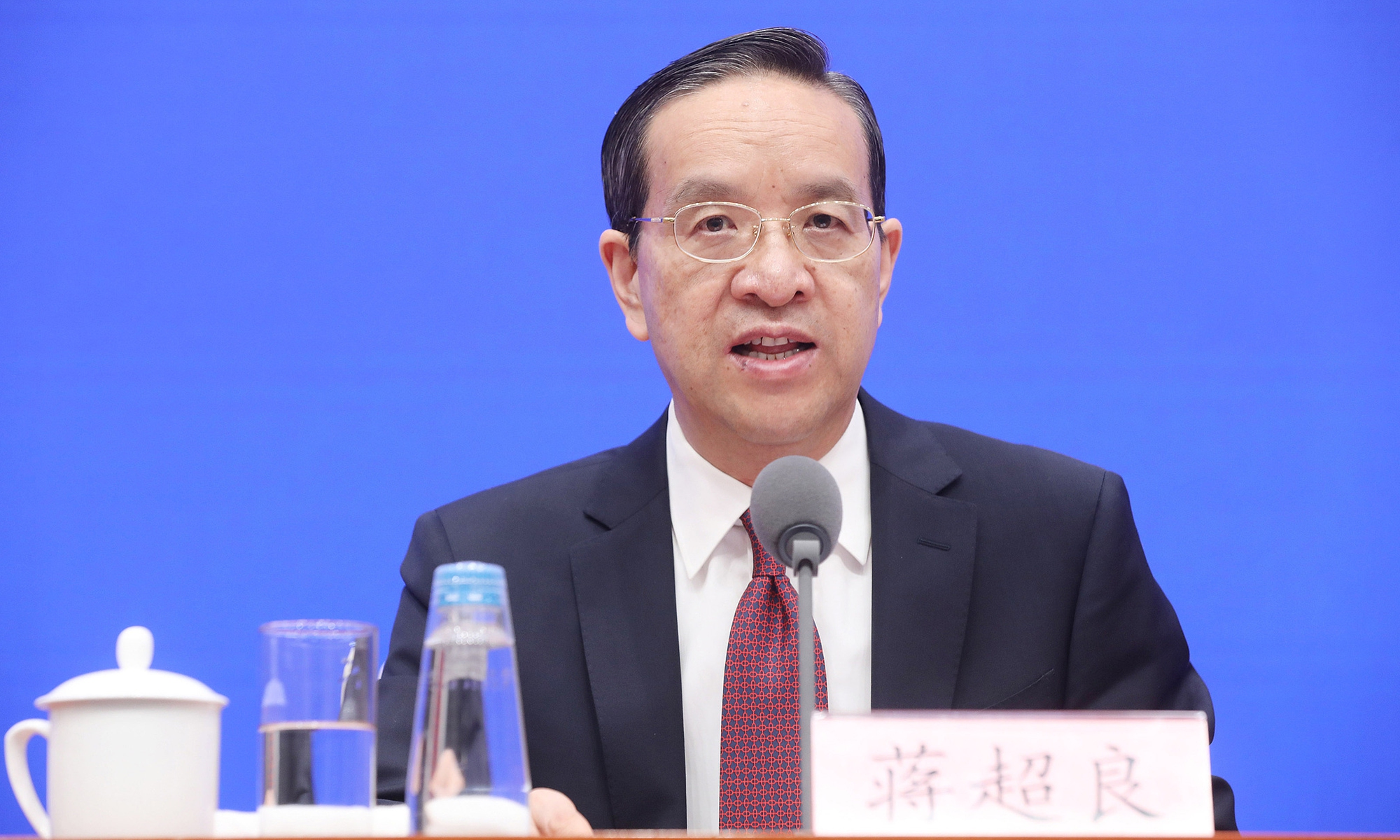
Jiang Chaoliang Photo: VCG
The third episode of an annual anti-corruption documentary series produced by China’s top anti-corruption watchdog will be aired on Tuesday, examining the bribery case involving Jiang Chaoliang, former Party secretary of CPC Hubei Provincial Committee and revealing that corruption not only targets officials but also extends to their family members.
Jointly produced by the publicity department of the Communist Party of China Central Commission for Discipline Inspection (CCDI), the National Commission of Supervision and China Central Television (CCTV), the four-episode documentary series, titled "Never pause a single step, never yield an inch," is being aired from Sunday to Wednesday.
In the third episode, Jiang, also a former member of the Standing Committee of the 14th National People's Congress (NPC) and vice chairperson of the NPC Agriculture and Rural Affairs Committee, confesses that he engaged in extensive family-style corruption.
The trailer released by CCDI states that corruption often follows power. Some individuals seek to exploit power for illicit gains, not only targeting officials themselves but also extending their reach to their family members.
Jiang said in the episode that bribery schemes do not operate on a one-to-one basis targeting only the official; instead, they can infiltrate every member of an official’s family.
Huang Tao, a CCD official, said that “a storm begins with the tiniest ripple,” adding that preventing the “targeted corruption” of officials primarily means taking early, small-scale preventive measures.
According to the trailer, “targeted corruption” is a major source of pollution in the political ecosystem. It says some officials form cliques, and after being targeted, they in turn exploit and target others, severely undermining the integrity of the officialdom.
Hong Lihe, a former deputy director of the Standing Committee of the Jiangxi Provincial People's Congress, who has been expelled from the Communist Party of China (CPC), also said in the trailer that corrupt officials rely on mutual assistance and support to sustain and expand their small circles.
On February 21, 2025, Jiang was placed under disciplinary review and investigation by the CCDI and National Commission of Supervision for suspicion of serious disciplinary violations.
Public information shows that Jiang was born in August 1957 in Miluo, Central China’s Hunan Province. He holds a master’s degree in economics and worked in the financial system from 1981 to 2014 as senior economist.
From 2002 and 2020, he served as a deputy governor of Central China’s Hubei Province, deputy Party secretary and governor of Northeast China’s Jilin Province, and Party secretary of Hubei. He served as vice chairperson of the NPC Agriculture and Rural Affairs Committee from 2021 before he was dismissed from public office.
Jiang was expelled from the CPC and dismissed from public office for serious violations of Party discipline and laws, including extensive power-for-money deals and family-based corruption, according to a CCDI statement released on October 27, 2025.
The investigation, approved by the CPC Central Committee, found that Jiang had lost his ideals and convictions, betrayed his original mission and engaged in superstitious activities. He violated the spirit of the central Party's eight-point rules by accepting banquets and travel arrangements that could have affected the impartial performance of his duties. Jiang also violated organizational principles by seeking benefits for others in personnel selection and recruitment, and accepting money and gifts in return.
Jiang had abandoned integrity and self-discipline, illegally accepted gifts and cash, borrowed vehicles from entities under his supervision and had others pay expenses that should have been borne by him. He was also found to have failed in his duties, causing negative impacts, the statement said.
The country's top anti-graft authorities concluded that Jiang had seriously violated political, organizational, integrity and work disciplines, constituting a serious breach of official duty and a suspected crime of bribery. His misconduct continued even after the 18th CPC National Congress, showing no sign of restraint or repentance.
Given the severity and adverse impact of his actions, and in accordance with CPC disciplinary regulations, the Supervision Law, and the law on administrative discipline for government employees, the CPC Central Committee approved the decision to expel Jiang from the Party and dismiss him from public office.
Global Times
RELATED ARTICLES