ARTS / CULTURE & LEISURE
Over 100 ancient tombs spanning two millennia unearthed in Henan
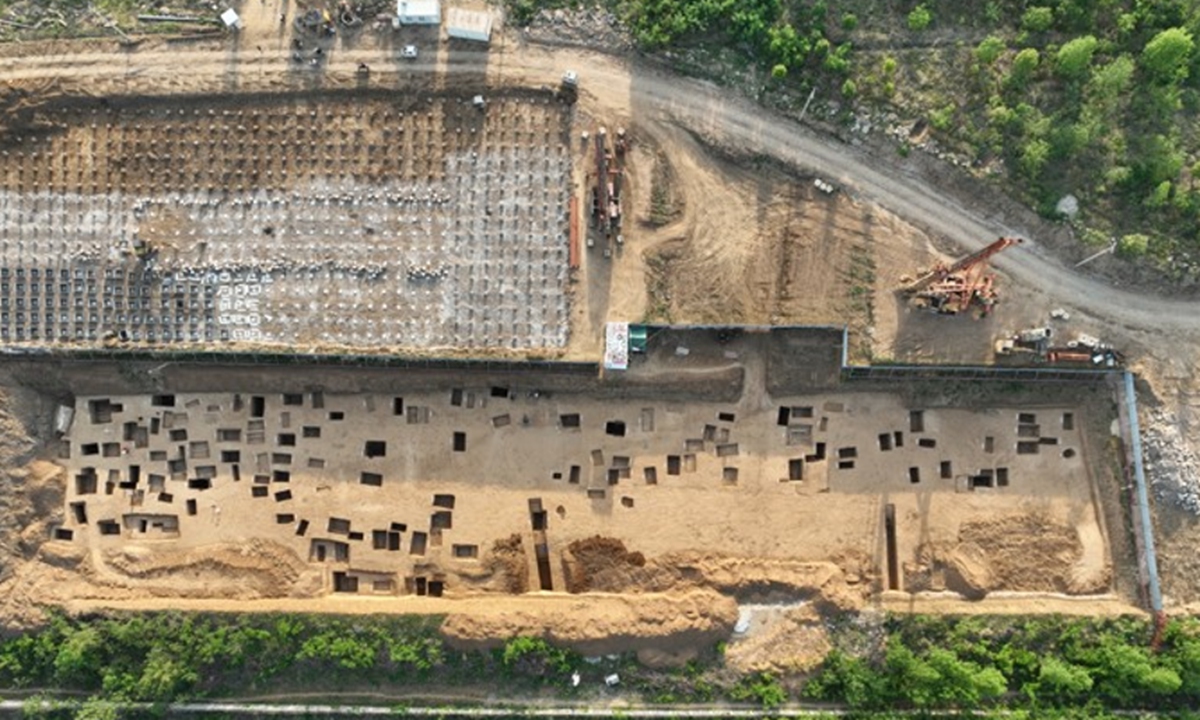
An aerial photo of the Lingyunshan road cemetery in Luohe, Henan Province Photo: Courtesy of the Luohe Institute of Cultural Relics and Archaeology
Archaeologists in Central China's Henan Province have uncovered more than 100 tombs dating from the Warring States Period (475BC-221BC) through the Qing Dynasty (1644-1911), offering insights into ancient burial customs and highlighting the region's long-standing role as a crossroads between northern and southern cultures.The discoveries were made at the Lingyunshan road cemetery in Luohe, Henan. The excavation was carried out by a joint archaeological team from the Henan Provincial Institute of Cultural Relics and Archaeology and the Luohe Institute of Cultural Relics and Archaeology from February to May 2025 as part of a cultural heritage survey linked to the construction of a local high-speed railway.
The cemetery has been excavated in stages over the past several years. Between 2020 and 2021, archaeologists uncovered 232 tombs dating from the Warring States to the Han Dynasty (206BC-AD220).
In mid-2024, another 73 Warring States to Han-era tombs were excavated, followed later that year by 251 tombs from various historical periods, including the Warring States Period, Han and Qing dynasties.
In 2025 alone, the team cleared 153 archaeological areas, including 145 tombs from the Warring States Period, Han and Qing periods. The excavation area covers 3,200 square meters.
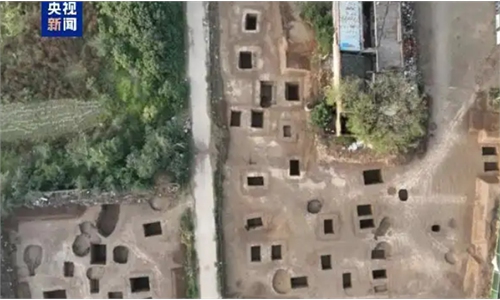
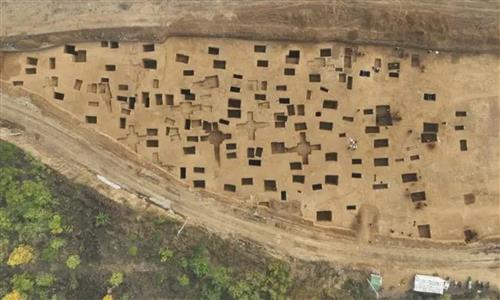
The tombs are arranged in an orderly manner, with few instances of disruption among those from the same period, clearly indicating that they were planned or managed by specialists, Liu Chen, an associate research curator at the Luohe Institute of Cultural Relics and Archaeology, told the Global Times.
The cemetery documents changes in burial practices over time. Rectangular vertical pit tombs common from the Warring States through the Western Han (206BC-AD25) period give way to brick-chamber tombs from the Eastern Han (25-220), while Qing Dynasty burials are simpler, often containing only porcelain jars.
Among them are 21 Warring States Period tombs. Among these, grave goods are dominated by ceramic ritual vessels, with relatively few daily-use items. Other artifacts include bronze and iron objects.
Among the 116 Han Dynasty tombs, human remains are largely absent and poorly preserved. Grave goods include pottery, bronze, iron, jade, stone and bone artifacts as well as crystals, with pottery accounting for the majority of these items.
Eight Qing Dynasty tombs were also identified, with grave goods consisting mainly of copper coins and porcelain jars.
The tombs uncovered in the 2025 excavation primarily belong to ordinary members of society, offering significant insights into the burial customs in the Luohe region during the Warring States and Western Han periods, Liu said.
By May 2025, the latest excavation had yielded a total of 1,032 artifacts made of pottery, bronze, iron and jade. Particularly notable are the pottery assemblages from Warring States Period burials. These include vessels typical of the Central Plains, alongside ancient Chu-style objects like cord-marked jars and pottery basins.
"The burial goods reflect a clear blending of Central Plains traditions with elements associated with Chu culture," Liu said. "The coexistence of Central Plains ritual traditions and Chu customs provides concrete archaeological evidence of the Yancheng district's role as a cultural corridor."
During the most recent excavation, archaeologists documented a Warring States tomb labeled M359. The tomb features a second-tier earthen platform and a semi-elliptical wall niche cut into the northern wall. Inside the niche, the team recovered one bronze vessel and 11 pottery objects.
The findings provide crucial physical evidence for establishing an archaeological cultural sequence in the local region. The discovery of numerous Warring States and Western Han tombs fills a significant gap in the region's burial history, offering essential data for refining and expanding the area's archaeological cultural chronology, noted Liu.
Archaeologists collected samples from 30 human skeletons and nine bags of soil. Future research using physical anthropology, DNA analysis and soil micromorphology aims to shed light on the individuals' age, gender, health and even dietary patterns.
RELATED ARTICLES