Illustration: Liu Rui/GT
Amid rising global economic uncertainty, Yiwu - often regarded as a bellwether for China's foreign trade - has quietly seen a steady increase in activity: more foreign business operators are establishing a presence in the city, turning short-term trade dealings into sustained, long-term commercial investments. As a focused example, Yiwu offers a concrete, granular view for observing how China's trade system continues to create consistent, long-term opportunities even amid broader global volatility.According to a report published on Wednesday by the People's Daily, Yiwu is now home to more than 10,000 foreign-invested entities from more than 160 countries and regions. Since the first foreign-operated entity was established in the city in the late 1980s, foreign participation has steadily expanded across 14 sectors, including trade services and modern logistics.
Behind these figures is a gradual evolution from short-term trade toward longer-term investment. Over the past several decades, Yiwu has developed a relatively well-established system for managing small-commodity trade, allowing cross-border transactions to occur within a reasonably stable and predictable framework. It is this continuity - rather than isolated opportunities - that has encouraged foreign operators to extend their investment in the city over time.
In Yiwu, this sense of continuity can be observed in several dimensions. First, the steadily improving business environment. The streamlined foreign investment registration system, one of many improvements, has reduced the company registration period from 15 days to just one. The launch of the "YiJing" app integrates more than 120 administrative services, covering everything from visa applications to banking, ensuring that foreign entrepreneurs can focus on business. With these facilitating measures, the number of foreign-funded companies has surged since 2015, with an average annual growth rate of 29 percent, local media outlets reported in August 2025.
Second, the ongoing availability of commercial opportunities. Yiwu's small commodities market is near a vast network of suppliers and factories across East China's Zhejiang Province and the Yangtze River Delta. This proximity allows traders to source goods quickly, cheaply, and reliably, reducing inventory and logistics costs. Its international trade market offers 2.1 million product varieties and hosts hundreds of thousands of global buyers annually, enabling traders to find new opportunities constantly.
Yiwu also benefits from the region's highly efficient logistics system and China's overall trend toward digitalized trade to implement increasingly convenient trade measures. For example, the local Digital Trade Center and the rapidly developing logistics hubs enhanced the efficiency and ease of trade last year.
Third, Yiwu's cultural inclusiveness creates a sense of belonging. Some foreign entrepreneurs from the Middle East, Africa, Europe and beyond describe the city as their "second hometown," having lived and traded there for more than a decade. The proliferation of international restaurants, cultural events, and sister-city exchanges fosters a multicultural urban life that feels welcoming to expatriates.
As global merchants have settled in Yiwu, the number of foreign-invested restaurants in the city has grown by an average of 20 percent per year over the past three years. Merchants from all corners of the world can find the foods of their hometowns locally, according to the People's Daily.
For some foreign operators, Yiwu serves as an initial entry point into the Chinese market. Over time, some have expanded their investments, gradually extending their supply chains and building local networks, establishing a long-term presence. This progression reflects judgments about the stability of China's trade system and, in turn, contributes to its broader predictability.
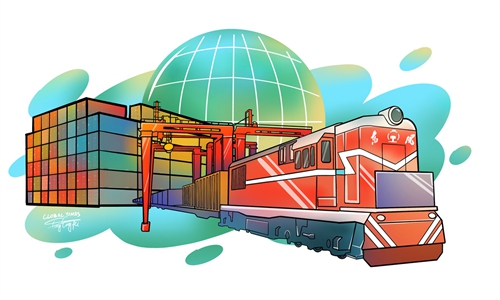
On a macro level, Yiwu is not isolated. Linked to ports, freight corridors, and trade fairs, it forms part of a continuously operating network that underpins China's trade infrastructure. These long-term arrangements give foreign operators a framework in which investment and planning can proceed with confidence.
For external observers, China's trade stability can appear abstract. In Yiwu, however, it is tangible: daily transactions, consistently operating markets, and the steadily growing number of foreign-invested entities create a quietly robust reality that signals continuity.
For companies seeking to expand exports to China or deepen their presence in the country, Yiwu offers a practical reference, showing how engagement with a local hub can evolve into deeper integration with China's trade system. The choices of foreign operators who convert trade into long-term investment themselves illuminate the durability and predictability of that framework.
The author is a reporter with the Global Times. bizopinion@globaltimes.com.cn
RELATED ARTICLES