IN-DEPTH / IN-DEPTH
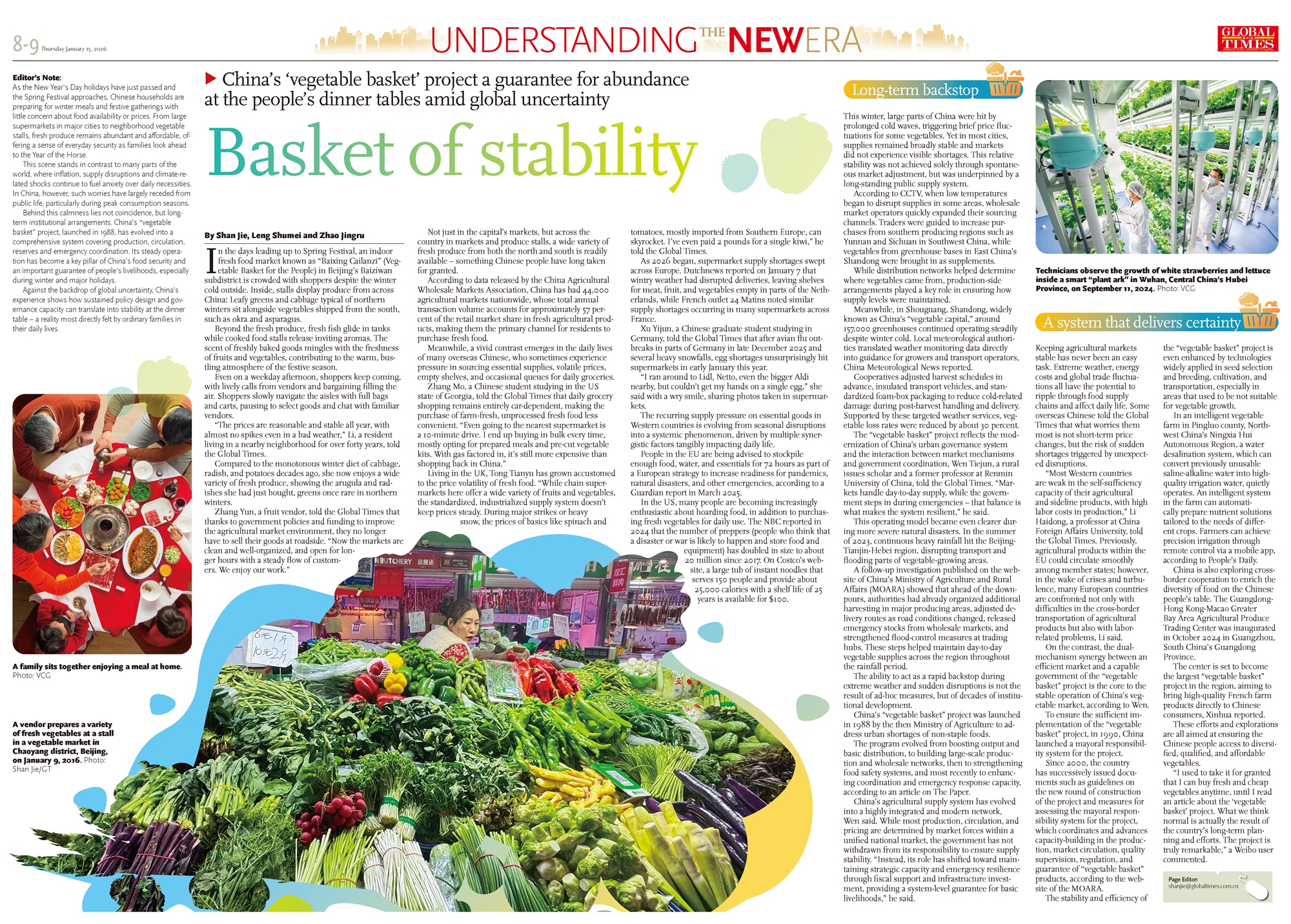
China’s ‘vegetable basket’ project a guarantee for abundance at the people’s dinner tables amid global uncertainty
By , Leng Shumei and Zhao Jingru Published: Jan 14, 2026 11:27 PM

Editor's Note:
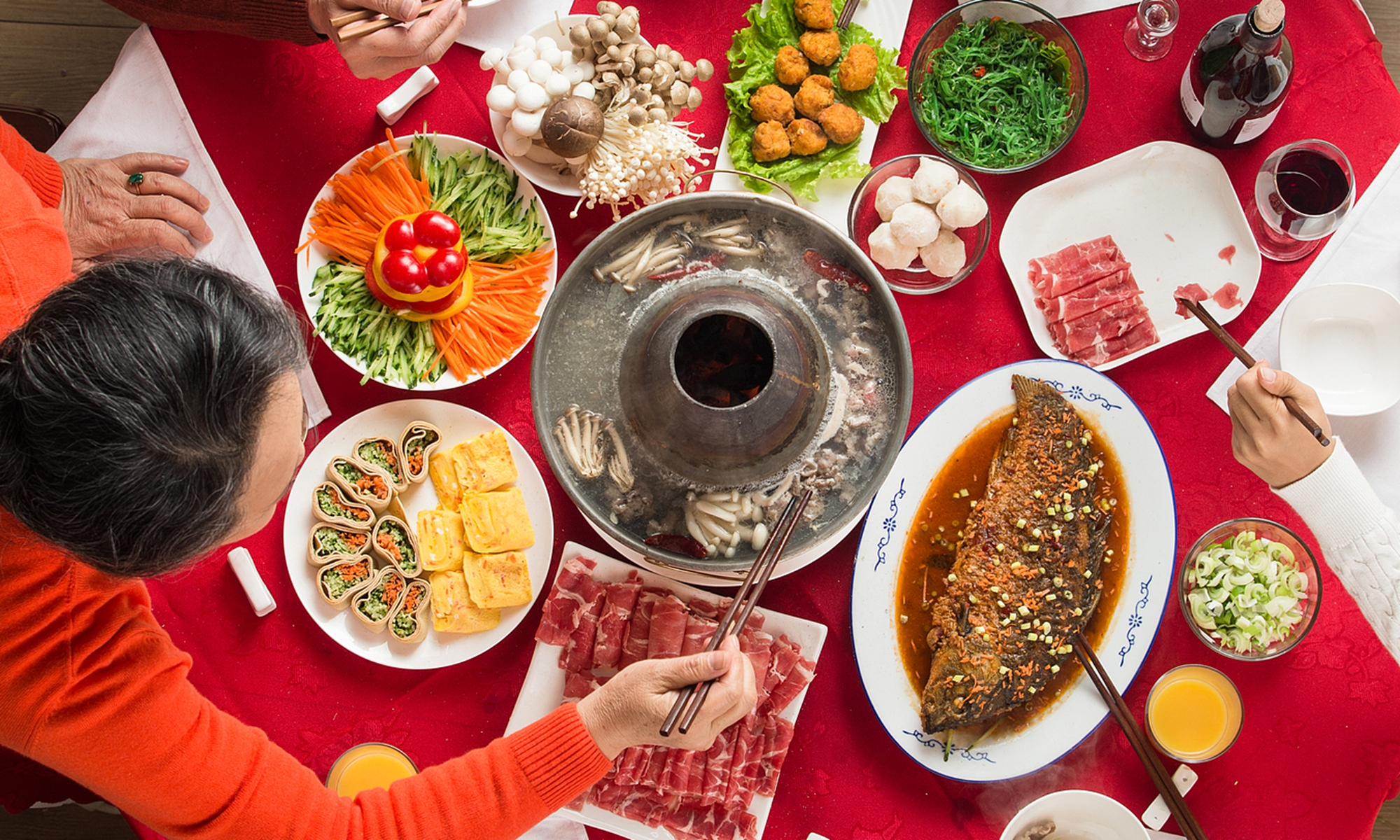
As the New Year's Day holidays have just passed and the Spring Festival approaches, Chinese households are preparing for winter meals and festive gatherings with little concern about food availability or prices. From large supermarkets in major cities to neighborhood vegetable stalls, fresh produce remains abundant and affordable, offering a sense of everyday security as families look ahead to the Year of the Horse.
This scene stands in contrast to many parts of the world, where inflation, supply disruptions and climate-related shocks continue to fuel anxiety over daily necessities. In China, however, such worries have largely receded from public life, particularly during peak consumption seasons.
Behind this calmness lies not coincidence, but long-term institutional arrangements. China's "vegetable basket" project, launched in 1988, has evolved into a comprehensive system covering production, circulation, reserves and emergency coordination. Its steady operation has become a key pillar of China's food security and an important guarantee of people's livelihoods, especially during winter and major holidays.
Against the backdrop of global uncertainty, China's experience shows how sustained policy design and governance capacity can translate into stability at the dinner table - a reality most directly felt by ordinary families in their daily lives.
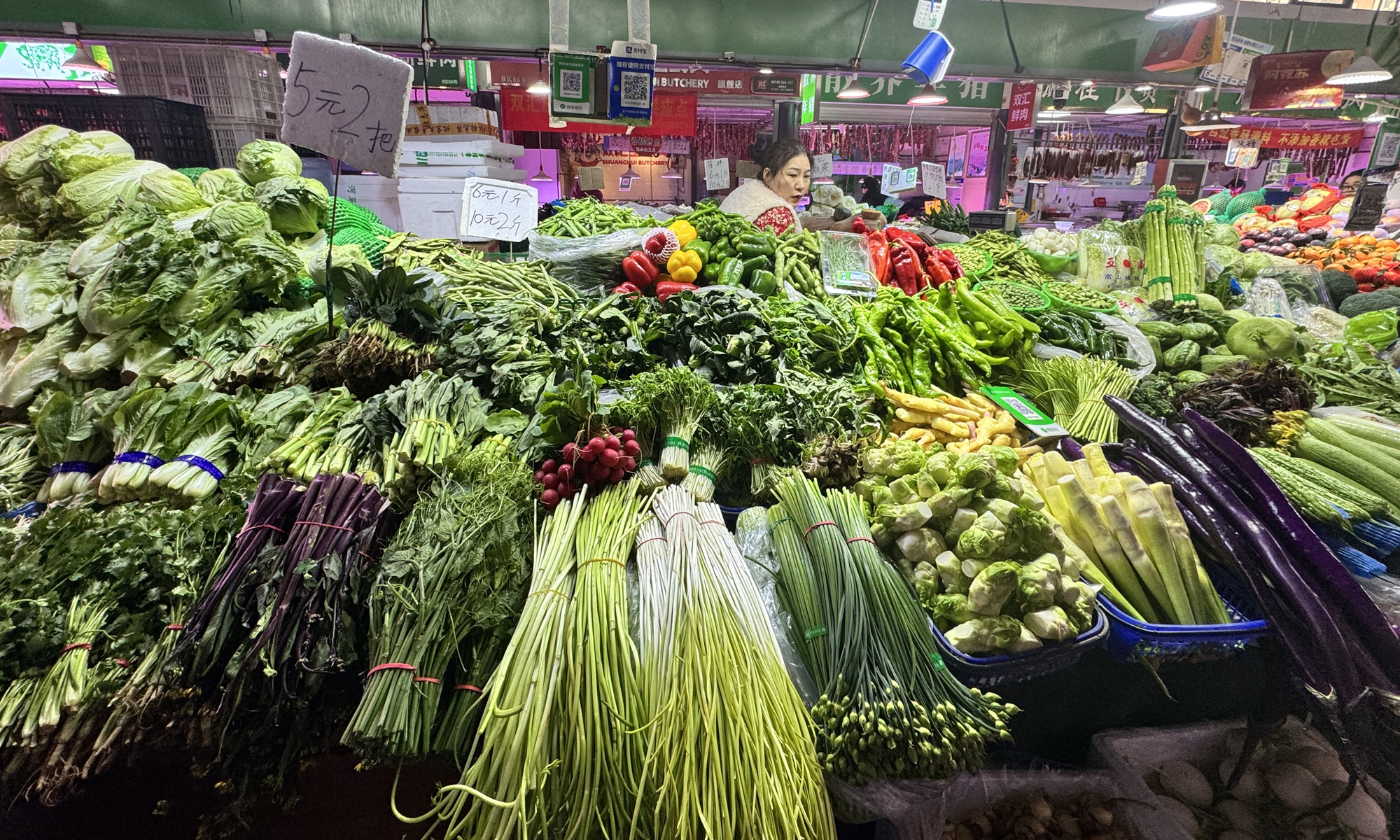
Beyond the fresh produce, fresh fish glide in tanks while cooked food stalls release inviting aromas. The scent of freshly baked goods mingles with the freshness of fruits and vegetables, contributing to the warm, bustling atmosphere of the festive season.
Even on a weekday afternoon, shoppers keep coming, with lively calls from vendors and bargaining filling the air. Shoppers slowly navigate the aisles with full bags and carts, pausing to select goods and chat with familiar vendors.
"The prices are reasonable and stable all year, with almost no spikes even in a bad weather," Li, a resident living in a nearby neighborhood for over forty years, told the Global Times.
Compared to the monotonous winter diet of cabbage, radish, and potatoes decades ago, she now enjoys a wide variety of fresh produce, showing the arugula and radishes she had just bought, greens once rare in northern winters.
Zhang Yun, a fruit vendor, told the Global Times that thanks to government policies and funding to improve the agricultural market environment, they no longer have to sell their goods at roadside. "Now the markets are clean and well-organized, and open for longer hours with a steady flow of customers. We enjoy our work."
Not just in the capital's markets, but across the country in markets and produce stalls, a wide variety of fresh produce from both the north and south is readily available - something Chinese people have long taken for granted.
According to data released by the China Agricultural Wholesale Markets Association, China has had 44,000 agricultural markets nationwide, whose total annual transaction volume accounts for approximately 57 percent of the retail market share in fresh agricultural products, making them the primary channel for residents to purchase fresh food.
Meanwhile, a vivid contrast emerges in the daily lives of many overseas Chinese, who sometimes experience pressure in sourcing essential supplies, volatile prices, empty shelves, and occasional queues for daily groceries.
Zhang Mo, a Chinese student studying in the US state of Georgia, told the Global Times that daily grocery shopping remains entirely car-dependent, making the purchase of farm-fresh, unprocessed fresh food less convenient. "Even going to the nearest supermarket is a 10-minute drive. I end up buying in bulk every time, mostly opting for prepared meals and pre-cut vegetable kits. With gas factored in, it's still more expensive than shopping back in China."
Living in the UK, Tong Tianyu has grown accustomed to the price volatility of fresh food. "While chain supermarkets here offer a wide variety of fruits and vegetables, the standardized, industrialized supply system doesn't keep prices steady. During major strikes or heavy snow, the prices of basics like spinach and tomatoes, mostly imported from Southern Europe, can skyrocket. I've even paid 2 pounds for a single kiwi," he told the Global Times.
As 2026 began, supermarket supply shortages swept across Europe. Dutchnews reported on January 7 that wintry weather had disrupted deliveries, leaving shelves for meat, fruit, and vegetables empty in parts of the Netherlands, while French outlet 24 Matins noted similar supply shortages occurring in many supermarkets across France.
Xu Yijun, a Chinese graduate student studying in Germany, told the Global Times that after avian flu outbreaks in parts of Germany in late December 2025 and several heavy snowfalls, egg shortages unsurprisingly hit supermarkets in early January this year.
"I ran around to Lidl, Netto, even the bigger Aldi nearby, but couldn't get my hands on a single egg," she said with a wry smile, sharing photos taken in supermarkets.
The recurring supply pressure on essential goods in Western countries is evolving from seasonal disruptions into a systemic phenomenon, driven by multiple synergistic factors tangibly impacting daily life.
People in the EU are being advised to stockpile enough food, water, and essentials for 72 hours as part of a European strategy to increase readiness for pandemics, natural disasters, and other emergencies, according to a Guardian report in March 2025.
In the US, many people are becoming increasingly enthusiastic about hoarding food, in addition to purchasing fresh vegetables for daily use. The NBC reported in 2024 that the number of preppers (people who think that a disaster or war is likely to happen and store food and equipment) has doubled in size to about 20 million since 2017. On Costco's website, a large tub of instant noodles that serves 150 people and provide about 25,000 calories with a shelf life of 25 years is available for $100.
Long-term backstop
This winter, large parts of China were hit by prolonged cold waves, triggering brief price fluctuations for some vegetables. Yet in most cities, supplies remained broadly stable and markets did not experience visible shortages. This relative stability was not achieved solely through spontaneous market adjustment, but was underpinned by a long-standing public supply system.
According to CCTV, when low temperatures began to disrupt supplies in some areas, wholesale market operators quickly expanded their sourcing channels. Traders were guided to increase purchases from southern producing regions such as Yunnan and Sichuan in Southwest China, while vegetables from greenhouse bases in East China's Shandong were brought in as supplements.
While distribution networks helped determine where vegetables came from, production-side arrangements played a key role in ensuring how supply levels were maintained.
Meanwhile, in Shouguang, Shandong, widely known as China's "vegetable capital," around 157,000 greenhouses continued operating steadily despite winter cold. Local meteorological authorities translated weather monitoring data directly into guidance for growers and transport operators, China Meteorological News reported.
Cooperatives adjusted harvest schedules in advance, insulated transport vehicles, and standardized foam-box packaging to reduce cold-related damage during post-harvest handling and delivery. Supported by these targeted weather services, vegetable loss rates were reduced by about 30 percent.
The "vegetable basket" project reflects the modernization of China's urban governance system and the interaction between market mechanisms and government coordination, Wen Tiejun, a rural issues scholar and a former professor at Renmin University of China, told the Global Times. "Markets handle day-to-day supply, while the government steps in during emergencies - that balance is what makes the system resilient," he said.
A follow-up investigation published on the website of China's Ministry of Agriculture and Rural Affairs (MOARA) showed that ahead of the downpours, authorities had already organized additional harvesting in major producing areas, adjusted delivery routes as road conditions changed, released emergency stocks from wholesale markets, and strengthened flood-control measures at trading hubs. These steps helped maintain day-to-day vegetable supplies across the region throughout the rainfall period.
The ability to act as a rapid backstop during extreme weather and sudden disruptions is not the result of ad-hoc measures, but of decades of institutional development.
China's "vegetable basket" project was launched in 1988 by the then Ministry of Agriculture to address urban shortages of non-staple foods.
The program evolved from boosting output and basic distribution, to building large-scale production and wholesale networks, then to strengthening food safety systems, and most recently to enhancing coordination and emergency response capacity, according to an article on The Paper.
China's agricultural supply system has evolved into a highly integrated and modern network, Wen said. While most production, circulation, and pricing are determined by market forces within a unified national market, the government has not withdrawn from its responsibility to ensure supply stability. "Instead, its role has shifted toward maintaining strategic capacity and emergency resilience through fiscal support and infrastructure investment, providing a system-level guarantee for basic livelihoods," he said.
A system that delivers certainty
Keeping agricultural markets stable has never been an easy task. Extreme weather, energy costs and global trade fluctuations all have the potential to ripple through food supply chains and affect daily life. Some overseas Chinese told the Global Times that what worries them most is not short-term price changes, but the risk of sudden shortages triggered by unexpected disruptions.
"Most Western countries are weak in the self-sufficiency capacity of their agricultural and sideline products, with high labor costs in production," Li Haidong, a professor at China Foreign Affairs University, told the Global Times. Previously, agricultural products within the EU could circulate smoothly among member states; however, in the wake of crises and turbulence, many European countries are confronted not only with difficulties in the cross-border transportation of agricultural products but also with labor-related problems, Li said.
On the contrast, the dual-mechanism synergy between an efficient market and a capable government of the "vegetable basket" project is the core to the stable operation of China's vegetable market, according to Wen.
To ensure the sufficient implementation of the "vegetable basket" project, in 1990, China launched a mayoral responsibility system for the project.
Since 2000, the country has successively issued documents such as guidelines on the new round of construction of the project and measures for assessing the mayoral responsibility system for the project, which coordinates and advances capacity-building in the production, market circulation, quality supervision, regulation, and guarantee of "vegetable basket" products, according to the website of the MOARA.
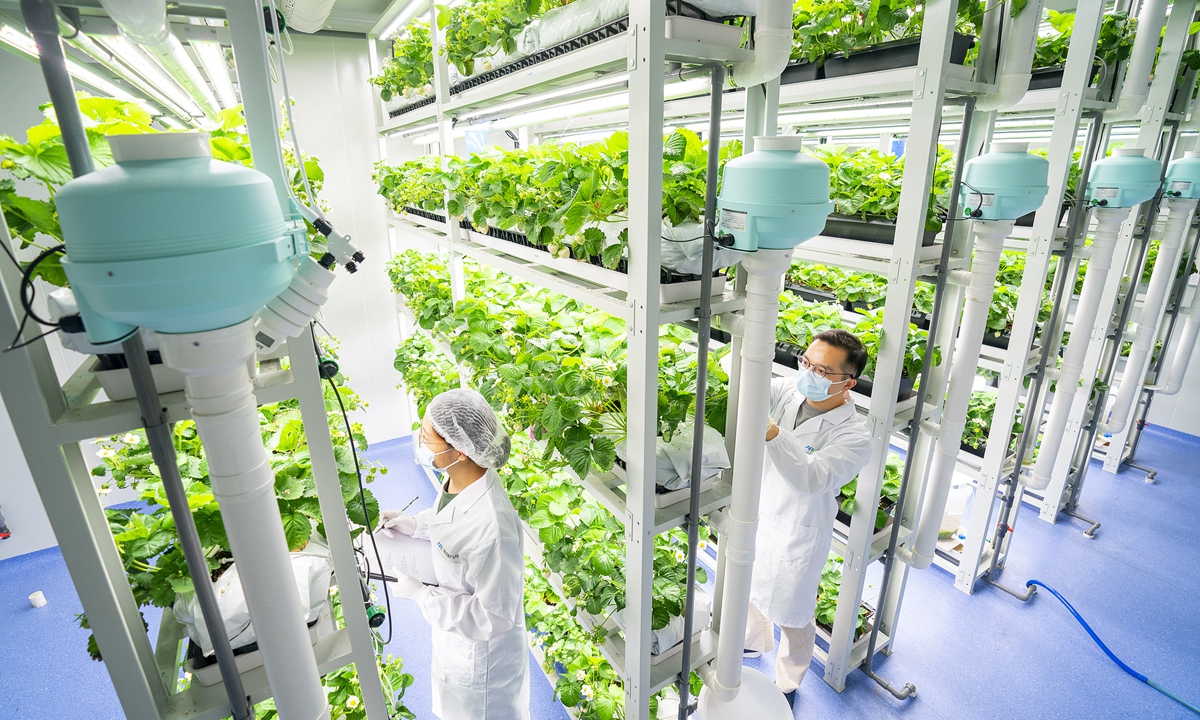
The stability and efficiency of the "vegetable basket" project is even enhanced by technologies widely applied in seed selection and breeding, cultivation, and transportation, especially in areas that used to be not suitable for vegetable growth.
China is also exploring cross-border cooperation to enrich the diversity of food on the Chinese people's table. The Guangdong-Hong Kong-Macao Greater Bay Area Agricultural Produce Trading Center was inaugurated in October 2024 in Guangzhou, South China's Guangdong Province.
The center is set to become the largest "vegetable basket" project in the region, aiming to bring high-quality French farm products directly to Chinese consumers, Xinhua reported.
These efforts and explorations are all aimed at ensuring the Chinese people access to diversified, qualified, and affordable vegetables.
"I used to take it for granted that I can buy fresh and cheap vegetables anytime, until I read an article about the 'vegetable basket' project. What we think normal is actually the result of the country's long-term planning and efforts. The project is truly remarkable," a Weibo user commented.
As the New Year's Day holidays have just passed and the Spring Festival approaches, Chinese households are preparing for winter meals and festive gatherings with little concern about food availability or prices. From large supermarkets in major cities to neighborhood vegetable stalls, fresh produce remains abundant and affordable, offering a sense of everyday security as families look ahead to the Year of the Horse.
This scene stands in contrast to many parts of the world, where inflation, supply disruptions and climate-related shocks continue to fuel anxiety over daily necessities. In China, however, such worries have largely receded from public life, particularly during peak consumption seasons.
Behind this calmness lies not coincidence, but long-term institutional arrangements. China's "vegetable basket" project, launched in 1988, has evolved into a comprehensive system covering production, circulation, reserves and emergency coordination. Its steady operation has become a key pillar of China's food security and an important guarantee of people's livelihoods, especially during winter and major holidays.
Against the backdrop of global uncertainty, China's experience shows how sustained policy design and governance capacity can translate into stability at the dinner table - a reality most directly felt by ordinary families in their daily lives.
A vendor prepares a variety of fresh vegetables at a stall in a vegetable market in Chaoyang district, Beijing, on January 9, 2016. Photo: Shan Jie/GT
In the days leading up to Spring Festival, an indoor fresh food market known as "Baixing Cailanzi" (Vegetable Basket for the People) in Beijing's Baiziwan subdistrict is crowded with shoppers despite the winter cold outside. Inside, stalls display produce from across China: Leafy greens and cabbage typical of northern winters sit alongside vegetables shipped from the south, such as okra and asparagus.Beyond the fresh produce, fresh fish glide in tanks while cooked food stalls release inviting aromas. The scent of freshly baked goods mingles with the freshness of fruits and vegetables, contributing to the warm, bustling atmosphere of the festive season.
Even on a weekday afternoon, shoppers keep coming, with lively calls from vendors and bargaining filling the air. Shoppers slowly navigate the aisles with full bags and carts, pausing to select goods and chat with familiar vendors.
"The prices are reasonable and stable all year, with almost no spikes even in a bad weather," Li, a resident living in a nearby neighborhood for over forty years, told the Global Times.
Compared to the monotonous winter diet of cabbage, radish, and potatoes decades ago, she now enjoys a wide variety of fresh produce, showing the arugula and radishes she had just bought, greens once rare in northern winters.
Zhang Yun, a fruit vendor, told the Global Times that thanks to government policies and funding to improve the agricultural market environment, they no longer have to sell their goods at roadside. "Now the markets are clean and well-organized, and open for longer hours with a steady flow of customers. We enjoy our work."
Not just in the capital's markets, but across the country in markets and produce stalls, a wide variety of fresh produce from both the north and south is readily available - something Chinese people have long taken for granted.
According to data released by the China Agricultural Wholesale Markets Association, China has had 44,000 agricultural markets nationwide, whose total annual transaction volume accounts for approximately 57 percent of the retail market share in fresh agricultural products, making them the primary channel for residents to purchase fresh food.
Meanwhile, a vivid contrast emerges in the daily lives of many overseas Chinese, who sometimes experience pressure in sourcing essential supplies, volatile prices, empty shelves, and occasional queues for daily groceries.
Zhang Mo, a Chinese student studying in the US state of Georgia, told the Global Times that daily grocery shopping remains entirely car-dependent, making the purchase of farm-fresh, unprocessed fresh food less convenient. "Even going to the nearest supermarket is a 10-minute drive. I end up buying in bulk every time, mostly opting for prepared meals and pre-cut vegetable kits. With gas factored in, it's still more expensive than shopping back in China."
Living in the UK, Tong Tianyu has grown accustomed to the price volatility of fresh food. "While chain supermarkets here offer a wide variety of fruits and vegetables, the standardized, industrialized supply system doesn't keep prices steady. During major strikes or heavy snow, the prices of basics like spinach and tomatoes, mostly imported from Southern Europe, can skyrocket. I've even paid 2 pounds for a single kiwi," he told the Global Times.
As 2026 began, supermarket supply shortages swept across Europe. Dutchnews reported on January 7 that wintry weather had disrupted deliveries, leaving shelves for meat, fruit, and vegetables empty in parts of the Netherlands, while French outlet 24 Matins noted similar supply shortages occurring in many supermarkets across France.
Xu Yijun, a Chinese graduate student studying in Germany, told the Global Times that after avian flu outbreaks in parts of Germany in late December 2025 and several heavy snowfalls, egg shortages unsurprisingly hit supermarkets in early January this year.
"I ran around to Lidl, Netto, even the bigger Aldi nearby, but couldn't get my hands on a single egg," she said with a wry smile, sharing photos taken in supermarkets.
The recurring supply pressure on essential goods in Western countries is evolving from seasonal disruptions into a systemic phenomenon, driven by multiple synergistic factors tangibly impacting daily life.
People in the EU are being advised to stockpile enough food, water, and essentials for 72 hours as part of a European strategy to increase readiness for pandemics, natural disasters, and other emergencies, according to a Guardian report in March 2025.
In the US, many people are becoming increasingly enthusiastic about hoarding food, in addition to purchasing fresh vegetables for daily use. The NBC reported in 2024 that the number of preppers (people who think that a disaster or war is likely to happen and store food and equipment) has doubled in size to about 20 million since 2017. On Costco's website, a large tub of instant noodles that serves 150 people and provide about 25,000 calories with a shelf life of 25 years is available for $100.
Long-term backstop
This winter, large parts of China were hit by prolonged cold waves, triggering brief price fluctuations for some vegetables. Yet in most cities, supplies remained broadly stable and markets did not experience visible shortages. This relative stability was not achieved solely through spontaneous market adjustment, but was underpinned by a long-standing public supply system.
According to CCTV, when low temperatures began to disrupt supplies in some areas, wholesale market operators quickly expanded their sourcing channels. Traders were guided to increase purchases from southern producing regions such as Yunnan and Sichuan in Southwest China, while vegetables from greenhouse bases in East China's Shandong were brought in as supplements.
While distribution networks helped determine where vegetables came from, production-side arrangements played a key role in ensuring how supply levels were maintained.
Meanwhile, in Shouguang, Shandong, widely known as China's "vegetable capital," around 157,000 greenhouses continued operating steadily despite winter cold. Local meteorological authorities translated weather monitoring data directly into guidance for growers and transport operators, China Meteorological News reported.
Cooperatives adjusted harvest schedules in advance, insulated transport vehicles, and standardized foam-box packaging to reduce cold-related damage during post-harvest handling and delivery. Supported by these targeted weather services, vegetable loss rates were reduced by about 30 percent.
The "vegetable basket" project reflects the modernization of China's urban governance system and the interaction between market mechanisms and government coordination, Wen Tiejun, a rural issues scholar and a former professor at Renmin University of China, told the Global Times. "Markets handle day-to-day supply, while the government steps in during emergencies - that balance is what makes the system resilient," he said.
A family sits together enjoying a meal at home. Ph0to: VCG
This operating model became even clearer during more severe natural disasters. In the summer of 2023, continuous heavy rainfall hit the Beijing-Tianjin-Hebei region, disrupting transport and flooding parts of vegetable-growing areas.A follow-up investigation published on the website of China's Ministry of Agriculture and Rural Affairs (MOARA) showed that ahead of the downpours, authorities had already organized additional harvesting in major producing areas, adjusted delivery routes as road conditions changed, released emergency stocks from wholesale markets, and strengthened flood-control measures at trading hubs. These steps helped maintain day-to-day vegetable supplies across the region throughout the rainfall period.
The ability to act as a rapid backstop during extreme weather and sudden disruptions is not the result of ad-hoc measures, but of decades of institutional development.
China's "vegetable basket" project was launched in 1988 by the then Ministry of Agriculture to address urban shortages of non-staple foods.
The program evolved from boosting output and basic distribution, to building large-scale production and wholesale networks, then to strengthening food safety systems, and most recently to enhancing coordination and emergency response capacity, according to an article on The Paper.
China's agricultural supply system has evolved into a highly integrated and modern network, Wen said. While most production, circulation, and pricing are determined by market forces within a unified national market, the government has not withdrawn from its responsibility to ensure supply stability. "Instead, its role has shifted toward maintaining strategic capacity and emergency resilience through fiscal support and infrastructure investment, providing a system-level guarantee for basic livelihoods," he said.
A system that delivers certainty
Keeping agricultural markets stable has never been an easy task. Extreme weather, energy costs and global trade fluctuations all have the potential to ripple through food supply chains and affect daily life. Some overseas Chinese told the Global Times that what worries them most is not short-term price changes, but the risk of sudden shortages triggered by unexpected disruptions.
"Most Western countries are weak in the self-sufficiency capacity of their agricultural and sideline products, with high labor costs in production," Li Haidong, a professor at China Foreign Affairs University, told the Global Times. Previously, agricultural products within the EU could circulate smoothly among member states; however, in the wake of crises and turbulence, many European countries are confronted not only with difficulties in the cross-border transportation of agricultural products but also with labor-related problems, Li said.
On the contrast, the dual-mechanism synergy between an efficient market and a capable government of the "vegetable basket" project is the core to the stable operation of China's vegetable market, according to Wen.
To ensure the sufficient implementation of the "vegetable basket" project, in 1990, China launched a mayoral responsibility system for the project.
Since 2000, the country has successively issued documents such as guidelines on the new round of construction of the project and measures for assessing the mayoral responsibility system for the project, which coordinates and advances capacity-building in the production, market circulation, quality supervision, regulation, and guarantee of "vegetable basket" products, according to the website of the MOARA.
The stability and efficiency of the "vegetable basket" project is even enhanced by technologies widely applied in seed selection and breeding, cultivation, and transportation, especially in areas that used to be not suitable for vegetable growth.
Technicians observe the growth of white strawberries and lettuce inside a smart "plant ark" in Wuhan, Central China's Hubei Province, on September 11, 2024. Ph0to: VCG
In an intelligent vegetable farm in Pingluo county, Northwest China's Ningxia Hui Autonomous Region, a water desalination system, which can convert previously unusable saline-alkaline water into high-quality irrigation water, quietly operates. An intelligent system in the farm can automatically prepare nutrient solutions tailored to the needs of different crops. Farmers can achieve precision irrigation through remote control via a mobile app, according to People's Daily.China is also exploring cross-border cooperation to enrich the diversity of food on the Chinese people's table. The Guangdong-Hong Kong-Macao Greater Bay Area Agricultural Produce Trading Center was inaugurated in October 2024 in Guangzhou, South China's Guangdong Province.
The center is set to become the largest "vegetable basket" project in the region, aiming to bring high-quality French farm products directly to Chinese consumers, Xinhua reported.
These efforts and explorations are all aimed at ensuring the Chinese people access to diversified, qualified, and affordable vegetables.
"I used to take it for granted that I can buy fresh and cheap vegetables anytime, until I read an article about the 'vegetable basket' project. What we think normal is actually the result of the country's long-term planning and efforts. The project is truly remarkable," a Weibo user commented.
RELATED ARTICLES