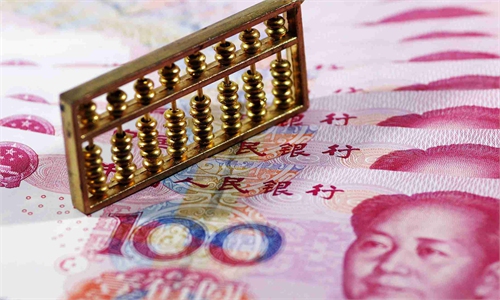
China has neither necessity nor intention to gain competitive edge in trade through currency depreciation: deputy PBC governor
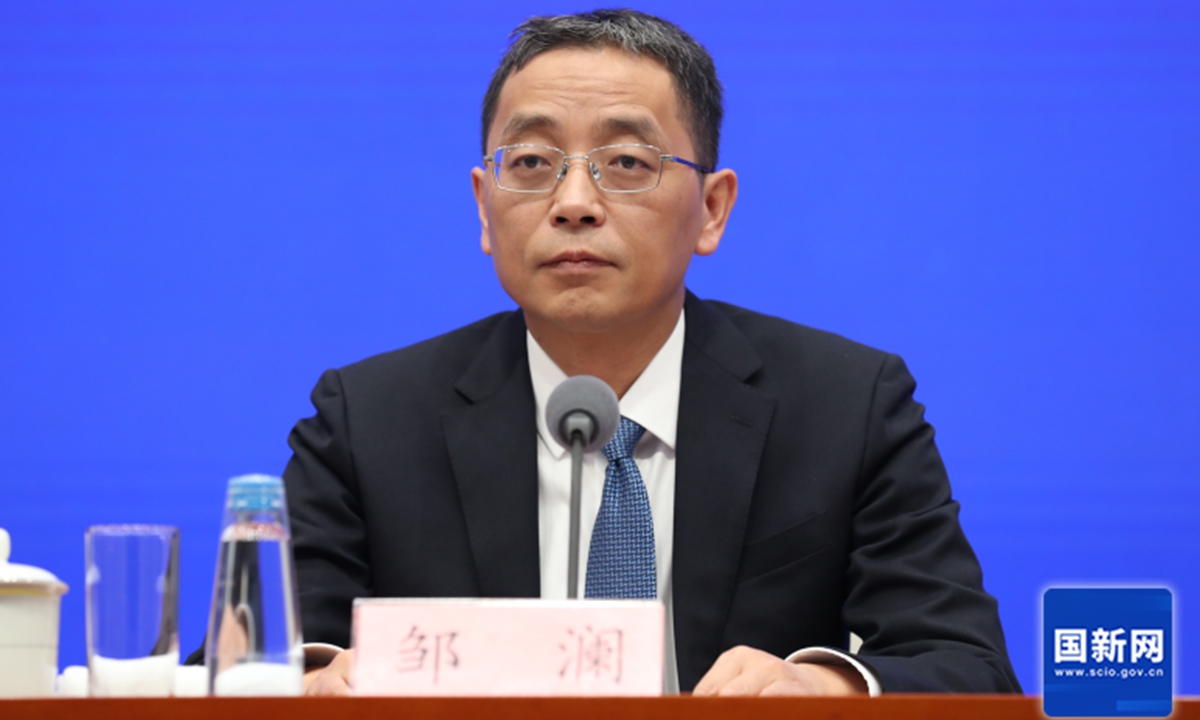
Zou Lan, deputy governor of the People's Bank of China, at a press conference in Beijing on January 15, 2026 Photo: State Council Information Office website
China's exchange rate policy is clear and consistent: upholding the decisive role of the market in exchange rate formation and keeping the yuan's exchange rate basically stable at a reasonable and balanced level. China is a responsible major country, and has neither the necessity nor the intention to gain a competitive advantage in international trade through exchange rate depreciation, Zou Lan, deputy governor of the People's Bank of China (PBC), the country's central bank, said on Thursday.
Globally, over the past few years, developed economies first raised interest rates significantly and then cut them rapidly, and international economic and trade barriers and frictions are also on the rise, leading to notable volatility in global financial markets. With the yuan's exchange rate once faced depreciation pressure, the PBC and State Administration of Foreign Exchange (SAFE) strengthened expectation management to guard against the risk of exchange rate overshooting, according to the official.
Since 2020, the US Dollar Index has risen by about 1.9 percent, while the CFETS yuan exchange rate composite index, which measures the yuan's exchange rate against a basket of currencies, has risen by 7.2 percent. Thus, overall, the yuan's exchange rate has been stable, Zou said.
Factors affecting exchange rates are highly diverse, such as economic growth, monetary policy, financial markets, and geopolitics. By the end of 2025, driven by market forces, the yuan's exchange rate against the US dollar broke above 7 yuan, Zou said. The official said that China-US economic and trade situation has eased since May 2025, and thus the US Dollar Index weakened somewhat, making the yuan appreciate against the dollar.
Looking ahead, China boasts ultra-large market and complete industrial chain, technological innovation and industrial innovation accelerate integration, new growth drivers flourish vigorously, domestic demand potential continues to unleash, domestic and international dual circulation are smooth, and macroeconomic fundamentals are upward in the long-term, which all provide support for the basic stability of the yuan's exchange rate, the deputy governor said.
Zou made the remarks at a press conference held in Beijing. The external situation remains complex and severe, and there is still uncertainty about the magnitude and pace of interest rate adjustments by major economies. Geopolitical shocks may persist, which will cause certain disturbances to the yuan's exchange rate, the official said.
The yuan's exchange rate is expected to continue to maintain two-way fluctuations with elasticity, Zou said.
RELATED ARTICLES