ARTS / ART
How China’s Spring Festival intangible heritage ‘hua mo’ lives on in kitchen
A taste of tradition
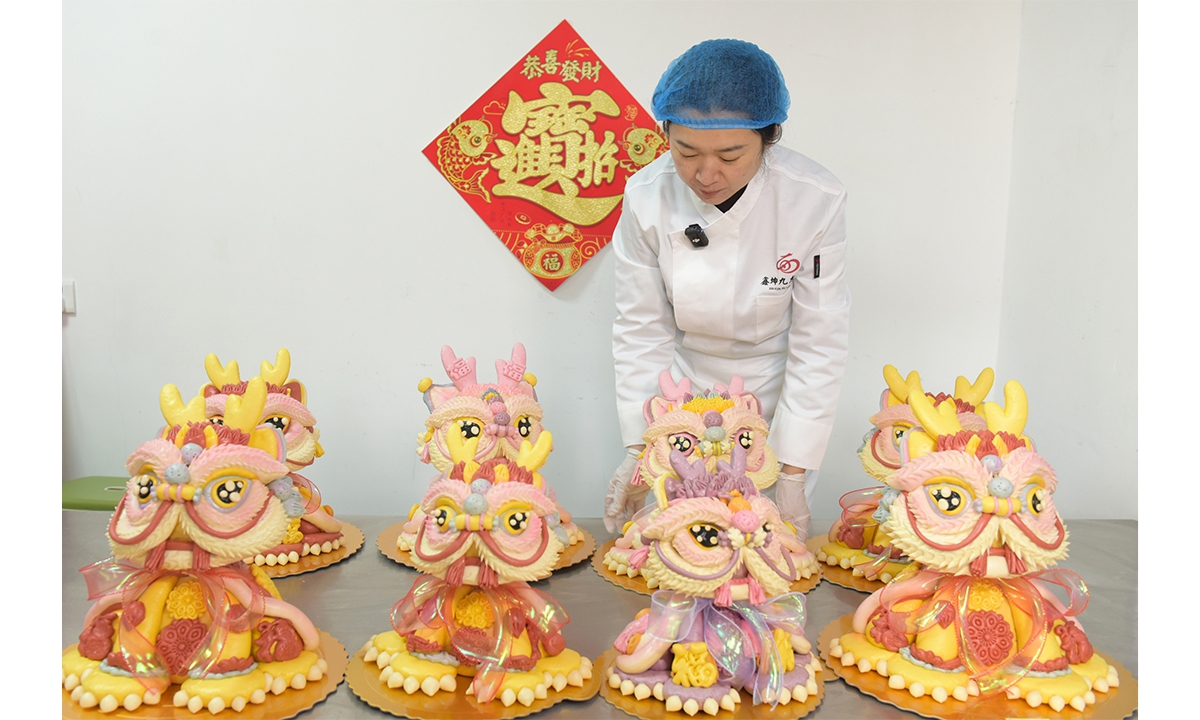
An employee arranges hua mo in Jiangzhou, East China's Shandong Province, on January 13, 2026. Photo: VCG
Long before firecrackers start crackling and red lanterns are lit, the Chinese Spring Festival begins quietly in kitchens across China. Steam rises from large metal pots. Dough is kneaded and shaped carefully. For many families, the Spring Festival's atmosphere starts not with decorations, but with food, particularly those that carry centuries of cultural memory.Among them is hua mo, or flower-shaped steamed buns, which have been showing a renewed presence and are recognized as an important item of China's intangible cultural heritage.
On China's social media platforms such as Xiaohongshu and Douyin, people have been showcasing steamed buns shaped like lions, mythical beasts, flowers and zodiac animals. Related hashtags have also surged on trending lists, attracting widespread attention.
While their elaborate shapes often draw attention, the appeal of hua mo extends far beyond their visual charm.
Steamed foods hold a special place in Spring Festival customs. Linguistically, the Chinese word for "steam" (zheng) sounds similar to characters meaning "thriving" and "rising," making these dishes symbols of prosperity and growth.
But wheat-based foods such as hua mo carry deeper cultural roots. "In early agricultural society, offering carefully prepared food was one of the most important ways to communicate with the divine," Zhu Yi, an associate professor of food security and nutrition at China Agricultural University in Beijing, told the Global Times.
Today, hua mo serve a broader range of purposes.
Beyond being a staple choice for festive celebrations, they have also become a popular gift for relatives and friends.
Rooted in grain
As a traditional form of food-based folk art popular in northern China, hua mo is most commonly found in provinces such as Shanxi, Shandong, Henan, Shaanxi and Gansu. Made from wheat flour dough, the buns function simultaneously as food, decoration and offering.
The process of making hua mo is both methodical and expressive. Dough is kneaded, tinted, shaped, left to rise and finally steamed.
Thanks to fingers moving swiftly from one step to the next, rows of vividly shaped hua mo quietly take form.
Wheat-growing northern regions in China developed elaborate flour-based foods like flower buns.
In northern areas, flower buns are traditionally made for Spring Festival, weddings, births and ancestor worship.
They may be stacked in towers, shaped into animals symbolizing fortune, or adorned with dates and beans representing fertility and abundance.
Archaeological evidence suggests that the tradition dates back more than a millennium.
Tang Dynasty (618-907) dough sculptures unearthed from Northwest China's Xinjiang Uygur Autonomous Region, indicate that flour-based ritual art was already well developed at the time.
Zhu told the Global Times that, in China's long agrarian past, when food was scarce and physical labor was demanding, high-carbohydrate, calorie-dense foods were valued as both nourishment and insurance for survival. Hua mo, in that traditional sense, is an ideal choice.
Today, circumstances have changed, and the Spring Festival staples have evolved with the times.
They are increasingly becoming lighter, more refined and more inventive. Ingredients now extend beyond polished rice and white flour to include whole wheat, mixed grains, pumpkin, root vegetables and leafy greens.
Production, storage and distribution have been modernized, with vacuum packaging and cold-chain logistics allowing the flavors of the festival to be enjoyed year-round.
Many products are now designed for do-it-yourself preparation, preserving the joy of family participation.
At the same time, designs have grown more contemporary, with cartoon figures and pop-culture mascots increasingly appearing alongside traditional motifs.
These qualities have made hua mo more than just a festive treat for Spring Festival tables. They have become a cherished part of China's culinary heritage.
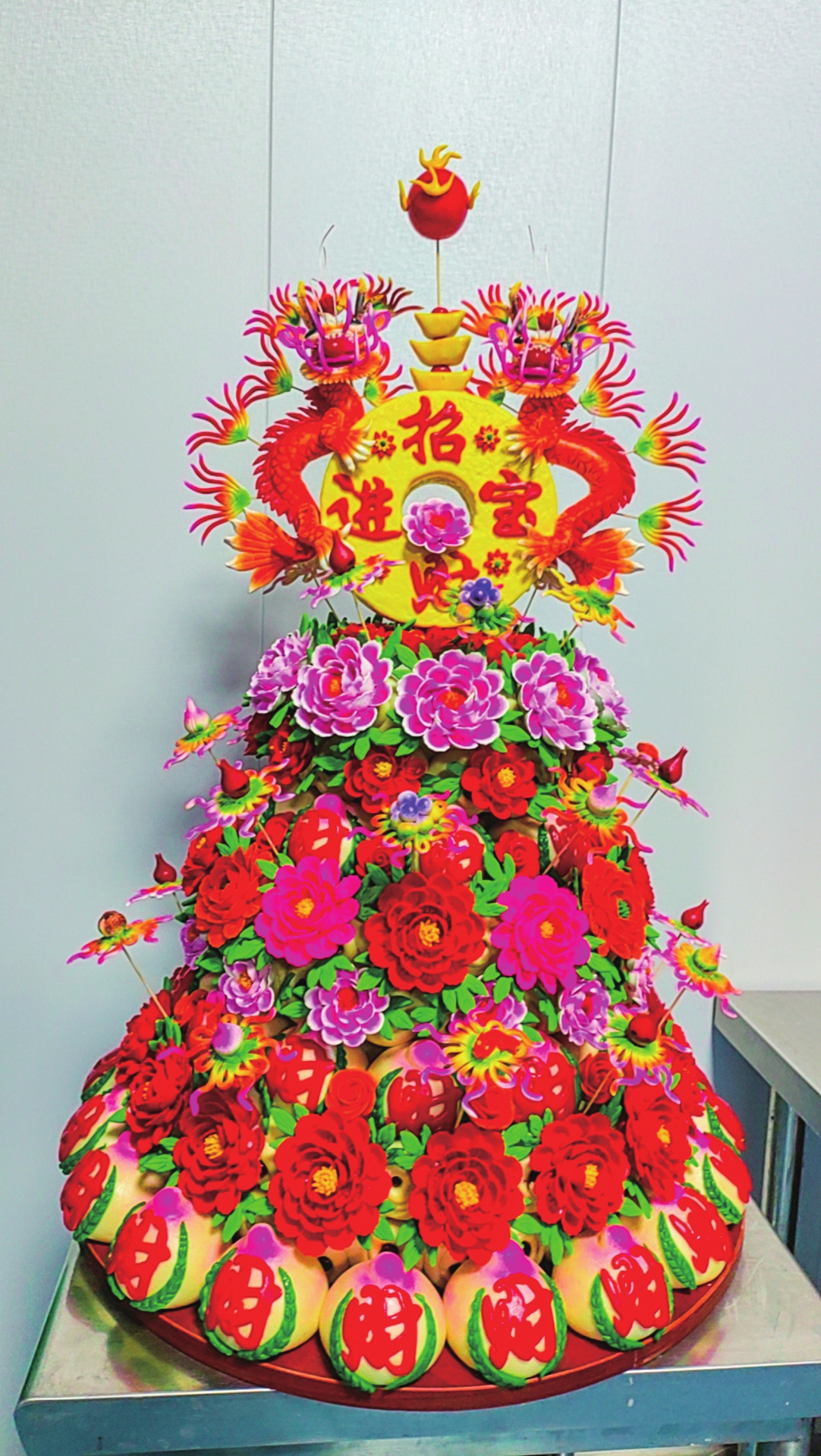
Wenxi hua mo (traditional edible decoration) Photo: Courtesy of Jia Hongjian
Living dough artOne of the most renowned centers of hua mo culture is Wenxi county, located at the northern edge of the Yuncheng Basin in North China's Shanxi Province. The local craft of making hua mo was recognized as a national intangible cultural heritage (ICH) in 2008.
Wenxi has ideal conditions for growing high-quality wheat, Jia Hongjian, curator of the county's cultural center, told the Global Times. "Because steamed buns were a daily staple, the craft gradually evolved into a distinctive local art with a history of more than 1,000 years."
Wenxi's colorful buns gained prominence during the Sui and Tang dynasties (581-907), when social stability and cultural prosperity encouraged artistic expression.
By the Ming and Qing dynasties (1368-1911), elaborately shaped buns were even served in imperial palaces during sacrificial ceremonies and festivals.
It was mainly used as a gift and commonly appeared in collective folk activities, including celebrations for a child's first month of life, elders' milestone birthdays, house-raising ceremonies and funeral rites, according to Jia.
"Generation after generation of artisans have infused these buns with cultural meaning," Jia said.
"They are art at our fingertips, and flavor on our tongues."
The ceremonial role of Wenxi buns has waned over time, while their artistic, aesthetic, and use have grown in popularity.
For instance, during weddings, a pomegranate-shaped hua mo is gifted, symbolizing fertility and prosperity, said Jia.
Additionally, on the Double Ninth Festival, or China's Seniors' Day, the elderly receive chrysanthemum-shaped steamed buns, conveying wishes of happiness and longevity.
"Wenxi hua mo is woven into everyday life and carried forward by the communities that keep the tradition alive. It reflects local customs and values, offering a tangible window into our history, folk practices and sculptural artistry," Jia told the Global Times.
RELATED ARTICLES