IN-DEPTH / IN-DEPTH
CPC in global eyes: CPC ‘clearly charts the direction and goals for the future’: Indonesian volunteer
Enlightenment Through Service
By in Shanghai Published: Jan 15, 2026 10:12 PM

Editor's Note:
Chinese President Xi Jinping has pointed out, "to understand China today, one must learn to understand the Communist Party of China (CPC)." With the rapid development of China's economy and society, and the steady advancement of Chinese path to modernization, the notable achievements of the CPC have drawn extensive international attention and scholarly interest. Against this backdrop, the Global Times has launched the "CPC in Global Eyes" column, focusing on the feelings, perspectives, and insights of international friends from various fields regarding the CPC's historical path and achievements.
They include those who have toured China; deeply study the CPC in academic fields; work, live, study, seek employment, or do business in various fields in China; and who, though having not having visited China in person, pay close attention to the CPC's policies and trends. Through their vivid personal experiences, we aim to present a multifaceted overseas view of the CPC.
In the fifth installment of this series, we turn to Shanghai, home of the Memorial Hall Scenic Area of the First, Second, and Fourth National Congresses of the CPC. Revered as the "place of the Party's original aspiration," the area is a touchstone for the CPC's founding ideals. At the Memorial Hall of the Second National Congress of the CPC, a unique team of international volunteers dedicates their leisure time to offering guided services and facilitating cultural exchange activities. The Global Times recently spoke with two of these volunteers, who shared their service journeys and offered vivid, first‑hand observations on the Party.
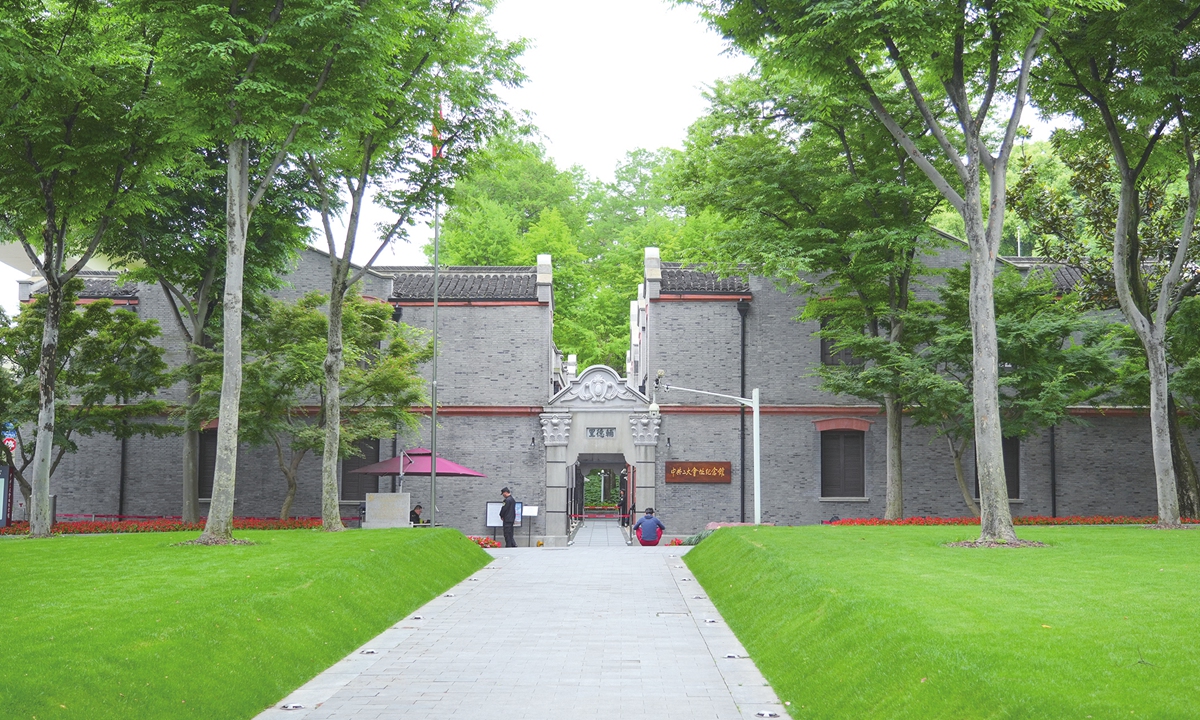
One day in early 2025, Indonesian student Audrey Keiko Wilona stepped into the Memorial Hall of the Second National Congress of the CPC in downtown Shanghai while taking a stroll. At the time, Wilona, who was still quite unfamiliar with the history of the CPC, did not expect a casual visit to affect her so deeply.
Inside the memorial, the 22-year-old encountered the struggles of the Party's early members. She was particularly drawn to the section on the former site of the Pingmin Women's School, the CPC's first school for cultivating women cadres in 1922. There, Wilona discovered accounts of how the Party helped women access education, pursue truth, and join the revolutionary cause, which resonated with her in a way that felt intimate despite the distance in time and space.
"When I read the stories of these pioneering women educators, it reminded me of Indonesia's Raden Adjeng Kartini, a symbol of women's education and empowerment in my country," Wilona recalled. "Even though the two places are far apart, the spirit of pursuing knowledge and trying to improve society is very similar."
Some of the teachers in the Pingmin Women's School later went on to teach at the Shanghai University. As an international student in Shanghai University's School of Life Sciences, Wilona felt a meaningful personal connection, which sparked her curiosity and affinity toward the original site. Months later, at the memorial's invitation, she returned not as a visitor but as an international volunteer.
"Through this volunteer work, I can not only learn the history of the CPC more directly, but also feel a stronger sense of belonging to the local community," Wilona told the Global Times. "It is a very meaningful part of my life in Shanghai."
Including Wilona, the international volunteer team now includes 30 people from 16 countries and covers 10 languages, according to the memorial. After training, volunteers can choose to assist international visitors at the memorial, and also to take part in Shanghai's cross-cultural exchange activities, bringing those stories to a wider audience.
Wilona has taken part in two local speech competitions as an international volunteer at the memorial. At those platforms that encouraged diverse voices to tell China's stories, she talked about her visits to Shanghai's memorials and sites related to the CPC.
During one of her speeches, Wilona played the classic Chinese revolutionary piece Ode to the Red Plum Blossom on the guzheng, a traditional Chinese zither. The song commemorates Jiang Zhuyun (1920-1949), a Party member revered as a heroic model. Many CPC members like "Sister Jiang" worked selflessly and fought tirelessly for a brighter future for the country. "They light the way forward," Wilona said.
Beyond historical narratives, Wilona's understanding of CPC members comes more directly from her daily life. From staff at the memorial to some of her university classmates and teachers, she finds these ordinary Party members around her to be genuinely warm and helpful, having offered much support as she adjusted to life in Shanghai. "More than that, I feel there's an atmosphere of willingness to help others throughout Chinese society, which is probably inseparable from the CPC's commitment to serving the people."
Therefore, when asked to describe the CPC in three words or phrases, Wilona's first choice was "people-oriented."
The other two were "visionary" and "resilience." On "visionary," Wilona pointed to an exhibition hall at the memorial that displays 70 representative Party constitutions from different eras. In July 1922, the CPC adopted its first formal constitution right where this current memorial hall is located. "[These documents] made me feel that the Party not only summarizes past achievements, but also clearly charts the direction and goals for the future. It shows a long-term vision," Wilona told the Global Times.
"Overall, these words reflect the impressions I formed from the historical figures I learned about, and from the community dedication I have seen during my time in China," she concluded. "They represent how I, as an international volunteer and student, understood the stories shared with me here."
Living and studying in China gives Wilona a frontline view of the country's progress under the leadership of the CPC. For her, the most immediate impression as a woman has been a deep, almost tangible sense of safety, as she can wander the streets alone at night in Shanghai without a second thought. She also speaks highly of China's rapid advances in high technology, and finds its seamless blending of tradition and modernity truly striking.
"All of this has made me keenly aware of the vitality and warmth of China under the Party's leadership," she said.
Chinese President Xi Jinping has pointed out, "to understand China today, one must learn to understand the Communist Party of China (CPC)." With the rapid development of China's economy and society, and the steady advancement of Chinese path to modernization, the notable achievements of the CPC have drawn extensive international attention and scholarly interest. Against this backdrop, the Global Times has launched the "CPC in Global Eyes" column, focusing on the feelings, perspectives, and insights of international friends from various fields regarding the CPC's historical path and achievements.
They include those who have toured China; deeply study the CPC in academic fields; work, live, study, seek employment, or do business in various fields in China; and who, though having not having visited China in person, pay close attention to the CPC's policies and trends. Through their vivid personal experiences, we aim to present a multifaceted overseas view of the CPC.
In the fifth installment of this series, we turn to Shanghai, home of the Memorial Hall Scenic Area of the First, Second, and Fourth National Congresses of the CPC. Revered as the "place of the Party's original aspiration," the area is a touchstone for the CPC's founding ideals. At the Memorial Hall of the Second National Congress of the CPC, a unique team of international volunteers dedicates their leisure time to offering guided services and facilitating cultural exchange activities. The Global Times recently spoke with two of these volunteers, who shared their service journeys and offered vivid, first‑hand observations on the Party.
The entrance of the Memorial Hall of the Second National Congress of the CPC in Shanghai Photo: Chen Xia/GT
One day in early 2025, Indonesian student Audrey Keiko Wilona stepped into the Memorial Hall of the Second National Congress of the CPC in downtown Shanghai while taking a stroll. At the time, Wilona, who was still quite unfamiliar with the history of the CPC, did not expect a casual visit to affect her so deeply.
Inside the memorial, the 22-year-old encountered the struggles of the Party's early members. She was particularly drawn to the section on the former site of the Pingmin Women's School, the CPC's first school for cultivating women cadres in 1922. There, Wilona discovered accounts of how the Party helped women access education, pursue truth, and join the revolutionary cause, which resonated with her in a way that felt intimate despite the distance in time and space.
"When I read the stories of these pioneering women educators, it reminded me of Indonesia's Raden Adjeng Kartini, a symbol of women's education and empowerment in my country," Wilona recalled. "Even though the two places are far apart, the spirit of pursuing knowledge and trying to improve society is very similar."
Some of the teachers in the Pingmin Women's School later went on to teach at the Shanghai University. As an international student in Shanghai University's School of Life Sciences, Wilona felt a meaningful personal connection, which sparked her curiosity and affinity toward the original site. Months later, at the memorial's invitation, she returned not as a visitor but as an international volunteer.
"Through this volunteer work, I can not only learn the history of the CPC more directly, but also feel a stronger sense of belonging to the local community," Wilona told the Global Times. "It is a very meaningful part of my life in Shanghai."
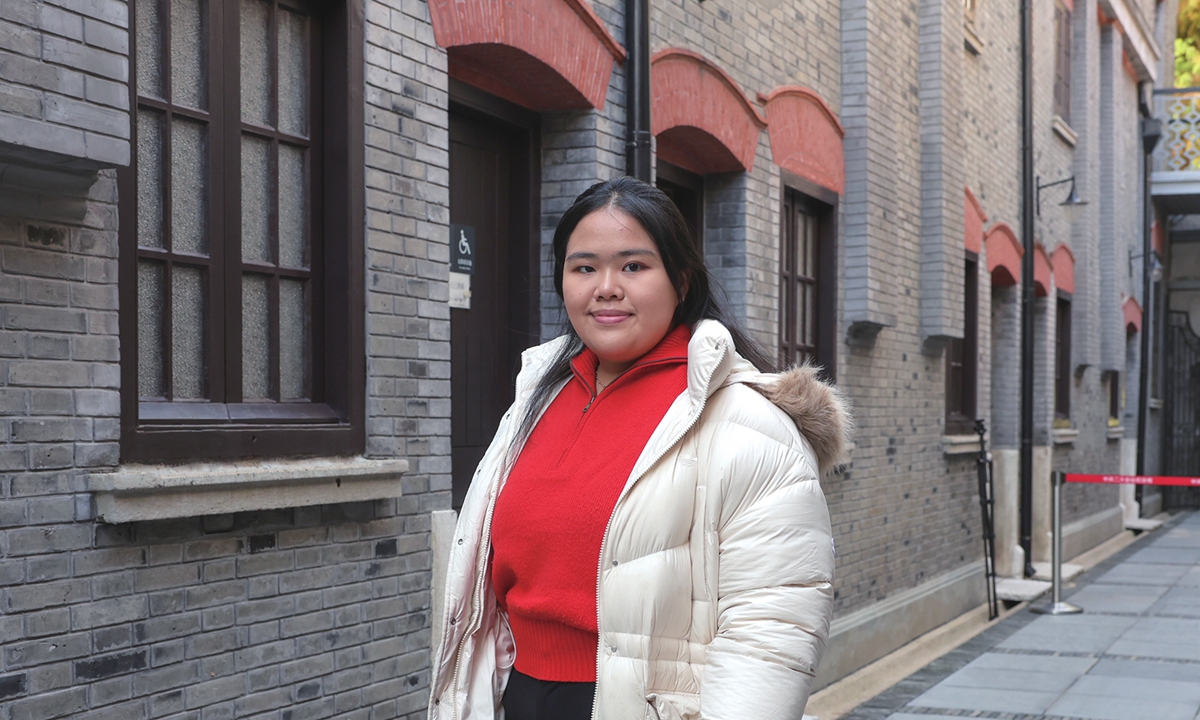
Audrey Keiko Wilona Photo: Chen Xia/GT
Including Wilona, the international volunteer team now includes 30 people from 16 countries and covers 10 languages, according to the memorial. After training, volunteers can choose to assist international visitors at the memorial, and also to take part in Shanghai's cross-cultural exchange activities, bringing those stories to a wider audience.
Wilona has taken part in two local speech competitions as an international volunteer at the memorial. At those platforms that encouraged diverse voices to tell China's stories, she talked about her visits to Shanghai's memorials and sites related to the CPC.
During one of her speeches, Wilona played the classic Chinese revolutionary piece Ode to the Red Plum Blossom on the guzheng, a traditional Chinese zither. The song commemorates Jiang Zhuyun (1920-1949), a Party member revered as a heroic model. Many CPC members like "Sister Jiang" worked selflessly and fought tirelessly for a brighter future for the country. "They light the way forward," Wilona said.
Beyond historical narratives, Wilona's understanding of CPC members comes more directly from her daily life. From staff at the memorial to some of her university classmates and teachers, she finds these ordinary Party members around her to be genuinely warm and helpful, having offered much support as she adjusted to life in Shanghai. "More than that, I feel there's an atmosphere of willingness to help others throughout Chinese society, which is probably inseparable from the CPC's commitment to serving the people."
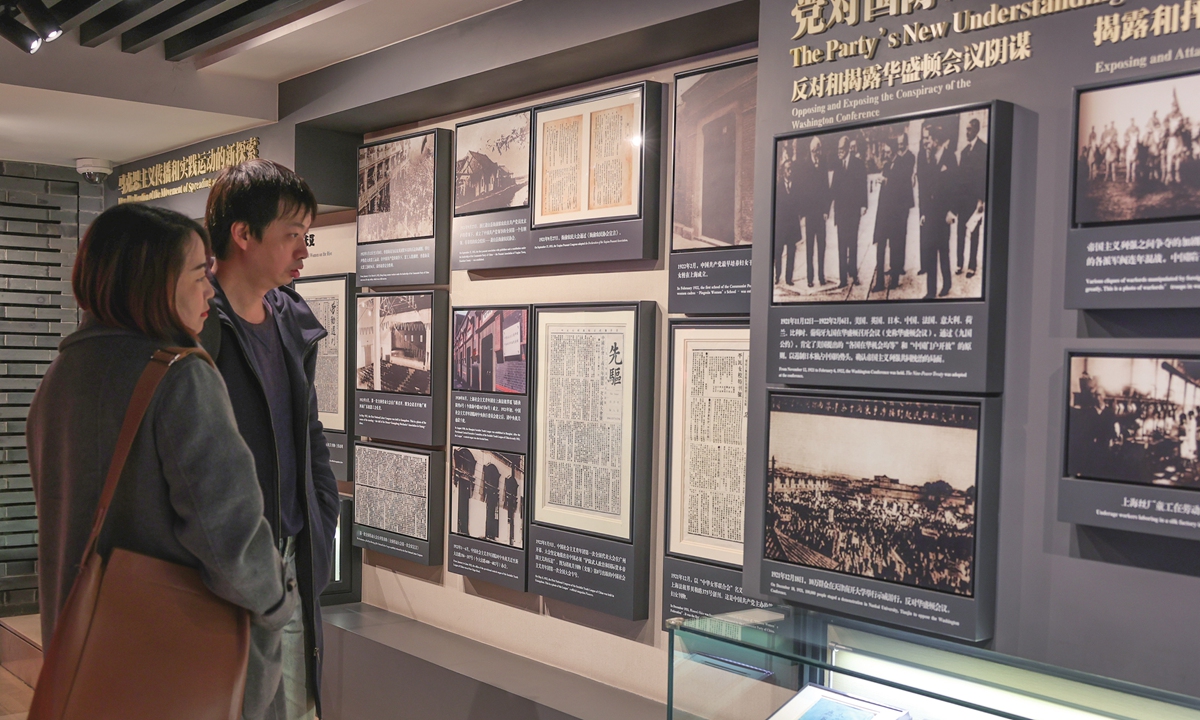
Visitors inspect the exhibits displayed at the Memorial Hall of the Second National Congress of the CPC on January 6, 2026. Photo: Chen Xia/GT
Therefore, when asked to describe the CPC in three words or phrases, Wilona's first choice was "people-oriented."
The other two were "visionary" and "resilience." On "visionary," Wilona pointed to an exhibition hall at the memorial that displays 70 representative Party constitutions from different eras. In July 1922, the CPC adopted its first formal constitution right where this current memorial hall is located. "[These documents] made me feel that the Party not only summarizes past achievements, but also clearly charts the direction and goals for the future. It shows a long-term vision," Wilona told the Global Times.
"Overall, these words reflect the impressions I formed from the historical figures I learned about, and from the community dedication I have seen during my time in China," she concluded. "They represent how I, as an international volunteer and student, understood the stories shared with me here."
Living and studying in China gives Wilona a frontline view of the country's progress under the leadership of the CPC. For her, the most immediate impression as a woman has been a deep, almost tangible sense of safety, as she can wander the streets alone at night in Shanghai without a second thought. She also speaks highly of China's rapid advances in high technology, and finds its seamless blending of tradition and modernity truly striking.
"All of this has made me keenly aware of the vitality and warmth of China under the Party's leadership," she said.
RELATED ARTICLES