ARTS / CULTURE & LEISURE
Rooted in conservation, a veteran sows seeds of ecotourism amid nature
Human-nature interplay

Two baby binturongs at the Pu'er Sun River Forest Park in Pu'er, Yunnan Province Photo: Courtesy of Mekong Tourism
In Pu'er Sun River Forest Park, Southwest China's Yunnan Province, a craspedolobium vine has been growing for more than 50 years. The shrub is not rare, in fact, it pales in comparison to the park's over 2,100 precious botanical species. But this vine tells a story of human-nature interplay - When a walkway was built across its path, the park left a hole to let it climb through. In return, the vine now offers a natural rest spot where visitors can lean and take some time out.
A 10-minute walk from the vine brings a whiff of "popcorn." The source of the scent is a few baby binturongs nearby. Though wild by nature, these cubs' lively growth was gently midwifed by the park team, who helped their mother nurse and have provided the cubs 24-hour care since they were born in January 2025.
Be it the growing vine or the tender newborns, the park has many such sights that reveal the mutual allowance between nature, wildlife, and people. Officially opened to the public in 2013, the park is a tourism project developed by Mekong Tourism.
"Ecological peace is how we build tourism. It's not an add-on, but a promise we make for all our projects," Yu Jinfang, Mekong Tourism's CEO, told the Global Times.
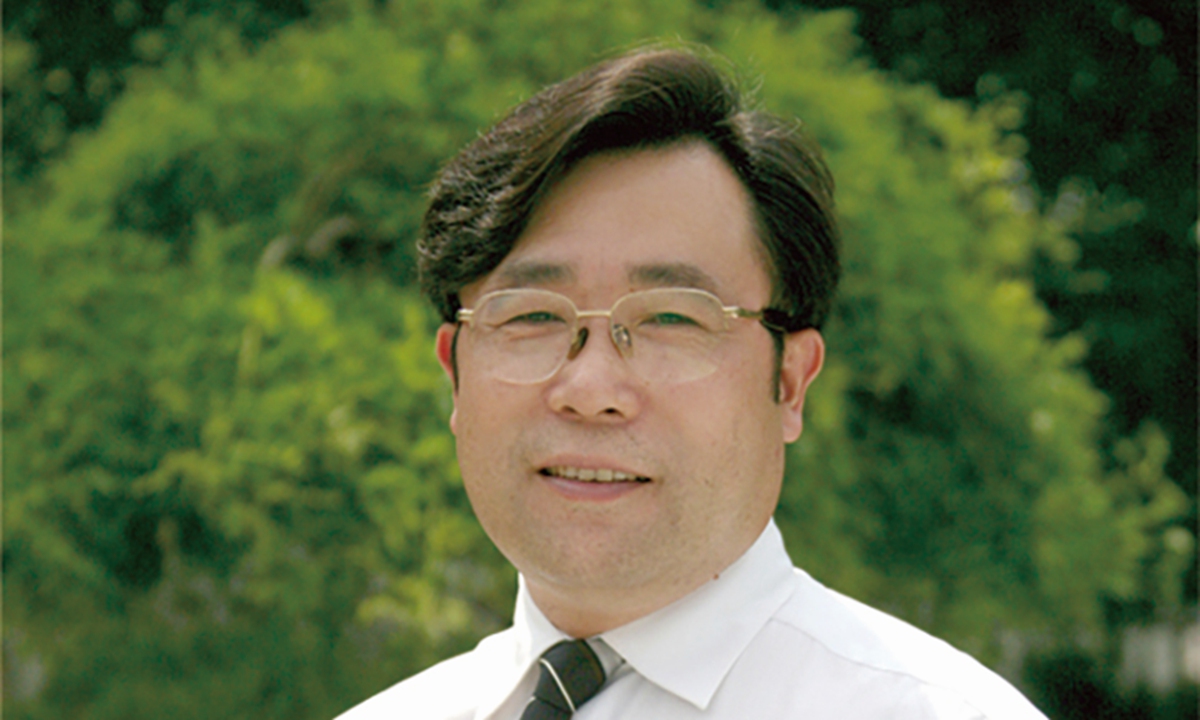
Yu Jinfang, CEO of Mekong Tourism Photo: Courtesy of Mekong Tourism
Bond with nature
Yu's promise began around 30 years ago. By the mid-1990s, he was already a veteran entrepreneur in pipeline manufacturing. Motivated by a vision to rewrite the narrative of underdeveloped regions, he encountered the tropical rainforests of Xishuangbanna by chance. What he saw was not merely trees, but a calling of the Mother Nature.
Back then, the locals' livelihoods faced limited resources. To survive, people had to cut down forests to clear land for crops and rubber plantations, letting precious ecological resources fall by the wayside.
"Though not a Yunnan local, I was determined to find a way to protect the local greenery while ensuring it has sustainable value," Yu said, adding that "tourism" was his solution.
Starting from 1995, he began leading his team to develop the Xishuangbanna Primeval Forest Park through a "conservation-led" developmental approach. At that time, the project had already learned how to "make way for trees." Fallen ancient trees and flowering plants were left where they lay, and tourist facilities were built to fit into the living landscape.
Different from reshaping nature into man-made scenery, this "conservation-based tourism" costs more and takes longer time to see a return on investment. Yet it helped reverse the decline, raising the site's rainforest coverage to over 98 percent. The authentic experience of nature at the site has also become a most compelling selling point for visitors.
"'Nature travel' isn't a botanic tour for me. It's an immersive return to the wild that no fabricated wilderness can genuinely offer," Yao Kaiyu, a 45-year-old visitor from Shenzhen, told the Global Times.
Years of conservation-led tourism development taught Yu and his team that nature means more than the natural environment, but also encompasses wildlife to be guarded.
Less than an hour's drive from the Xishuangbanna rainforest lies the Wild Elephant Valley, another of the tourism group's projects established in the early 2000s. The site is home to wild Asian elephants, which are listed as an endangered species by the International Union for Conservation of Nature. Today, there are over 300 of them in China, with approximately 250 frequently active in and around the valley.
Initially planned to only have elephant watching via cable cars and walkways, the valley's purpose deepened in 2005 after a 3-year-old calf named "Ranran" was rescued there. At that time, Ranran was wounded by a poacher's snare. After six months of treatment, the calf was eventually nursed back to health and returned to the wild. Today, Ranran has grown up to become a mother.
This experience inspired the valley to see tourism as a "practical ecosystem that can sustain the wildlife," said Yu. A Wild Asian Elephant Breeding and Rescue Center and a Wildlife Rescue and Conservation Center were set up one after the other. Including the elephant, the two centers have rescued 12,900 wild animals of various species.
"They migrate often, but we, as 'elephant doctors' will keep a forever home for them," Chen Jiming, an expert at the Rescue Center, told the Global Times.
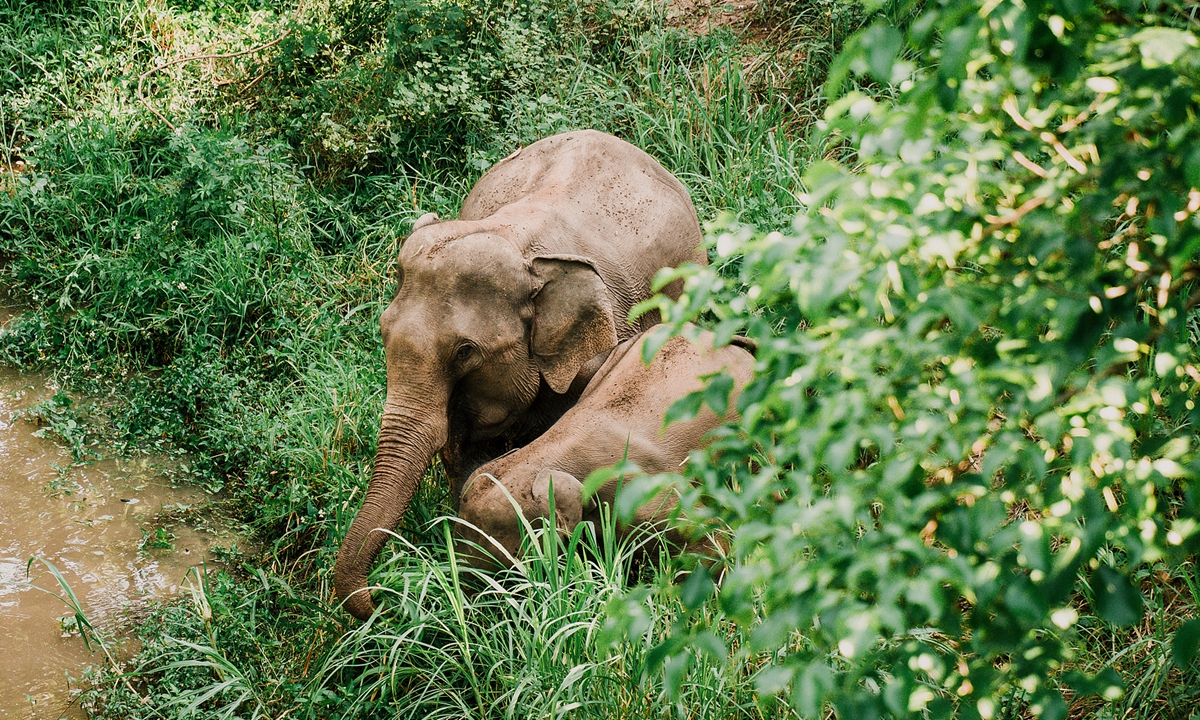
A wild Asian elephant at Wild Elephant Valley in Xishuangbanna, Yunnan Province Photo: Courtesy of Mekong Tourism
'More than drawing crowds'
The human-wildlife bond extends beyond being "doctors for elephants" to the tourism group's other projects such as the Yunnan Safari Park in Kunming. At the park, "Sister Guo," who is retiring this year, has tenderly guarded a raccoon named "Diudiu" for 17 years. Meanwhile, Tang Rong, a girl who once dreamed of the big city, has now chosen to stay in her hometown, where she popularizes wildlife knowledge among the public.
Including Sister Guo, Tang and many others, these tourism service workers are all residents. Although locals were originally engaged mainly in agriculture, the increasingly successful local tourism has provided them with new employment opportunities, particularly encouraging young people to stay in their hometowns. Taking the Pu'er Sun River Forest Park as an example. Eighty-five percent of its employees are local, with ethnic minorities making up 60 percent of the staff.
Born in a remote mountain village, Nanli, a 23-year-old girl from the Dai ethnic group, told the Global Times that she once felt a bit "puzzled" about her future, but the tour guide job at the Pu'er Sun River Forest Park has given her an income to support her family and, more importantly, a "renewed sense of hope in life."
"For us, tourism is more than drawing crowds; it's about giving back and bringing tangible benefits to the local community," Yu told the Global Times.
The year 2025 marked the 30th anniversary of Mekong Tourism, and this milestone will be celebrated at an anniversary event by the group in February 2026. Looking back on his journey, Yu said that what "shaped" him the most were those years he served in uniform and his childhood memories.
In 1957, Yu was born to a humble farming family in Huzhou, Zhejiang Province. At 18, he made the 2,300 kilometer journey from his hometown to Yunnan as a new recruit, sustaining himself on little more than a mantou (steamed bun) on an old train.
The discipline and resilience he learned in the army became the bedrock of how he manages his business. Many veterans were brought into his tourism group. As a veteran himself, Yu still insists on visiting project sites that are often remote and rough, leaving him mud-spattered.
Perhaps it's the old soldier's rigor in him, but Yu rarely shows much emotion. Yet his voice softens when he recalled his "four mosquitoes" story to the Global Times. As a child, his mother would roll up her trousers to draw the mosquitoes away from him. "The love and sense of duty my parents taught me in childhood," he says, "were planted deep in my soul, and guide me still."
RELATED ARTICLES