ARTS / CULTURE & LEISURE
Temple’s limited run broadens access to Beijing Central Axis heritage
Honoring the virtuous
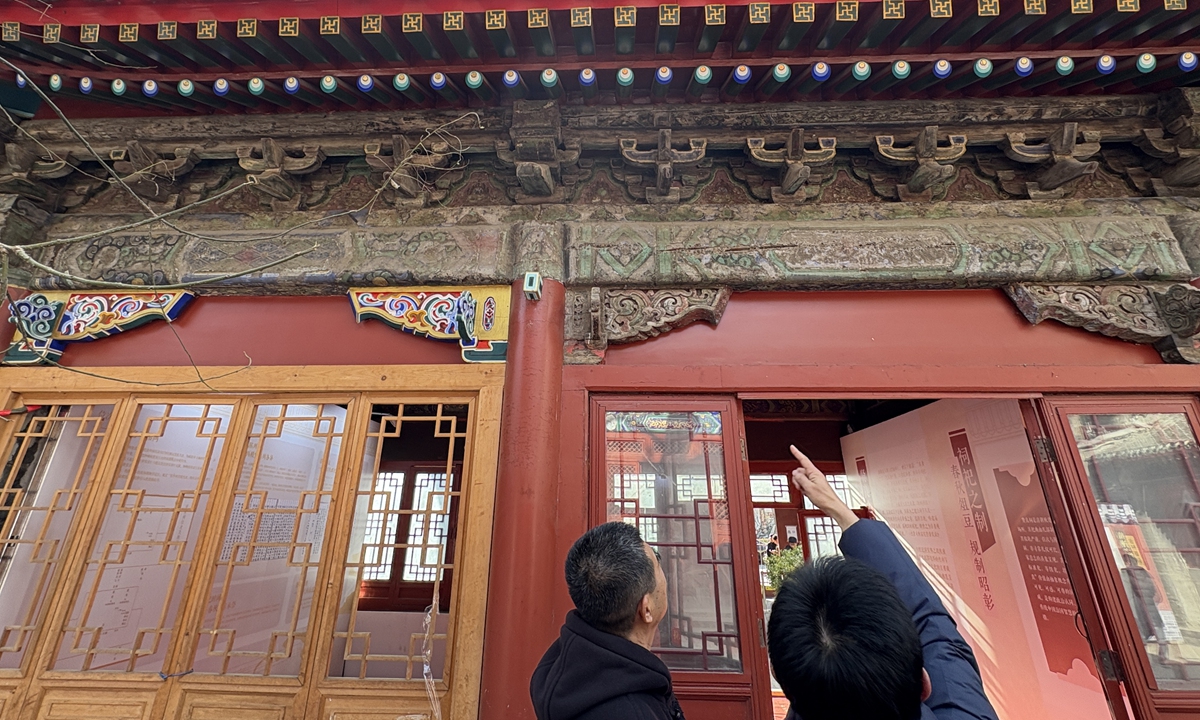
Visitors examine the restored and unrestored parts of the Xianliang temple in Beijing. Photos on this page: Wu Jie/GT
The Xianliang Ancestral Temple in Beijing's Xicheng District opened its doors for a limited run recently, adding a new cultural landmark along the Chinese capital's Central Axis.
The temple (also translatedas Temple of the Virtuous), well known for its intricate wood carvings and stunning dragon-themed caisson ceilings, was built during the reign of Emperor Yongzheng of the Qing Dynasty (1644-1911) in honor of meritorious officials.
Walking into the triple-courtyard compound from the solemn main gate close to the Beihai North station along subway Line 6, one is immediately enveloped by an atmosphere steeped in history and reverence.
The temple's architecture, with its sweeping eaves and ornate beams painted in vibrant red, blue and gold, speaks to a tradition of honoring virtuous individuals about 300 years ago.
Liu Zheng, a member of the Chinese Society of Cultural Relics, told the Global Times that the temple was originally built during the reign of the Emperor Yongzheng to commemorate his brother Yunxiang, who helped him secure the throne and consolidate his power, but passed away at a young age.
Later, the temple was used to honor officials who made outstanding contributions to the Qing Dynasty. Many ministers considered it an honor to be enshrined in the Xianliang temple, Liu said.
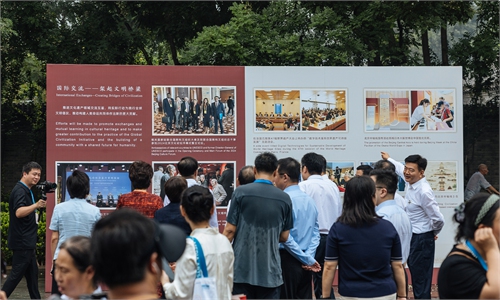
A temporary exhibition is currently being held in the main hall of the temple to offer an in-depth interpretation of its history and the timeless spirit of recognizing individuals who have demonstrated virtue, loyalty, and exceptional service to the country.
A staff member there told the Global Times that the temple is currently only partially open, with a daily visitor limit of 700 people. After January 31, the temple will close again for further restoration and maintenance. It will reopen once all the restoration is completed.
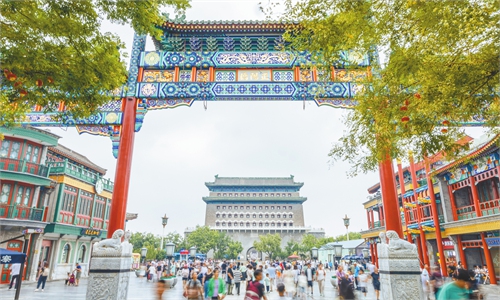
The opening is part of the capital's efforts to protect and utilize cultural relics, and promote public access to more heritage sites along the Beijing Central Axis, which was recognized as a UNESCO World Heritage Site in 2024.
Another three heritage buildings around the Central Axis will officially open before the Spring Festival and more tailored tourist routes will be launched to preserve and showcase the history and culture of the world heritage site, according to a press conference the city held on January 7.
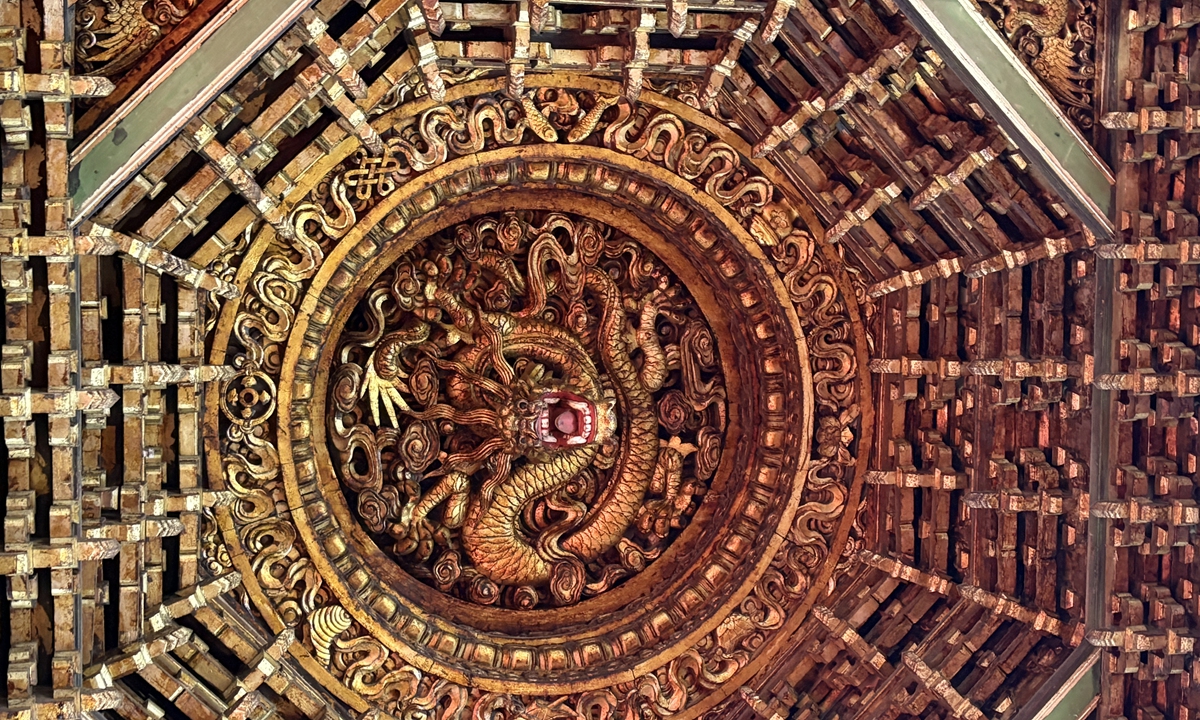
The dragon-themed caisson at the Xianliang Ancestral Temple in Beijing
Prestigious statusNear Beijing's Di'anmen, many temples were built during the Qing Dynasty for sacrificial ceremonies. Among them, the Xianliang temple is the largest and most prestigious architectural complex. Today, these temples have become distinctive landmarks and cultural symbols along the Central Axis, Liu said.
From Emperor Yongzheng to Emperor Xuantong era, a total of 178 people were commemorated at the temple, including some well-known Qing Dynasty senior officials such as Liu Yong, Zeng Guofan and Zhang Zhidong, according to the exhibition. The temple was previously used as a school before being listed as a protected site.
In addition to appreciating the reverence of virtuous individuals, many visitors have been drawn by the dragon caisson ceiling on the roof of the main hall.
A traditional architecture enthusiast surnamed Shi, who came from Beijing's eastern Tongzhou District for the visit, told the Global Times that he specifically came to admire the dragon caisson ceiling.
"This type of dragon caisson structure is very rare. It symbolizes that this was a royal sacrificial site. The main hall is a half timber-framed and half brick-and-stone construction. The brick-and-stone section might have been used in the past to house the memorial tablets of the ministers honored here," he said.
Liu said that the coiled dragon caisson ceiling is one of the symbols of royal architecture. Using this type of ceiling in the temple indicates that being enshrined there was a royal gift, highlighting its prestigious status and enhancing the sense of honor for those being commemorated there. This distinctive feature not only reflects the temple's royal connection but also emphasizes its high rank among similar buildings.
A demonstration of the roof's popularity, a glazed refrigerator magnet, modeled after the dragon caisson ceiling, sold out within days of its release. While it is currently sold out, visitors can now place advance orders for the next round of sales, said the staff member.
Integrating into community life
Another three revitalized cultural heritage sites along the Central Axis that will soon open to the public are Peking Opera artist Mei Lanfang's ancestral home, Wudao Temple and Yongquan An (nun convent). Also, a Beijing Central Axis digital museum is also being planned. Yongquan An will be transformed into an art museum for precious nanmu wood, creating a culturally immersive experience that "brings the national timber back to life."
Mei's ancestral home will be developed into a Mei Lanfang aesthetic art exhibition center, integrating diverse functions such as digital art and immersive costume experiences, while Wudao Temple will be revitalized as a Beijing dialect hall, building a community centered on the aesthetics of daily life, Jin Zhen, chief of the Xicheng District Bureau of Culture and Tourism, said at the press conference.
Injecting contemporary aesthetics into these historical sites and creating interactive experiences is one of the examples of Beijing's efforts to promote the opening and revitalization of cultural heritage buildings.
Stretching 7.8 kilometers from the Yongding Gate in the south to the Bell and Drum Towers in the north, the Beijing Central Axis was constructed based on ancient architectural philosophies to create an ideal layout for a capital city. The Central Axis can be traced back to the Yuan Dynasty (1279-1368), while its length was extended in the Ming and Qing dynasties (1368-1911).
Preserving historical heritage while integrating it into contemporary life and serving the public, the cultural roots of Beijing will continue to thrive in modern times.
RELATED ARTICLES