Illustration: Chen Xia/GT
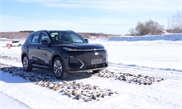
China's electric vehicle (EV) sector boom is creating more growth points within the industry ecosystem, bringing fresh economic opportunities to regions traditionally constrained by harsh climates.Heihe, in Northeast China's Heilongjiang Province, where morning temperatures can drop to about -30 C in winter, is attracting an increasing number of carmakers for EV cold-weather testing. The city has become a key hub for extreme weather testing, by establishing partnerships with more than 170 domestic and international companies and building 34 professional test bases and 120 high-standard testing roads, according to a People's Daily report on Sunday.
The Heihe case illustrates how technological demands from the EV sector are linking advanced vehicle engineering with regional economic development. It is a concrete example of how industrial progress in emerging sectors can generate high-value economic opportunities beyond traditional urban centers and manufacturing hubs, helping local regions overcome climatic disadvantages.
Cold weather performance remains one of the challenges for EVs, as low temperatures affect battery discharge rates and icy and snowy environments have an impact on vehicles' on-road stability. To address them, vehicle tests in Heihe are comprehensive, including cold starts, anti-skid capabilities, defrosting and defogging systems, as well as battery performance - capabilities that are crucial for consumer trust.
For Heihe city, this surge in testing has created employment opportunities and generated new growth points for local economy. The testing season every year has activated Heihe's winter economy. During the 2024-25 season, direct revenue from EV testing reached 170 million yuan ($24.4 million), while related services - including accommodation, dining, tourism, and logistics - generated 430 million yuan in additional income.
Now, with 85 percent of China's and 45 percent of the world's cold-region vehicle testing market, Heihe city is emerging as a hub of global automotive testing in extreme cold, according to China National Radio.
For China's rapidly expanding EV industry, the rise of testing centers like Heihe signifies a strengthening of the domestic supply chain and industrial ecosystem. Tests that previously required overseas facilities can now be conducted domestically at much lower testing costs now. According to the People's Daily, more than 90 carmakers have participated in Heihe's 2025-26 winter testing so far, deploying more than 3,100 test vehicles and 5,000 engineers, illustrating the scale and unique value of domestic testing hubs.
The Heihe model has broader implications for the growth of Chinese EV industry. As a growing number of Chinese consumers embrace green EVs, proven performance in frozen weather conditions certainly provides a tangible competitive edge. The testing would also help boost Chinese EVs' international credibility, certifying specific EVs under extreme environmental conditions and enabling smoother market entry abroad.
Leveraging dedicated cold-region testing bases and breakthroughs in battery and thermal management technologies, China's EVs are rapidly making technological progress in cold-weather performance, laying a solid technical foundation for large-scale deployment in frigid places. For instance, Dongfeng Automobile on Wednesday dispatched test vehicles equipped with its new 350 watt-hours/kilogram solid-state batteries for extreme weather testing. Official data show the batteries can deliver more than 1,000 kilometers of range per charge. The trials focus on low-temperature range, charging, and durability, with more than 70 tests conducted in -40 C to -30 C weather conditions.
The success of Heihe's testing hub underscores the convergence of technology, regional economic development, and international trade strategy. By turning extreme climatic conditions into structured testing environments, China is supporting tailored regional development, helping generate economic value beyond metropolitan industrial centers.
The rich data and experiences gained in tests in Heihe and other places enable Chinese EV manufacturers to compete more effectively in international markets, reinforcing China's leading position in the EV industry and laying the groundwork for sustained innovation and high-quality growth.
The author is a reporter with the Global Times. bizopinion@globaltimes.com.cn
RELATED ARTICLES