Chinese unicorn UBTech Robotics signs cooperation deal with Airbus, expanding application scenarios
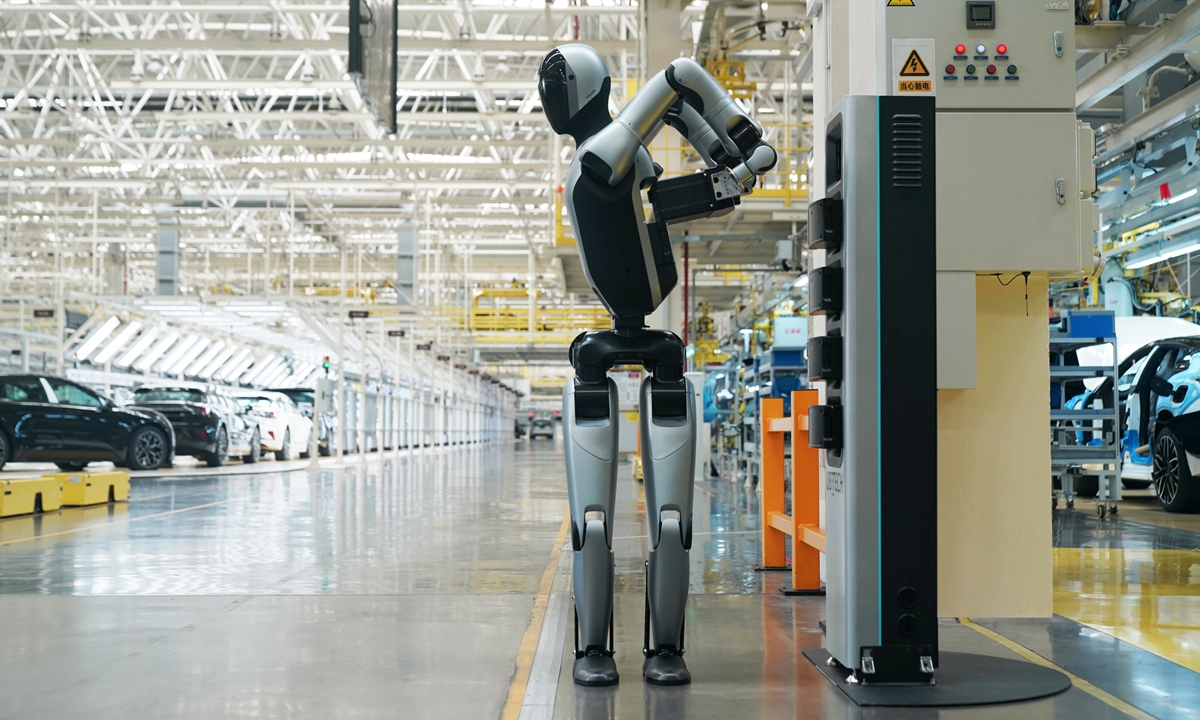
Photo: Courtesy of UBTECH
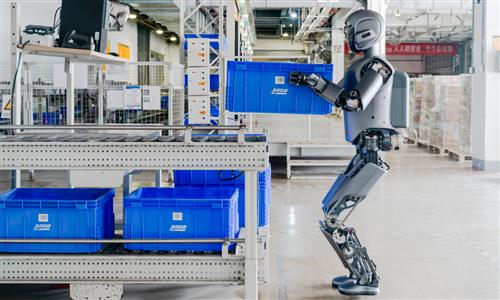
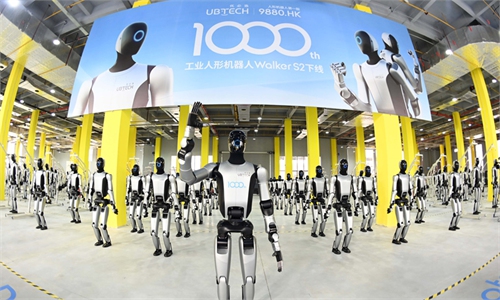
Chinese humanoid robotics producer UBTECH Robotics announced on Sunday that it has signed a cooperation agreement with aviation giant Airbus, which includes the purchase of the Chinese company's latest industrial humanoid robot, Walker S2, for use in Airbus manufacturing facilities, according to the Shenzhen-based company's official WeChat account.
The move underscores the latest development of China's unicorn enterprises as they expand international cooperation and application scenarios with global partners, a Chinese expert said, noting that China's unicorns are experiencing rapid growth thanks to policy support, an improved business environment, increased technology investment, and other factors.
According to the company, this cooperation with Airbus means that since signing its strategic partnership with US semiconductor giant Texas Instruments last year, UBTECH Robotics has gradually expanded the application of its humanoid robots from industrial scenarios in China to five major global scenarios: aviation manufacturing, vehicle manufacturing, 3C electronics manufacturing, smart logistics, and semiconductor manufacturing.
The industrial application value of humanoid robots, as a form of new quality productive forces, has been further extended, said the company, and the two sides will jointly expand the deployment of humanoid robots in aviation manufacturing scenarios.
In 2025, UBTECH Robotics' humanoid robot orders totaled more than 1.4 billion yuan ($200 million), ranking first globally. In 2026, the production capacity of its industrial humanoid robots is expected to reach tens of thousands of units, according to the company. Beyond the Chinese market, the firm has also begun to gradually expand the deployment of its humanoid robots into overseas manufacturing markets, including Europe and the US, said the company.
UBTECH Robotics is not alone in expanding international cooperation. Chinese unicorn XPENG, an electric vehicle producer, is also advancing its international expansion with firm and rapid momentum. In 2025, its overseas deliveries surged 96 percent year-on-year, while deliveries of localized models developed in cooperation with European partners soared 268 percent, according to the Yangcheng Evening News.
This comes amid the rapid rise of Chinese robotics and other high-tech unicorns.
A recent report from Hurun Research Institute has identified 796 publicly listed companies in China that were founded after 2000 and are valued at more than $1 billion. These companies are distributed across 126 cities in 32 provincial-level regions nationwide, with a combined valuation totaling 24 trillion yuan.
In the Hurun ranking, nine companies are deeply engaged in the robotics field. UBTECH Robotics, founded in 2012, ranks first within the robotics sector.
The ranking shows that China's unicorn enterprises are accelerating their concentration in hard-tech sectors represented by robotics and other fields, with industrial clustering becoming increasingly evident, Li Changan, a professor at the Academy of China Open Economy Studies under the University of International Business and Economics, told the Global Times on Sunday.
China's unicorn companies are an important force in technological innovation and also represent a key direction for the future evolution of enterprises and technology, serving as an important indicator of a country's innovation capability, said Li, noting that in recent years, the number of China's unicorn enterprises has continued to grow, fully demonstrating the vitality supported by the country's economic and social development.
This trend also reflects the positive outcomes of a continuously improving business climate. With the further implementation of policies supporting technological innovation and enterprises, as well as ongoing improvements to the business environment, more unicorn companies are expected to emerge, said Li.
Global Times
RELATED ARTICLES