Illustration: Xia Qing/GT
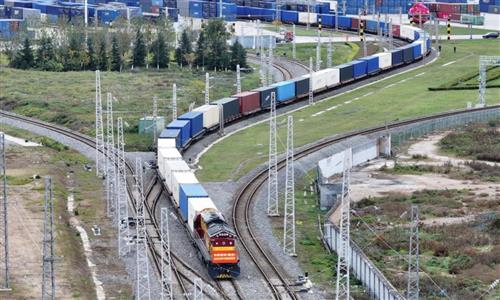
As the Spring Festival approaches, Chengxiang station in Southwest China's Sichuan Province has witnessed more activity. A report by CCTV News on Monday noted the rising shipments of a local specialty, pea tendrils. These fresh greens are transported via the X8658 cargo train, which delivers them to markets including Guangzhou, South China's Guangdong Province. What may appear to be a routine logistical operation actually reflects a broader trend: the continuous expansion of China's freight train network, an important component of the country's evolving supply chain infrastructure.Pea tendrils, the tender young stems and leaves of the pea plant, are most flavorful during the winter months. According to CCTV News, many of these pea tendrils are sourced from a modern agricultural park located just a bit more than 20 kilometers from Chengxiang station. Once harvested, they are quickly loaded onto the X8658 cargo train, ensuring that the fresh produce reaches its destination swiftly while preserving its quality.
The X8658, a fast cargo train covering more than 2,000 kilometers, connects inland Sichuan with the Guangdong-Hong Kong-Macao Greater Bay Area, a region marked by strong consumption potential and growing engagement with international markets. According to media reports, the service operates six times a week. Each train departs Chengxiang station at 9:52 am, with a transit time consistently under 40 hours, ensuring timely delivery of goods across regions.
Transported via the X8658, pea tendrils are shipped directly without intermediate transfers, minimizing the risk of damage and ensuring they arrive at their freshest. This streamlined logistics network allows consumers in cities like Guangzhou to access fresh produce more easily, expanding their food options.
The Guangdong-Hong Kong-Macao Greater Bay Area, a coastal hub and one of China's most active trade regions, benefits from this efficient logistics corridor. It not only facilitates the movement of inland products to domestic and global markets but also streamlines the delivery of imports to China's interior, fostering greater regional integration and boosting trade connectivity.
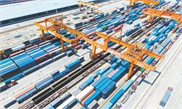
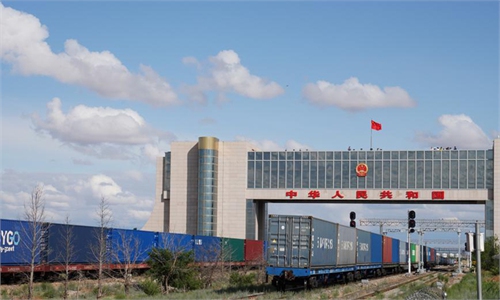
This logistics corridor is just one facet of China's expanding freight rail network, which has significantly cut transport times and improved efficiency. In tandem with the development of key infrastructure such as cold storage facilities, these rail services facilitate the transportation of perishable goods, pharmaceuticals, high-precision instruments, and more. The enhanced logistics capacity has, in turn, fostered the growth of new consumption and production chains, generating fresh economic opportunities. Collectively, these developments could be seen as part of what might be termed the "corridor economy."
The "corridor economy" is undergoing rapid expansion. According to data released by China State Railway Group Co on January 5, China's national railway system handled 4.066 billion tons of cargo in 2025, marking the ninth consecutive year of growth. Daily rail freight loading surpassed 200,000 railcars for the first time, underscoring the resilience and expanding capacity of China's logistics infrastructure.
At the same time, China accelerated the development of multimodal transport. Rail-water intermodal transport reached 17.38 million standard containers, up 15.1 percent year-on-year. By expanding fast and scheduled freight services and increasing passenger-style freight train operations, rail freight train volume grew by 24.5 percent, highlighting a structural upgrade in logistics efficiency.
In recent years, China's modern logistics system has continued to improve, with the coordinated development of transport corridors, logistics hubs and distribution networks. Dedicated freight train routes and cold-chain logistics trunk corridors have expanded steadily, alongside stronger links between production areas and consumer markets.
These infrastructure upgrades are driving economic benefits, for example, in the consumer sector. As China focuses more on consumption-driven growth, improvements in logistics efficiency have played a valuable role in unlocking consumer potential. This is especially evident in sectors involving high-value and perishable goods, where timely and reliable delivery aligns closely with the evolving consumption patterns of the Chinese market.
With the Spring Festival approaching, demand for fresh fruits, vegetables, and other perishable goods is rising steadily. An advanced logistics system helps further unlock consumption potential while also creating new opportunities for agricultural imports. Imported seafood, premium meat products, and festive specialty foods are now reaching consumers more efficiently, diversifying holiday consumption choices and stimulating market activity.
Freight transport is unlocking a growing array of business opportunities. Beyond pea tendrils, numerous other industries are benefiting. The launch of coffee freight trains along the China-Laos Railway, for example, has opened new opportunities for Yunnan's coffee industry. The expanding "corridor economy" is seamlessly connecting markets, fostering the growth of both the consumption and production chains.
The author is a reporter with the Global Times. bizopinion@globaltimes.com.cn
RELATED ARTICLES