ARTS / BOOKS
China releases earliest 'encyclopedia' of horse management written on 2,400-year-old bamboo slips
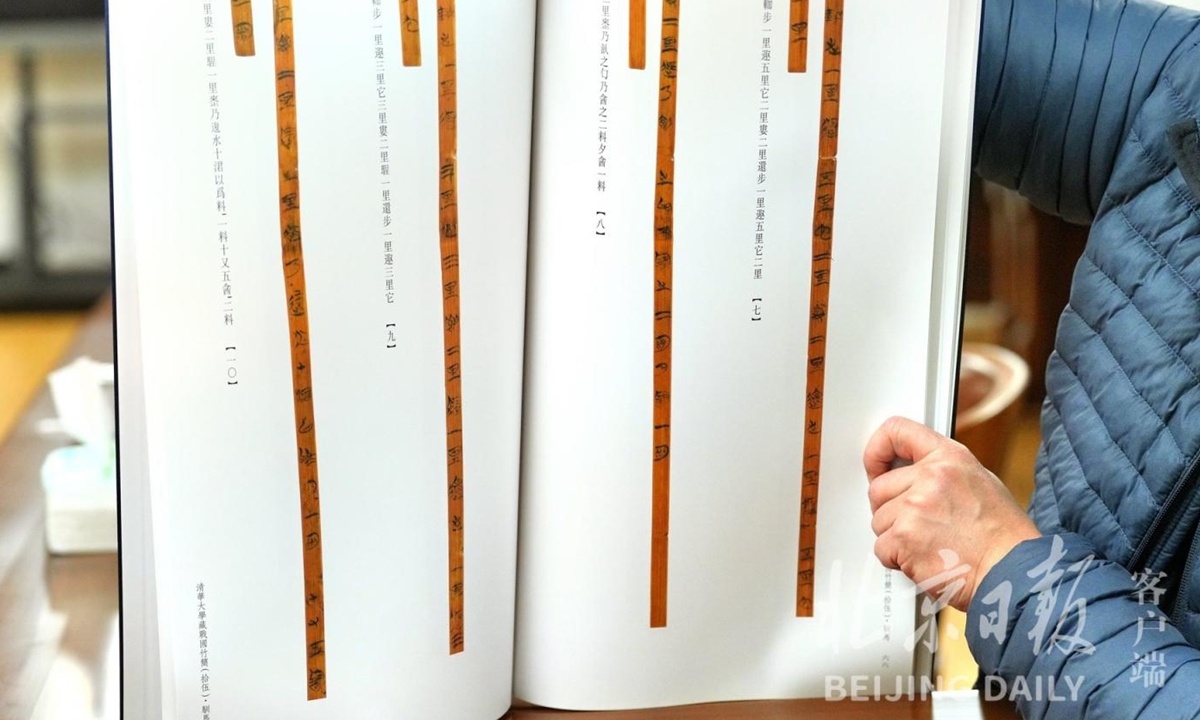
The Xunma (Training Horses) chapter of the Tsinghua University Collection of Warring States Bamboo Slips Photo: Beijing Daily
Around 2,400 years ago, people in China had already written systematic "guides for evaluating horses," "manuals for horse driving," and even "handbooks for diagnosing and treating horse diseases," according to the latest research released on Monday by scholars from China's Tsinghua University who studied bamboo slips from the Warring State Period (475 BC-221 BC).The research paper includes five first-time specialized treatises on horse administration: Fan Ma Zhi Ji (Illnesses of Horses), Xunma (Training Horses), Yushu (Techniques of Driving), Yuma Zhi Dao (The Way of Horse Management) and Xuma (Inspecting Horses), the earliest "encyclopedia" of ancient horse management discovered to date in China.
Peng Gang, vice president of Tsinghua University, stated that the collation and research of the Tsinghua University Collection of Warring States Bamboo Slips have been ongoing for over a decade, the Guangming Daily reported.
In response to the rapid advancements in technology and artificial intelligence, the research team has proactively engaged in cutting-edge fields like computational paleography.
The five treatises provide invaluable new materials for researching the technological development, institutional civilization, and social life of the pre-Qin (221BC-206BC) period, giving them significant academic value.
The Xuma (Inspecting Horses) chapter comprises 40 slips. It focuses on the art of horse physiognomy, detailing the physical characteristics of 12 categories of horses and elucidating their identification standards. It is highly valuable for studying ancient equine appraisal techniques, the history of animal husbandry, and zooarchaeology.
The Fan Ma Zhi Ji (Illnesses of Horses) originally consisted of 24 slips, but one is missing, leaving 23 extant slips. It systematically records various horse diseases and their symptoms, making it the earliest specialized text on equine therapy discovered to date.
The Xunma (Training Horses) chapter contains 12 slips. It summarizes experiences in horse training, primarily documenting methods for training and regulating fodder and water intake. It emphasizes ensuring horse health through specialized breeding practices.
Comprising 38 slips, the Yushu (Techniques of Driving) text comprehensively explains how to drive a horse drawn vehicle based on the horse's body language.
The Yuma Zhi Dao (The Way of Horse Management) chapter has 12 slips. It discusses the general principles of horse management, drawing an analogy between managing horses and "governing a state and the people."
The Tsinghua Bamboo Slips, which entered the collection of Tsinghua University in 2008, consist of nearly 2,500 slips, making them the largest known batch of Warring States Period bamboo slips discovered to date. Their content primarily comprises texts classified under the classics, history, and philosophy categories - the core aspects of traditional Chinese culture - making them an exceptionally significant discovery.
RELATED ARTICLES