‘Sellout contract', ‘letter of surrender’: Mainland spokesperson slams DPP authorities’ claim that tariff talks with US reached preset goals
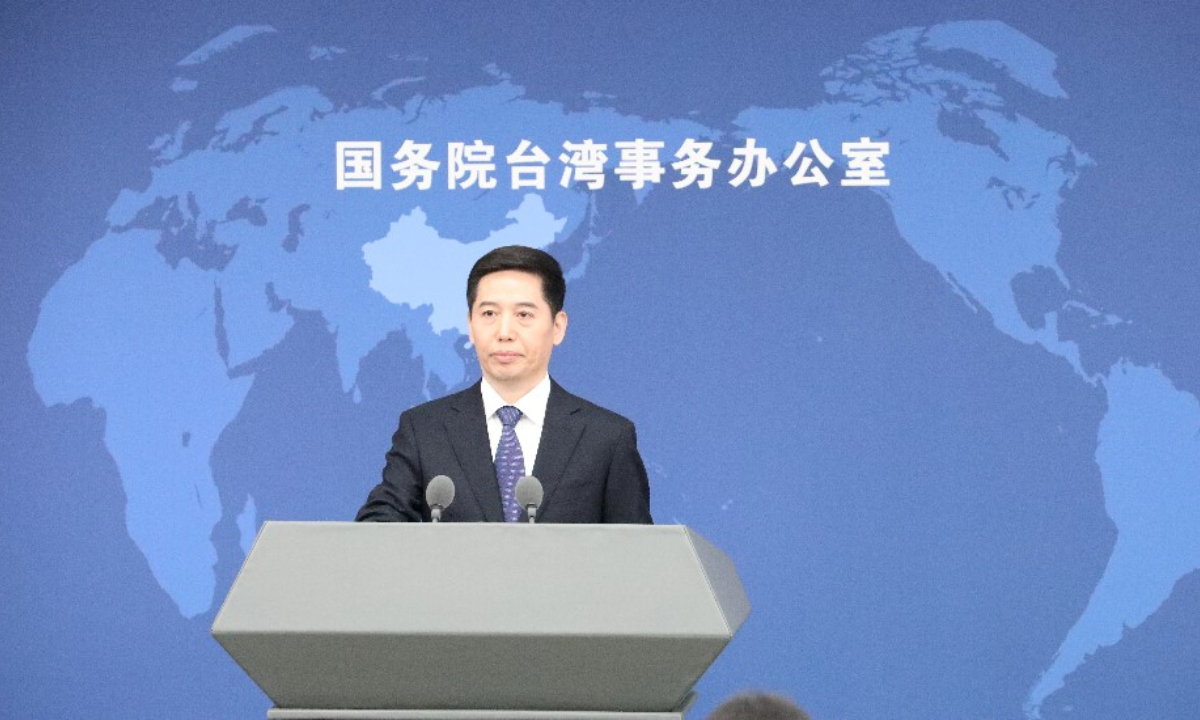
Peng Qing'en, a spokesperson for the State Council Taiwan Affairs Office
Peng Qing'en, spokesperson for the Taiwan Affairs Office of the State Council, on Wednesday slammed the Democratic Progressive Party (DPP) authorities' claim that tariff talks with US had reached preset goals, saying that the so-called consensus is a "sellout contract" and a "letter of surrender."
At a press briefing on Wednesday, a reporter noted that after the conclusion of tariff negotiations between Taiwan regional authorities and the US, the US Department of Commerce announced that the US would apply reciprocal tariffs on Taiwan goods with a total rate not exceeding 15 percent. Taiwan semiconductor and technology companies would make at least $250 billion in new direct investment in the US and the Taiwan regional authorities would also provide at least $250 billion in credit guarantees. The DPP authorities claimed that the tariff negotiations with the US had achieved their preset goals, and the "Taiwan model" had received US support.
Asked to comment on the reporter's question, Peng said that the so-called trade negotiations are in reality a form of maximum pressure exerted by the US using tariffs as a stick to coerce Taiwan region into significantly increasing its investment in the US, in an attempt to hollow out Taiwan's advantageous industries. The so-called consensus reached is nothing more than a "sellout contract" by the DPP authorities to sell out the well-being of the Taiwan residents and the interests of industrial development, and a "letter of surrender " that kowtows in the face of economic bullying, Peng said.
The spokesperson further noted that the DPP authorities glorified their desperate compromises as a "major breakthrough," whitewashed unilateral bullying as "equal cooperation," and packaged their appeasement as the "Taiwan model," allowing the US to plunder Taiwan island's industries and exploit the Taiwan residents. Such incompetence and shamelessness will only completely ruin Taiwan's development prospects, Peng said.
Global Times
RELATED ARTICLES