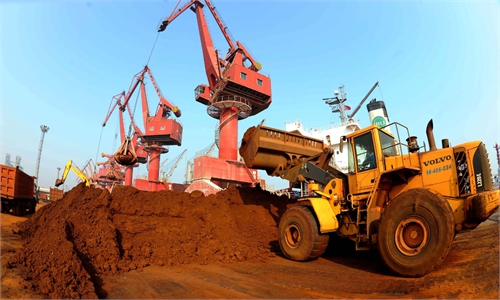
Bessent says China's rare earth supply 'proceeding as expected'; remarks reaffirm lawful export controls: expert
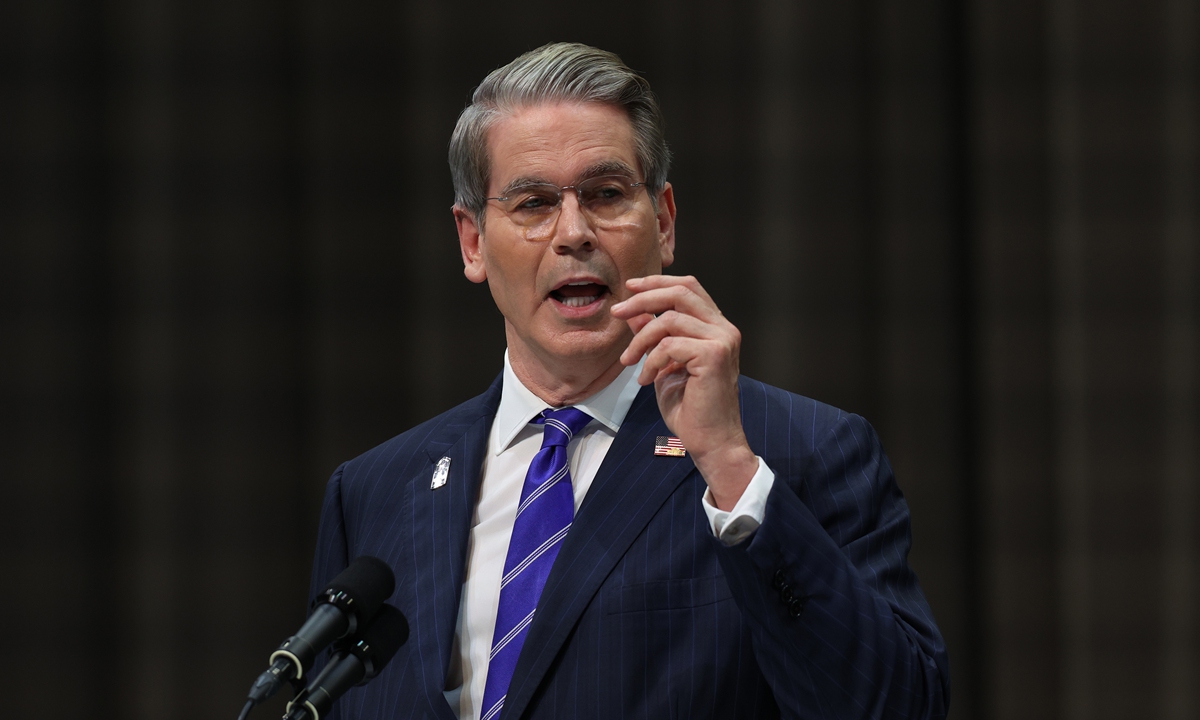
US treasury secretary Scott Bessent Photo: VCG
US Treasury Secretary Scott Bessent on Tuesday (local time) said in a media interview that China's rare earth supply to the US is proceeding as expected, describing the outcome as "quite satisfactory." He also noted that some remarks made by the Japanese prime minister had triggered frictions between China and Japan, but said the US has not been affected.
A Chinese expert noted that Bessent's remarks serve as further evidence that China consistently implements export controls under laws while continuing to approve compliant rare earth exports, thereby honoring its commitment responsibly. He added that Japan's current supply difficulties stem from its own inappropriate words and actions, rather than any discriminatory measures by China.
In an interview with Fox Business at the World Economic Forum in Davos, Bessent was asked whether China follows through on its commitments and whether rare earth magnets are flowing as expected. He said shipments have resumed as anticipated, with the fulfillment rate running in the 90-percent range, a level he described as "quite satisfactory," according to a Fox Business video released on Monday.
When referring to China's export controls affecting Japan, Bessent said the situation stemmed from tensions between China and Japan, noting that the two countries have been "in a skirmish" over some remarks made by the Japanese prime minister. "The US is immune from that," he added.
China's rare earth supply moving forward as expected demonstrates the country's consistent commitment to honoring agreements, reflects that the measures taken are reasonable and lawful, and shows that legitimate cooperation channels remain open, Zhou Mi, a senior researcher at the Chinese Academy of International Trade and Economic Cooperation, told the Global Times on Wednesday.
Zhou said remarks by US officials indicate that Japan's current rare earth supply difficulties are the direct consequence of a series of erroneous statements and actions by Japanese politicians, which have infringed upon China's core interests, rather than the result of any discriminatory measures by China. China's actions, he stressed, are based on facts and law, and constitute legitimate responses aimed at safeguarding international trade order and national security interests.
China announced in November last year, following China-US economic and trade talks in Kuala Lumpur, that it would suspend certain export control measures on overseas rare earth items and related technologies that had been announced on October 9.
After the Japanese prime minister made erroneous remarks regarding China's Taiwan region later in November, China's Ministry of Commerce announced on January 6 a decision to tighten export controls on dual-use items destined for Japan, citing national security and non-proliferation obligations.
Zhou said progress made between China and the US on major trade issues demonstrates that the two sides are capable of resolving concerns through consultation and reaching mutually acceptable arrangements. By contrast, Japan's continued refusal to acknowledge its mistakes and its provocations in the military and security fields will only worsen its predicament, he said.
Japan has also sought to rally support from the US and other G7 countries in an attempt to push for the "de-China" restructuring of critical mineral supply chains. Zhou said such efforts are unrealistic, as China, Japan and the US differ significantly in terms of industrial chain interests and the key supply categories they rely on.
China has repeatedly stressed that rare-earth-related items have dual-use attributes, and imposing export controls on them is an internationally accepted practice, reflecting China's consistent stance of safeguarding world peace and regional stability while actively participating in international non-proliferation efforts.
A Ministry of Commerce spokesperson said previously that China's export controls on all dual-use items, including restrictions on exports to Japan, aim to prevent "remilitarization" and nuclear ambitions, adding that the measures are fully justified, reasonable and lawful.
In Tuesday's interview, Bessent also noted that China has fulfilled its commitments to purchase US soybeans, adding that the two sides are looking ahead to purchases of 25 million tons next year, according to Bloomberg.
During the World Economic Forum in Davos, US Trade Representative Jamieson Greer raised the possibility of holding a new round of trade talks with China, according to Bloomberg.
On Wednesday, Chinese Foreign Ministry spokesperson Guo Jiakun said at a press conference that he would refer specific questions to competent authorities when asked whether China and the US are considering holding such a meeting and where it might take place.
Both China and the US should work together to earnestly implement the important consensus reached by the leaders of the two countries, and inject more stability and certainty into China-US economic and trade cooperation as well as the global economy, Guo said.
RELATED ARTICLES