US procedurally withdraws from WHO amid unpaid dues; Irresponsible move risks pushing Washington into health information silo: expert
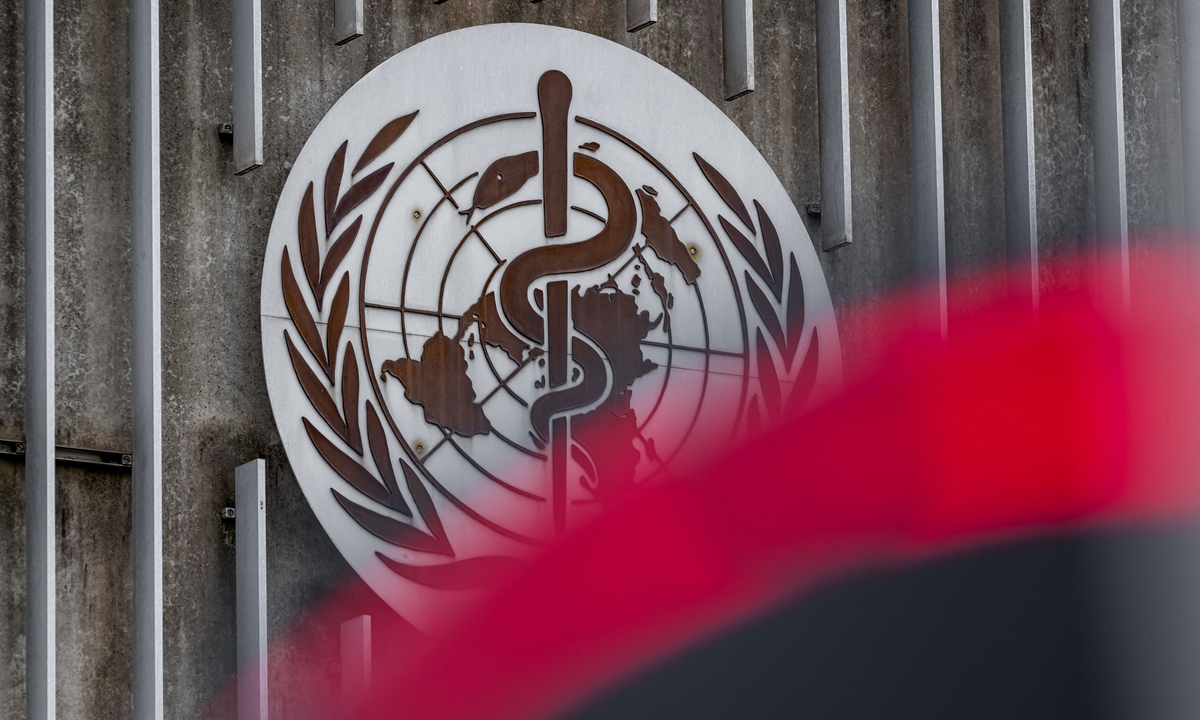
File Photo of a logo of the World Health Organization (WHO) outside its headquarters in Geneva Photo: VCG
January 22 marks one year since the US formally submitted its World Health Organization (WHO) withdrawal notice to the United Nations, which means the US has procedurally withdrawn from the WHO, China Central Television (CCTV) reported on Thursday.The US move dates back to January 20 last year, when Trump signed an executive order announcing the country's withdrawal from the WHO. The United Nations (UN) received formal notification two days later. Under the organization's charter, a member state's withdrawal takes effect one year after notice is submitted, the Xinhua News Agency reported.
The WHO has expressed regret over the US decision. In a previous statement, the organization said it plays a critical role in protecting global health, including that of Americans, and voiced hope that the US would reconsider its withdrawal and engage in constructive dialogue to maintain cooperation.
The White House previously claimed that the decision was based on concerns over the WHO's handling of global health crises and what it described as a failure to adopt urgently needed reforms.
WHO Director-General Tedros Adhanom Ghebreyesus warned on January 13 that the move would make both the US and the world "unsafe," noting that "it's not really the right decision," according to Xinhua.
WHO officials have said there are two key requirements for a member state to leave the organization: a one-year notice period and the settlement of outstanding financial obligations. While the one-year notice sets the US withdrawal date as January 22, one year after the WHO was notified, the issue of unpaid dues remains unresolved. According to NPR, the US owes approximately $278 million for the 2024-2025 period, but the State Department claimed Washington will not make any payments to the WHO before its withdrawal.
The US withdrawal from the WHO will have far-reaching and lasting negative consequences for the US itself, as the WHO remains a key global mechanism for responding to infectious diseases through information sharing and coordinated prevention, Lü Xiang, a research fellow at the Chinese Academy of Social Sciences, told the Global Times on Thursday.
Lü noted that by leaving the WHO, the US would turn itself into an "information silo," making it difficult to smoothly communicate and coordinate prevention measures if major infectious diseases emerge globally. At the same time, if a serious outbreak were to occur within the US, the country would also be unable to effectively inform other nations through the WHO, thereby increasing risks to global public health, the expert warned.
On the issue of unpaid dues, the amount involved is not substantial for the US, but refusing to pay reflects a long-standing irresponsible attitude, especially as the US has continued to benefit from WHO services in the past, Lü said.
The WHO told Global Times on Thursday via email that the US reserved its right to withdraw from the Organization on a one-year notice when it joined WHO, provided however that the financial obligations of the US to the Organization shall be met in full for the Organization's current fiscal year,
The matter is on the agenda of the upcoming Executive Board meeting, and the Secretariat will act on advice and guidance of WHO's governing bodies accordingly, according to WHO.
China has previously stated its position on the issue. Responding to a media inquiry on the US decision to withdraw from the World Health Organization, Foreign Ministry spokesperson Guo Jiakun said at a press conference on January 21, 2025, that as the authoritative and professional international organization in global public health, the WHO plays a central role in coordinating global public health governance. Its role should only be strengthened rather than weakened. China will, as always, support the WHO in fulfilling its duties, deepen international cooperation in public health, advance global public health governance, and promote the building of a global community of health for all.
RELATED ARTICLES