ARTS / CULTURE & LEISURE
China’s youth embrace Ningguta exile as new travel trend
Banished joy
By Published: Jan 22, 2026 10:17 PM Updated: Jan 23, 2026 10:13 PM

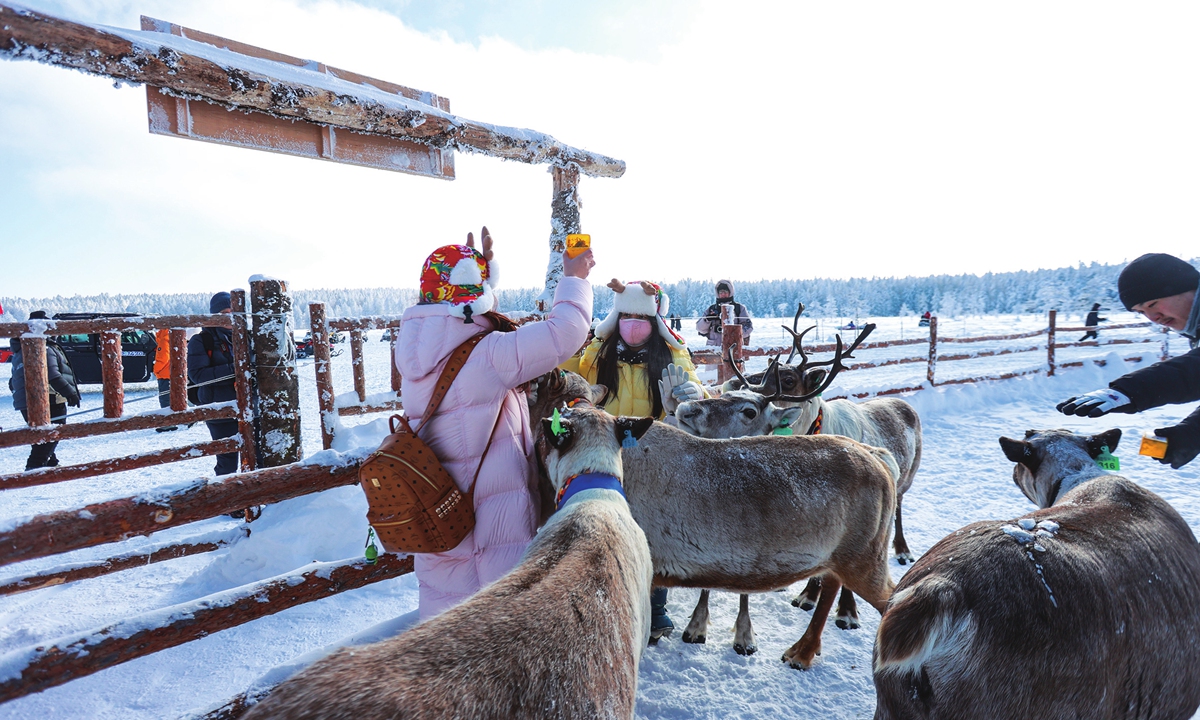
Tourists interact with reindeers in Helong, Northeast China's Jilin Province, on January 17, 2026. Photos on this page: VCG
Snow whips across the tourists' faces as a horse-drawn sleigh tears through a snow-covered forest, adrenaline surging with every jolt. This is not a scene of historical hardship, but a deliberately chosen, and paid-for modern adventure. On Chinese social media it has a name: "being exiled to Ningguta."As bitter cold sweeps down from northern China, most people retreat indoors. Yet a growing number of visitors, particularly southerners wanting to experience real winter, are doing the opposite. They travel north, chasing the cold and heading straight into ice and snow. Their unofficial slogan captures the spirit: "My fate is mine to command."
On Xiaohongshu, or RedNote app, horse-drawn sled rides in multiple northeastern Chinese scenic areas have recently gained popularity. Videos show tourists, swaddled in thick cotton coats, quickly turning into "moving snowmen" as they traverse snow-blanketed forests. This spectacle, jokingly dubbed the "modern version of exile to Ningguta," has sparked widespread discussion and trended nationally and even drawing attention of the people in parts of Southeast Asia.
Unpacking history
To understand the irony behind this trend, one should revisit Ningguta's grim history. Professor Qi Zhongming, dean of the School of Literature at Mudanjiang Normal University, locates Ningguta's historical sites in present-day city of Mudanjiang, Northeast China's Heilongjiang Province.
Established in the mid-1600s as a key Qing Dynasty (1644-1911) military and administrative center, Ningguta once governed vast frontier territories. Its name derives from Manchu and it means "six dwelling places," referring to local tribal settlements. More infamously, from 1655, it became a notorious destination for exiles, a place of bitter cold and remote hardship where disgraced officials and scholars were banished.
"Objectively speaking however, these exiles contributed to Ningguta's economic and cultural development and ethnic integration. They brought books and knowledge from China's Central Plains, transforming this frontier outpost," Qi said, according to news.china.com.
Those exiled ancestors could never have imagined that their suffering would be turned into a tourist attraction, or that "Ningguta" would evolve into an adjective.
Today, beyond Jingpo Lake, destinations in Heilongjiang, Jilin, and even Shandong provinces have adopted the label, defined by deep snow, freezing cold, and conditions harsh enough to make visitors question their life choices. This shift from bitter historical memories to a playful show is vividly reflected in the experiences of tourists and residents alike.
Qiqi (pen name), a Changbai Mountains tour guide with 22,000 Xiaohongshu followers, has won many likes for her "Ningguta-style tourism" posts.
She told the Global Times that temperatures at the Changbai Mountains hover around -20 C, and that most visitors come from southern China. The scenic spot's 10-minute horse-drawn sleigh ride delivers what she calls "an immediate shock of cold. Ten minutes is enough or the cold to sink right in," she said. "I usually recommend it only for children over 4. Any younger, the conditions are too harsh. After the ride, visitors are taken into heated huts to warm up," she said.
Known as fala in Manchu, horse-drawn sleighs were once lifelines for snow-bound communities. Today, they are a top winter attraction: At certain snow spots, tourists pay 50 to 100 yuan ($7.18 to $14.36) to ride sturdy horse-drawn sleighs through snow over a meter deep, enjoying the charm of a frozen wilderness.
Some destinations have upped the game with immersive elements: Some tourists don coats printed with the word "prisoner" and wear playful, cartoon-style shackles to reenact exile scenes, while others also send postcards from China's northernmost post office to complete the experience.
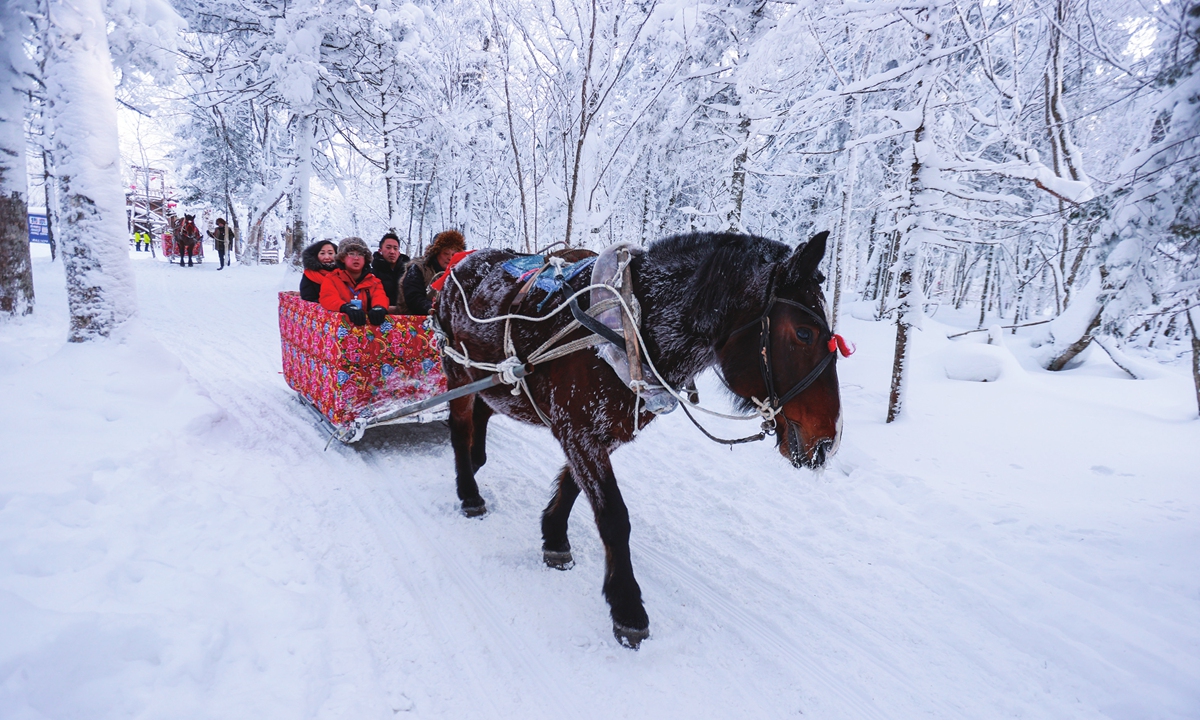
Visitors experience horse-drawn sleigh rides in Helong, Northeast China's Jilin Province, on January 17, 2026.
Hardship as entertainmentThis creativity merges Qing Dynasty costume drama with historical references. Historically a place of unspeakable hardship, Ningguta now invites tourists to laugh through the cold, humorously reframing hardship as a form of experiential tourism.
Apart from providing visitors with entertaining activities, scenic areas also incorporate educational elements by providing displays that retell the stories of exiled literati such as Wu Zhaoqian, a celebrated poet and scholar of the early Qing Dynasty.
The new touristic offer has attracted numerous tongue-in-cheek online reactions. One netizen commented, "Once exile meant hell; now we pay to shiver and cheer. What an unbeatable contrast!" "I learned history while having fun. Sleigh rides, hot springs and iron pot stew, they were worth every cent," another wrote.
Xiao Xian, who tried the "being exiled to Ningguta" experience in late December 2025, recalled feeling transported back to the exile scenes of Empresses in the Palace, a hit Chinese costume drama.
"It was around -10 C in Mudanjiang. We changed costumes and interacted with Qing-attired Non-Player Characters (NPCs). Settings, props and buildings felt authentic, blending with snow and cold to evoke history. The biggest surprise was the night snow disco: A group of actors dragged us 'exiles' to dance," she said.
Beyond novelty, this trend also represents a smart economic adaptation. These projects, often operated locally with fixed, safe routes, are effectively turning "cold resources" into "hot economic activity," drawing both domestic and international tourists. Yu Jinlong, a Beijing-based cultural critic links the trend to shifting consumption habits.
"Modern consumers prioritize experiences over material goods, seeking psychological satisfaction over basic needs. Whether shopping or traveling, unique experiences are now key," he told the Global Times.
RELATED ARTICLES