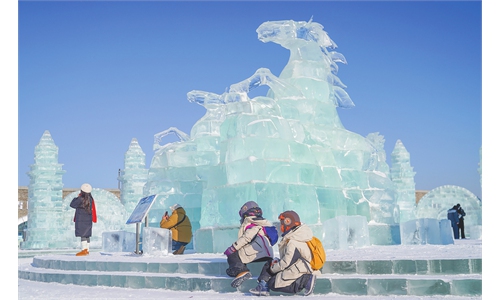
Folk culture, winter scenery in Northeast China draws increasing number of foreign tourists, boosting local tourism
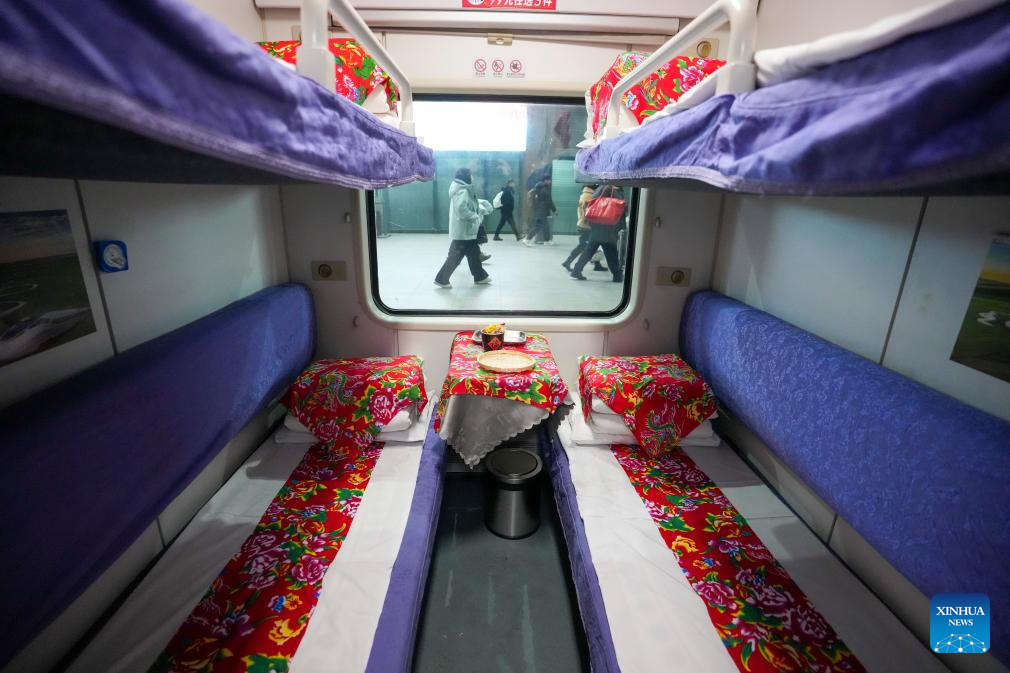
This photo taken on Dec. 22, 2025 shows a sleeping compartment of Train K7041 at Harbin Railway Station in Harbin, northeast China's Heilongjiang Province. Train K7041, the first northeast folk culture-themed train operated this winter, departed from Harbin Railway Station and headed for Mohe City on Monday. (Xinhua/Wang Song)
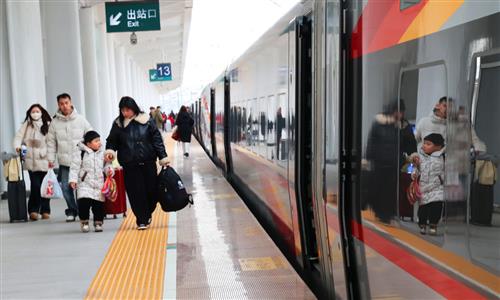
A train carrying more than 100 foreign tourists from Singapore, Malaysia and other countries arrived in Mohe, known as the "North Pole of China" in Northeast China's Heilongjiang Province, on Tuesday morning to experience the charm of ice and snow, chinanews.com reported.
The K7041 Harbin-Mohe train departed from Harbin Railway Station at 6:20 pm on Monday for the 17-hour trip. It was the first time the folk culture-themed train hosted a large international tour group, highlighting the growing appeal of Northeast China's winter tourism offerings.
This also comes as China's inbound tourism market has seen a strong growth during this winter, with ice-and-snow destinations and small cities in the country's northeast attracting more foreign visitors seeking to experience the local culture.
"This train journey is absolutely fantastic," Malaysian tourist Nicholas Fu told the Global Times on Tuesday. "I've made friends from China and other countries. We played cards, sang songs, and enjoyed games on the train."
Fu, who booked his trip on Trip.com, said that he is looking forward to three days and two nights in Mohe, where temperatures can drop below -40 C, and plans to share his experience on social media after the tour.
The interior of the carriages is decorated with iconic elements of Northeast China's folk culture such as "Dongbei Dahua," a typical floral pattern in contrasting red and green colors, recreating the cozy atmosphere of traditional northern China's kang (a heated platform bed made using earth bricks).
To facilitate the group's arrival and boarding, Harbin Railway Station opened a green channel for group travelers, and the Qiqihar passenger transport section organized youth volunteers to provide bilingual guidance throughout the journey. The train was also equipped with multilingual travel guides explaining the region's ice scenery and folk customs to help foreign tourists better appreciate local culture, according to china.news.com.
Jiang Yiyi, an industry expert at Beijing Sport University, told the Global Times on Tuesday that the themed train helps preserve and promote traditional culture while injecting vitality into the cultural tourism industry.
As more and more foreign visitors board the themed train and seek out authentic cultural experiences, they not only boost local economies through spending on tickets, accommodation, dining and souvenirs, but also strengthen cross-cultural exchange and generate market-driven incentives.
The train trip is part of a broader resurgence in inbound travel in winter tourism. According to Jiang, international visitors are looking beyond major coastal hubs and are drawn to seasonal attractions such as ice-and-snow festivals, winter landscapes, regional cuisines and cultural events, while improved rail links and scenic overnight journeys make these places easier to visit and more appealing.
This shift is helping spread tourism more evenly across the country and bringing new economic and cultural opportunities to regional cities that previously received less attention.
Data from travel platform Qunar showed that Spring Festival bookings for domestic flights made using non-Chinese passports are up by more than 20 percent year‑on‑year. The northeastern cities of Harbin, Changchun and Shenyang ranked among the top 20 inbound destinations.
A number of inland destinations saw especially strong growth. Bookings by travelers with foreign passports to Lanzhou in Northwest China's Gansu Province, and Hohhot in North China's Inner Mongolia Autonomous Region each increased more than fourfold, while arrivals to Guilin, Jinan, Yuncheng and Yantai more than doubled, according to information Qunar.com sent to the Global Times on Tuesday.
The top source countries for inbound holiday travelers include South Korea, Vietnam, Singapore, Australia, Indonesia and Canada. Qunar.com also reported sharp increases from more distant markets, with bookings from Argentina rising ninefold, while bookings from the Netherlands, Spain and the UK more than doubled.
Holiday periods such as Christmas, New Year's Day and the Spring Festival are naturally key windows for inbound travel, Jiang said, anticipating that inbound visitor numbers will continue to grow, with passenger volume showing a clear upward trend.
China's 15th Five-Year Plan (2026-30) has set the continued promotion of culture and tourism development as a key goal, noting that more convenient and foreigner-friendly services will be provided for inbound tourists.
China has also expanded travel facilitation. In 2024, the country expanded its unilateral visa-free entry policy to include 38 countries, allowing visits of up to 30 days, according to the National Immigration Administration.
Favorable tax refund policies have also spurred inbound travel. In April 2025 China lowered the tax refund threshold from 500 yuan ($71) to 200 yuan and raised the cash refund ceiling from 10,000 yuan to 20,000 yuan, according to a guideline issued by the Ministry of Commerce and five other departments, the People's Daily Online reported.
RELATED ARTICLES