US’ National Defense Strategy reportedly adopts softer tone toward China; concrete actions needed to maintain stable ties: expert
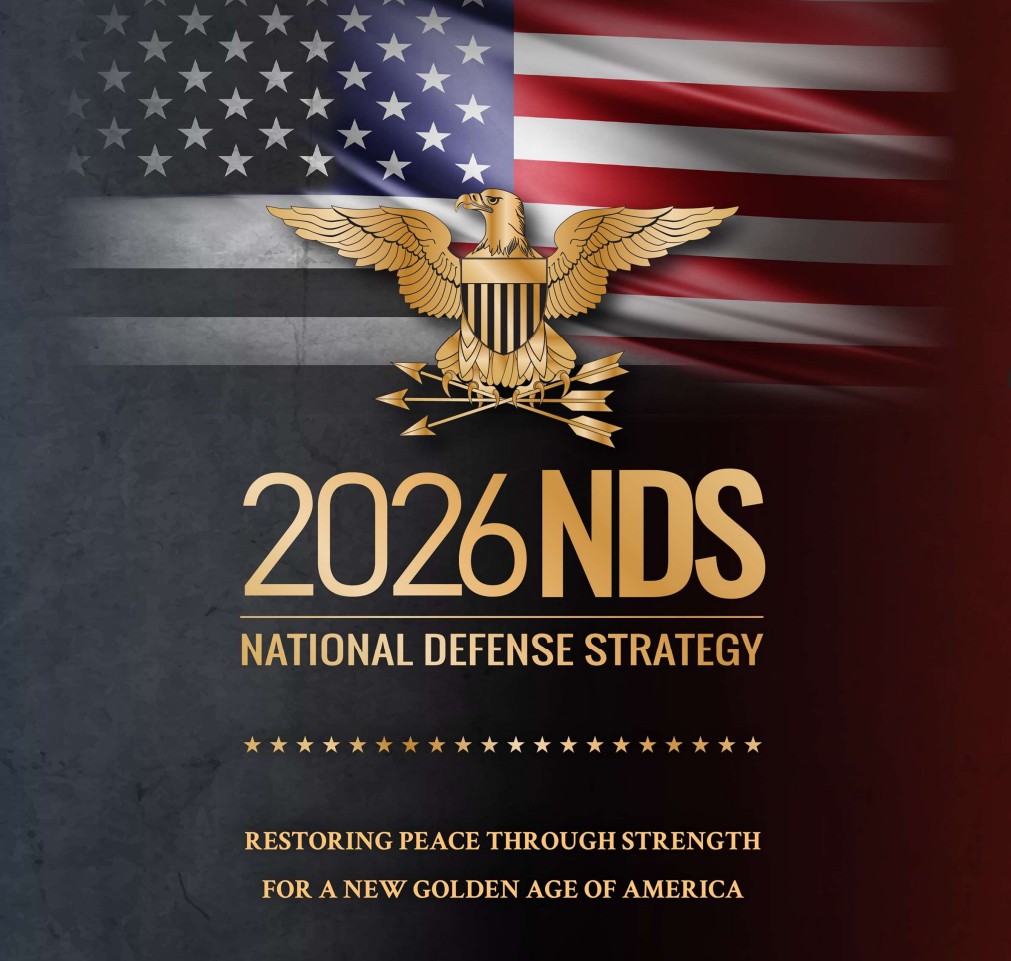
A screenshot of the cover of the US' National Defense Strategy published on January 23, 2026
The US Department of Defense released a priority-shifting National Defense Strategy late Friday, with US media claiming that it adopted a softer tone toward China than in previous years. A Chinese expert said it reflects a more measured approach in Washington's China policy, but it remains to be seen whether the US will take concrete actions to maintain stable ties with China.Much like the White House's National Security Strategy that preceded it, the defense blueprint reinforces US president Donald Trump's "America First" philosophy, which favors nonintervention overseas, questions decades of strategic relationships and prioritizes US interests, AP News reported. The National Defense Strategy last was published in 2022 under then-President Joe Biden and focused on China as America's "pacing challenge," the report said.
"President Trump seeks a stable peace, fair trade, and respectful relations with China," it says, which follows efforts to climb down from a trade war sparked by the administration's sky-high tariffs. It says it will "open a wider range of military-to-military communications" with China's army, according to AP News.
Bloomberg claimed in a report on Saturday that the US Defense Strategy downplays threat of confrontation with China and takes "a softer tone" toward China in years past, calling for deterrence "through strength, not confrontation." It also focuses on threats posed by migration and narcotics in the Western Hemisphere, per Bloomberg.
"Not for purposes of dominating, humiliating, or strangling China," the 25-page document reads. "To the contrary, our goal is far more scoped and reasonable than that: It is simply to ensure that neither China nor anyone else can dominate us or our allies. This does not require regime change or some other existential struggle," according to the report by Bloomberg.
The first Trump administration prioritized China in its 2018 defense strategy as the biggest threat to US security, while the 2026 strategy instead highlights a continued US focus on diplomacy with China, according to a Politico report.
The reported shift of the focus on China is likely based on the US administration's realistic judgment of the current balance of international forces, and its stated view that the most pressing challenge facing the US is not great power competition, but rather immigration and border security, Li Haidong, a professor at the China Foreign Affairs University, told the Global Times on Saturday.
Although it reflects a more measured approach in Washington's China policy, the complex domestic political forces shaping US strategy toward China leave it uncertain whether it can take concrete actions to boost coordination and maintain stable ties with China as it stated it seeks to, Li added.
To stabilize the bilateral relation, the US should abandon the entrenched mindset of defining the bilateral relationship in terms of "competition" and instead make cooperation the guiding principle, handling bilateral affairs along this track, the expert said, adding that whether this can truly be realized depends on the US' concrete actions.
According to the report by AP News, the strategy simultaneously courts help from partners in America's backyard, while warning them that the US will "actively and fearlessly defend America's interests throughout the Western Hemisphere." It specifically points to access to the Panama Canal and Greenland.
"We will engage in good faith with our neighbors, from Canada to our partners in Central and South America, but we will ensure that they respect and do their part to defend our shared interests," AP News reported, citing the document. "And where they do not, we will stand ready to take focused, decisive action that concretely advances US interests."
The US' recent words and deeds regarding the Western Hemisphere have also drawn criticism and has sparked tension between the US and its neighbors.
Previously, Canadian Prime Minister Mark Carney warned of a "rupture" in the global order, voicing support for Greenland and Denmark and criticizing the use of tariffs and economic pressure by major powers. Trump, speaking at the World Economic Forum in Davos, said, "Canada lives because of the United States." Earlier on Thursday, Carney rejected Trump's claim that Canada relies on the US for its existence, the Xinhua News Agency reported.
Noting Washington's threats over Greenland and its actions in Venezuela, Li said that the US strategic focus is increasingly centered on the Western Hemisphere, particularly the Americas, which could also be evident from US National Security Strategy published in December reflecting the US' so-called "new Monroe Doctrine."
Commenting on the US' newly released National Security Strategy in December, Guo Jiakun, a spokesperson for the Chinese Foreign Ministry said that China always believes that China and the US stand to gain from cooperation and lose from confrontation.
"Upholding mutual respect, peaceful coexistence and win-win cooperation is the right way for China and the US to get along with each other and is the only right and realistic choice. China stands ready to work with the US to sustain the steady development of the bilateral relationship and at the same time will firmly defend its sovereignty, security and development interests," Guo said.
With regarding to the US National Security Strategy's claims that the US does not support any unilateral change to the status quo in the Taiwan Strait and also discusses the US and its allies' capacity to deny any attempt to seize Taiwan, Guo said that Taiwan is China's Taiwan and is an inalienable part of China's territory. The Taiwan question is at the core of China's core interests and the first red line that must not be crossed in China-US relations. Resolving the Taiwan question is a matter for the Chinese people and Chinese people only that brooks no external interference, Guo said.
On Friday, in response to a question asking whether the Chinese side could confirm media reports that Trump said that he will visit China in April, Chinese Foreign Ministry spokesperson Guo Jiakun said during a press conference that a steady relationship serves the common interests of the two peoples and meets the expectation of the international community.
"Head-of-state diplomacy plays an irreplaceable role in providing strategic guidance to bilateral relations. On the specifics that you mentioned, I have no information to offer at the moment," the spokesperson said.
RELATED ARTICLES