ARTS / CULTURE & LEISURE
Why China U23’s runners-up finish matters more than scoreline
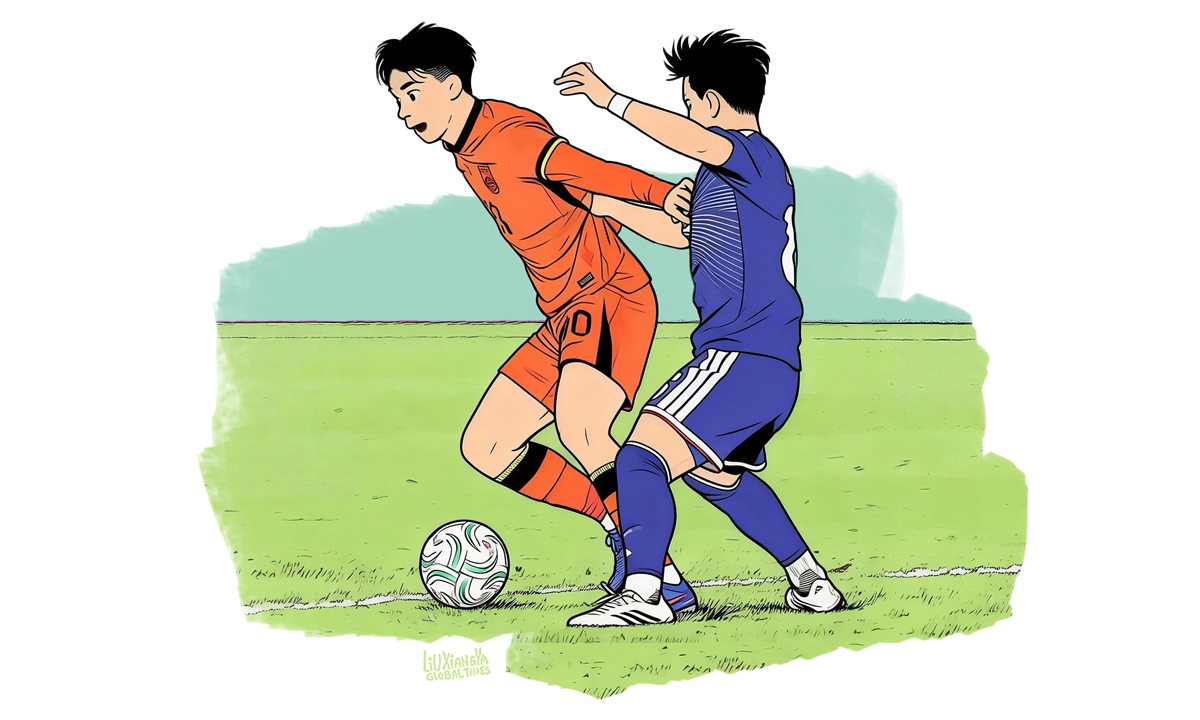
Illustration: Liu Xiangya/GT
When the awards ceremony concluded after the U23 Asian Cup final and the Chinese team stepped forward to receive their silver medals, the young players, eyes filled with tears, were surely thinking back to the beginning of the tournament.
At the time, Chinese football was mired in yet another low point. The senior national team had failed in its bid to reach the 2026 World Cup after corruption turmoil swept the governing body, the Chinese Football Association, leading fan enthusiasm to sink to rock bottom. No one could have imagined that the U23 national team would emerge like a ray of morning light.
Over the past years, China has taken part in the U23 Asian Cup for five times, each time failing to advance beyond the group stage and winning only two of 15 group-stage matches. Ahead of the opening game against Iraq in the 2026 tournament, even qualifying from the group would have been considered a historic breakthrough.
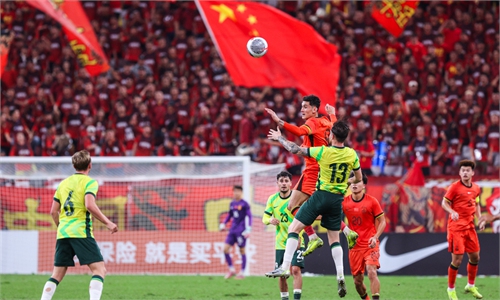
Against all expectations, China, seeded in the fourth pot, drew 0-0 with Iraq, beat Australia 1-0, and drew 0-0 with Thailand to finish second in the group. Confidence grew as the tournament progressed. China went on to eliminate Uzbekistan, to widespread surprise, in a penalty shootout and then outplayed and defeated Vietnam in the semifinals.
Although the final offered a direct and sobering reminder of the gap between China and Japan, and between China and Asia's elite, it was still a wonderful journey. For the first time since the 2004 Asian Cup on home soil, Chinese men's football team reached the final of an Asian competition - a 22-year wait.
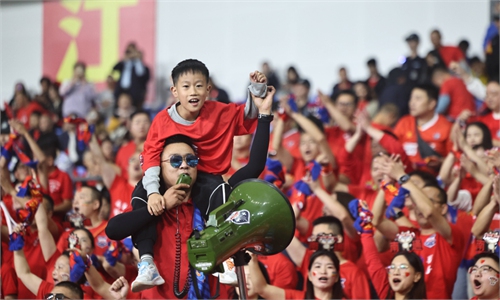
Football fever swept across the country thanks to the Chinese U23 team's performances. Large numbers of fans made last-minute decisions to fly to Saudi Arabia to support the team. Football-related topics dominated the top trending lists on social media, with discussion and attention reaching unprecedented levels, far surpassing any other topic.
U23 head coach Antonio Puche and his young players gave Chinese fans the chance to hold their heads high. It is precisely because of Puche's pragmatic approach that he has been able to remain in Chinese football for eight years, an unusually long tenure for a foreign coach.
Although Puche is a Spanish coach, he has consistently built his teams around defensive counterattacks, a 5-3-2 formation, and long passing since arriving in China. As a result, he has often been mocked as "Long-Ball Antonio." Yet Puche quickly recognized a fundamental reality: The technical ability of Chinese players is not sufficient to sustain possession-based football against stronger opponents.
There is a Chinese saying that "even the cleverest cook cannot prepare a meal without ingredients," but Puche is a coach who knows how to "cook" with what he has. With a pragmatic system, he has delivered China's best results in a decade across multiple youth age groups. Years of familiarity have fostered trust and strong tactical discipline within the U23 squad.
Winning matches through defense is a hard road. This requires belief, belief in the system, so that it can be executed decisively. Throughout the entire tournament, they did this extremely well. Even when under pressure, the players remained calm rather than panicking, sticking to their own rhythm. This was a quality rarely seen in Chinese national teams at any level in the past. In a tournament that demands quick results, a more pragmatic approach and a simpler, tougher style formed the foundation of this historic runner-up finish.
Beyond that, most of these young players are now regulars in the Chinese Super League (CSL). Goalkeeper Li Hao is already the U23 player with the most appearances in the league. While several others have established themselves as key contributors at club and national levels, including Wang Yudong, who is the highest-scoring domestic player. Xu Bin, whose consistent league performances have earned him a move to the Wolverhampton Wanderers, is a notable example.
Compared with many of their Asian peers, this group has accumulated valuable top-flight experience, strengthening both mentality and resilience under pressure. This U23 Asian Cup was not only a mid-term exam for this group of players, but also a test of the current level of the CSL. The facts have proven how important it is for young players to get regular play time in the league first.
While affirming the achievements, we must also face reality. In the final match, we experienced the gap with Japan in a direct and profound way. At this stage, Puche's approach suits us and aligns with our current situation. In competitive sports, winning will always matter more than looking good.
In the long run, however, the road for Chinese football remains long. Of course we want to play stronger football. Perhaps one day, we will no longer have to be so passive, fans will not have to watch with such tension, and we will be able to match Asia's strongest teams in terms of control. That is the aspiration of Chinese football, which will require the collective efforts of several generations.
The dream has ended, but we all know that dreams are something you are meant to wake up from eventually, while the road of reality must be taken step by step. This group of U23 players is following a healthy path: gaining experience through regular matches in the CSL and building confidence and big-match experience in continental competitions. Some of them will soon move into the senior national team, while most will gradually become the backbone of China's bid for the 2030 World Cup.
After 22 years, Chinese men's football has once again reached an Asian final. However, for these young players, this was only their first time. Let us hope the next one comes sooner than expected.
The author is a football commentator. life@globaltimes.com.cn
RELATED ARTICLES