ARTS / CULTURE & LEISURE
New names reveal stories behind homegrown Chinese roses
Cultural bloom
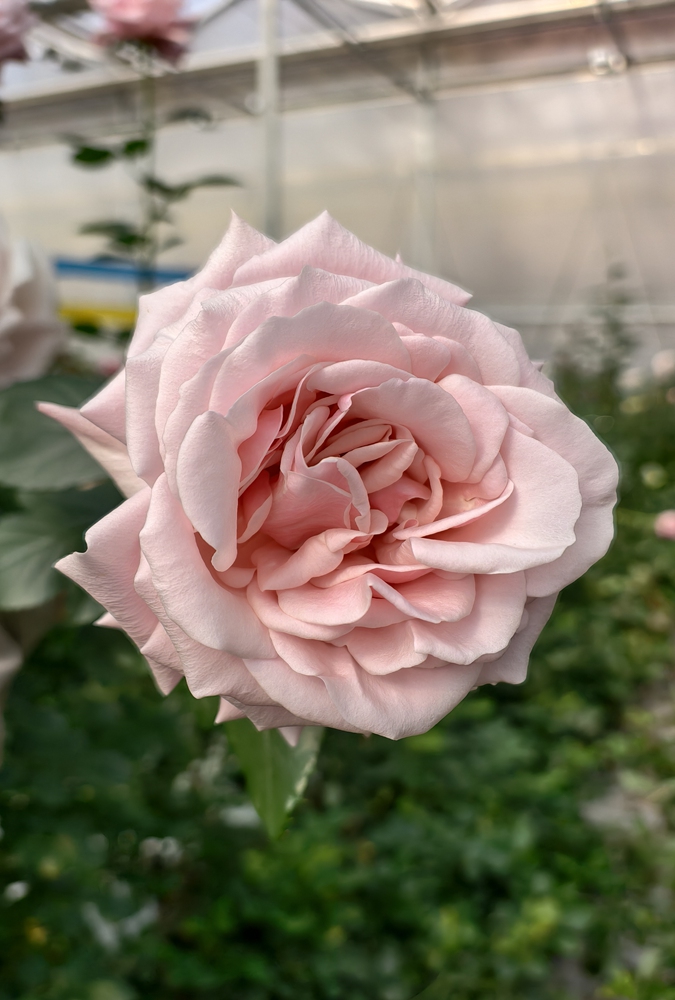
A Jiaolong Rose Photo: Courtesy of Yang Yingjie
Inside a greenhouse at the Yunnan Academy of Agricultural Sciences (YAAS), a newly bred Chinese rose once known only as No.4815-27 blooms quietly among thousands of new varieties. The pink flower has recently been renamed "Jiaolong" in honor of a late official. Since the academy first invited the public to name newly bred Chinese rose varieties, the initiative has sparked enthusiastic responses.
Among the many suggestions put forward by netizens, Jiaolong emerged as a clear front-runner. The name was meant to commemorate He Jiaolong, an official from Northwest China's Xinjiang Uygur Autonomous Region who passed away after falling off a horse while filming a video to promote local agriculture.
The name, rich in symbolism and emotion, quickly resonated online, transforming a routine scientific naming exercise into a nationwide discussion about memory, tribute, and public participation in science.
Yang Yingjie, an associate research fellow at the Flower Research Institute of YAAS, told the Global Times, "This is the first time we've opened the naming process to the public. We wanted people to learn about the new varieties and help them enter the market with stories, emotions, and cultural meaning attached."
The new plant varieties have traditionally been named and approved in accordance with regulations set by China's National Forestry and Grassland Administration, emphasizing lineage, traits, and scientific classification, Yang said.
The online call for names launched in December, Yang noted, is to move away from "cold serial numbers" and allow scientific achievements to carry human warmth.
The Jiaolong flower is one of thousands of new Chinese rose varieties cultivated by YAAS in recent years. Thanks to its unique geography and climate, Southwest China's Yunnan Province is often regarded as a "garden of the world," a natural haven for flowers of all kinds.
With abundant genetic resources and more than four decades of development, Yunnan's cut-flower industry has become one of the world's three leading flower producers and the largest flower trading and distribution center in Asia, according to the Yunnan Daily.
Flowers with meaning
In December, the institute partnered with a popular science blogger to solicit names online for a new Chinese rose variety numbered 4379-4. Among the responses was a lighthearted comment from a netizen in East China's Shandong Province: "Why not call it the Liu Baohua Rose? That's my uncle's name."
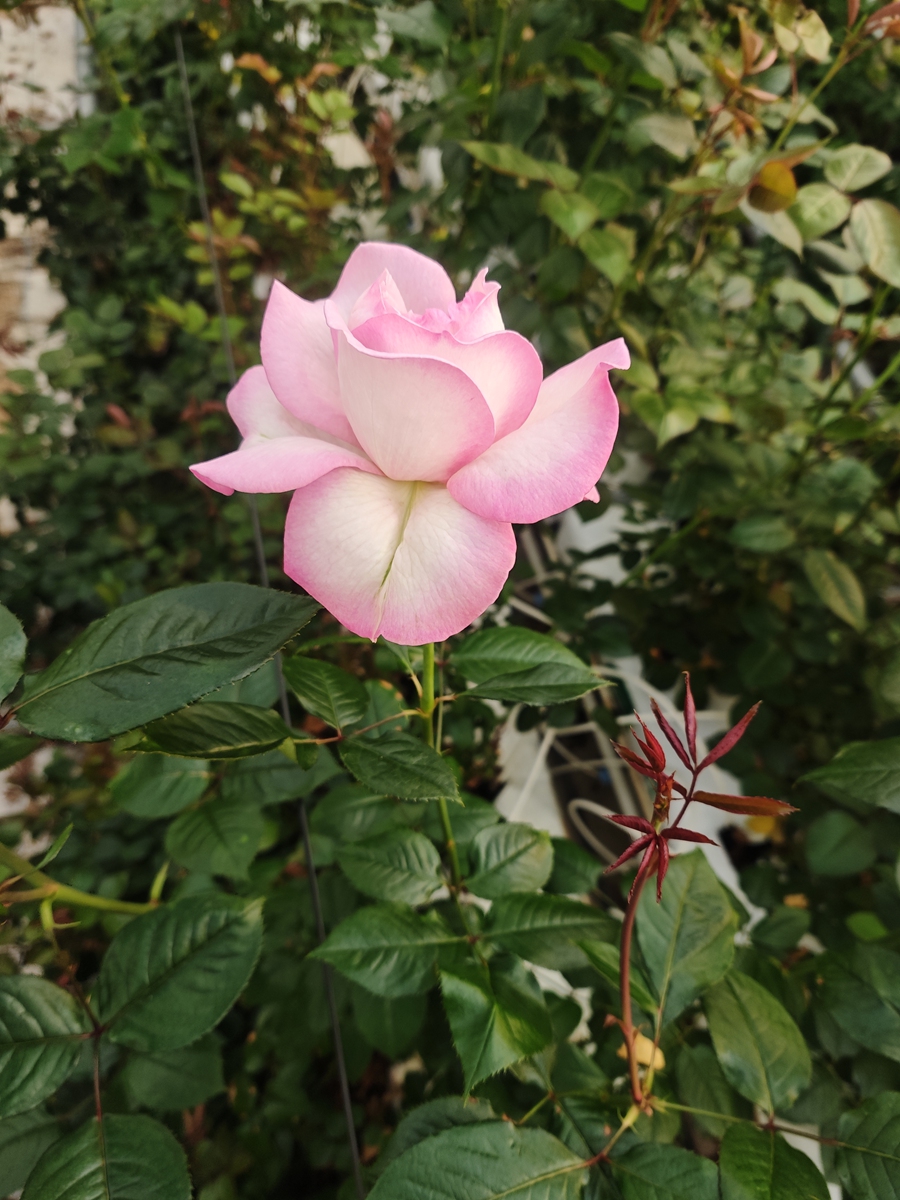
A Baohua rose Photo: Courtesy of Yang Yingjie
What began as a family joke quickly gained traction, earning thousands of likes. To the surprise of many - and the delight of the commenter - the institute adopted the suggestion. The name Baohua has passed preliminary review by the national administration, according to Yang.Cai Yanfei, a research fellow at the institute, said that the suggestion drew strong support online, and that the Chinese characters "Bao" and "Hua," drawn from the phrase "wu hua tian bao, ren jie di ling" (a land rich in treasures and outstanding people), resonate well with the institute's vision of cultivating the Chinese rose with domestic technology.
Baohua made its public debut in January at a press conference held in Kunming, capital of Yunnan. The variety marked an effort by the academy to cultivate new varieties with distinctive Chinese style and domestic breeding technology, according to a press release sent to the Global Times by the institute.
Where science meets soul
Despite Yunnan's natural advantages and position as an international hub of flowers, the lack of strong branding has constrained the value growth of Yunnan's flower industry. About 85 percent of flower varieties on the Chinese market are imported, requiring growers to pay 3 to 12 percent in annual patent royalties, according to the Farmers' Daily.
To change this, the YAAS and local authorities have been dedicated to building an independent breeding and innovation system.
In 2025, more than 1,000 new "Chinese-style" cut-rose varieties were released, spanning rare color palettes, disease-resistant strains, and low-maintenance landscaping types. This milestone marks a shift in China's rose breeding from isolated breakthroughs in individual varieties to a systematic, specialized, and large-scale development model. With these innovations, domestically bred roses possess a genuine Chinese style capable of competing with the world's top international varieties, laying a solid foundation for China's flower industry to transition from a major grower of planting to a global breeding powerhouse, according to the institute.
At the same time, the research team overcame long-standing technical challenges that had limited the industry, such as scentless roses and short vase life, achieving a triple breakthrough in appearance, fragrance, and practicality. This cultivation approach, which balances scientific innovation with aesthetic value, has allowed Chinese-style roses to develop a unique value that sets them apart from international varieties.
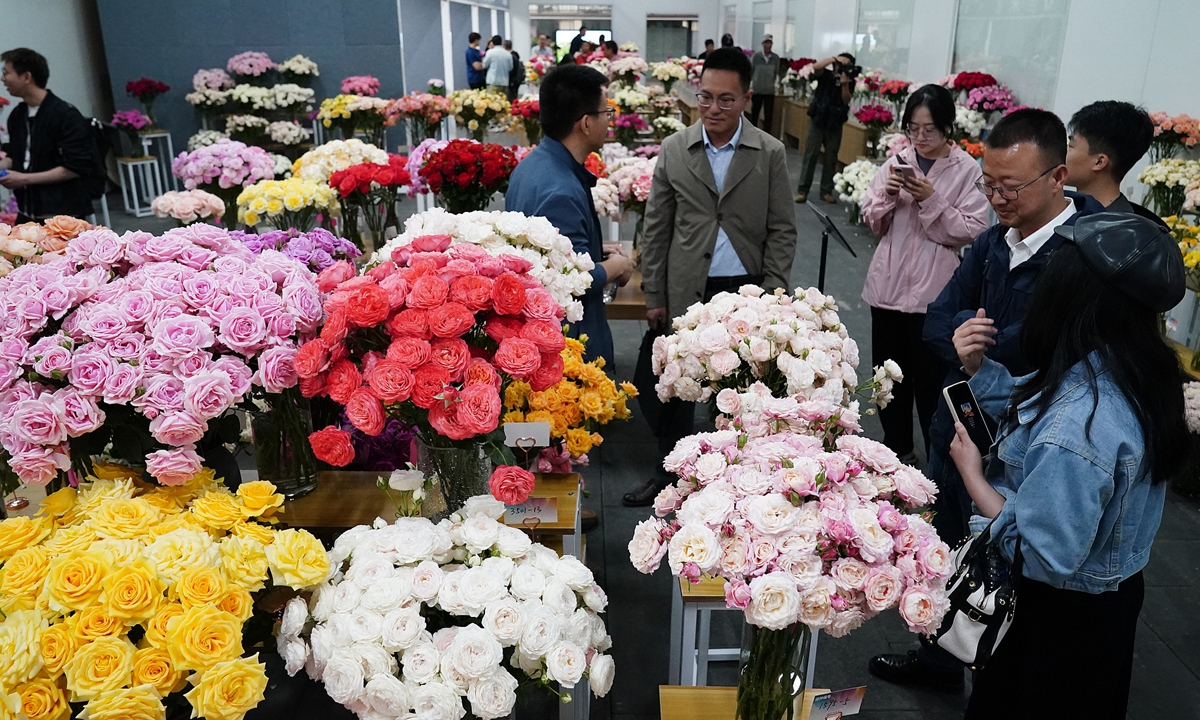
Visitors view new varieties of roses at the rose innovation achievement recommendation conference in Kunming, Southwest China's Yunnan Province, on May 18, 2025. Photo: VCG
But technological self-reliance is only part of the ambition. By inviting the public to name these flowers, the institute hopes to push plant breeding toward a deeper integration of technology, emotion, and culture. Each rose, in this vision, becomes more than a commercial product - it becomes a carrier of shared memory, personal stories, and cultural confidence.By integrating China's outstanding traditional culture, contemporary spirit, and emotional value into the innovative practice of variety cultivation, Chinese-style roses are no longer an abstract aesthetic concept - they have become a tangible, resonant, and shareable expression of culture.
Using flowers as a medium, this approach builds a new bridge for cultural communication, allowing Eastern humanistic values to bloom within the petals. It injects soul into the construction of a distinctively Chinese floral aesthetic system and brings more perceptible, understandable humanistic elements into China's flower industry.
RELATED ARTICLES