Illustration: Liu Xiangya/GT
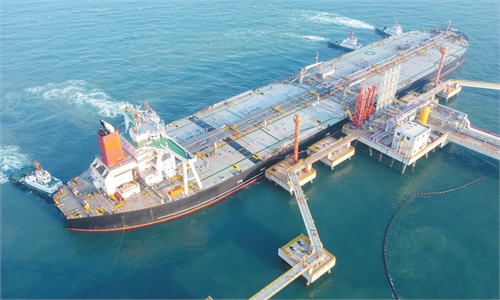
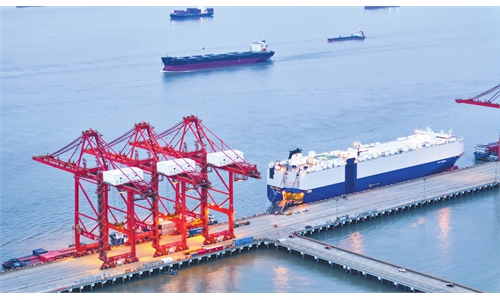
On Tuesday, the first shipments of import and export goods utilizing the new customs supervision model for sea-rail and water-water multimodal transport underwent customs procedures at ports and logistics hubs in Shanghai, East China's Jiangsu Province, and other regions, according to the General Administration of Customs (GAC).This new model is part of a broader effort to streamline customs procedures and to improve the efficiency of logistics operations, ultimately fostering smoother international trade flows.
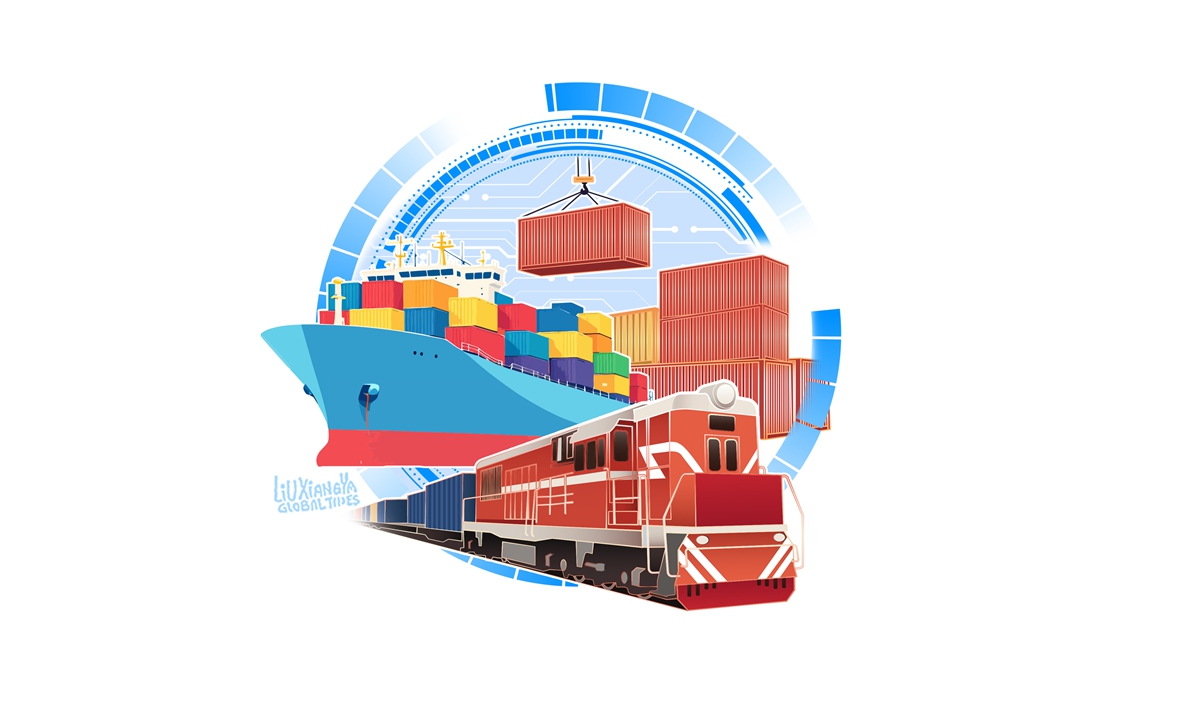
The GAC recently issued an announcement launching a pilot program for sea-rail and water-water multimodal transport supervision for both imports and exports, expanding on the existing rail-road export model. These efforts help improve logistics connections among coastal ports, border areas, and inland regions, fostering the integrated development of ports, railways, and inland waterways.
By allowing inland areas to benefit from the advantages of ports and border checkpoints, such efforts help create a more collaborative and coordinated economic landscape between coastal and inland regions.
In recent years, multimodal transport has rapidly expanded across China. Major trade hubs, ranging from ports and bonded zones to logistics centers and key corridors, have introduced innovative intermodal transport models, including rail-sea services. With this momentum in logistics development, the timing is ideal for optimizing customs supervision, offering the potential to further enhance both imports and exports. By streamlining customs procedures, this effort is set to improve trade efficiency and strengthen the integration of global supply chains.
For example, as of September 2025, the New International Land-Sea Trade Corridor had transported more than 1 million standard containers via rail-sea intermodal services, the Xinhua News Agency reported. By combining the weather resilience of rail transport with the large carrying capacity of maritime shipping, intermodal transport improves efficiency while reducing overall logistics costs.
Another example is the Yiwu (Suxi) International Hub, a freight hub that opened on June 27, 2025 connecting Ningbo Zhoushan Port, the world's largest seaport by cargo throughput, and Yiwu, one of the world's largest small-commodities trading and manufacturing hubs. Since its launch, the hub has been regularly operating sea-rail intermodal trains. In the first 11 months of 2025, Yiwu's sea-rail intermodal services handled 112,800 standard containers, a year-on-year surge of 30.4 percent, according to an article on the website of the Yiwu government.
Building on the development of logistics networks, customs facilitation measures further advance multimodal transport and enhance connectivity among coastal, border, and inland regions.
Traditionally, discussions of international trade often focus on coastal and border regions, while inland areas are sometimes seen as less central to the foreign trade chain.
However, the ongoing expansion of multimodal transport is helping to unlock the foreign trade potential of China's inland regions. By improving connectivity between these areas and key ports, multimodal transport enhances the role of inland areas in international trade.
China's inland regions are steadily enhancing their openness to trade, demonstrating robust consumer demand. In 2025, some inland regions showcased import potential. Customs data revealed that imports into Chongqing, in Southwest China, reached 241.95 billion yuan ($34.8 billion), a 16.4 percent year-on-year increase. Imports into Northwest China's Shaanxi Province totaled approximately 164.21 billion yuan in 2025, up 11.2 percent from the previous year. In Northwest China's Gansu Province, imports surged to 52.79 billion yuan, marking an 8.7 percent increase year-on-year.
China's inland regions show noteworthy demand potential, driven by both the consumer spending and the industrial need for raw materials and bulk commodities. The continued development of multimodal transport is instrumental in unlocking this potential. By improving logistical efficiency and connectivity, multimodal transport systems support both the domestic consumption and the industrial growth.
The opportunities created by the development of multimodal transport extend beyond trade, with the potential to influence deeper and more strategic areas, such as investment and industrial supply chains. As logistics infrastructure improves and customs facilitation advances, export-oriented manufacturing hubs may consider relocating from coastal regions to lower-cost inland areas. This development offers multinational companies new opportunities to optimize their supply chains in China, improving efficiency and reducing costs, while also fostering more balanced regional development.
To sum up, the ongoing development of multimodal transport is integrating China's inland regions more deeply into global trade and investment networks. The customs pilot program, as a component of this broader development, is expected to accelerate this process by streamlining logistics and improving cross-border trade efficiency. As these efforts unfold, multinational companies may find new opportunities to engage with the evolving market.
The author is a reporter with the Global Times. bizopinion@globaltimes.com.cn
RELATED ARTICLES