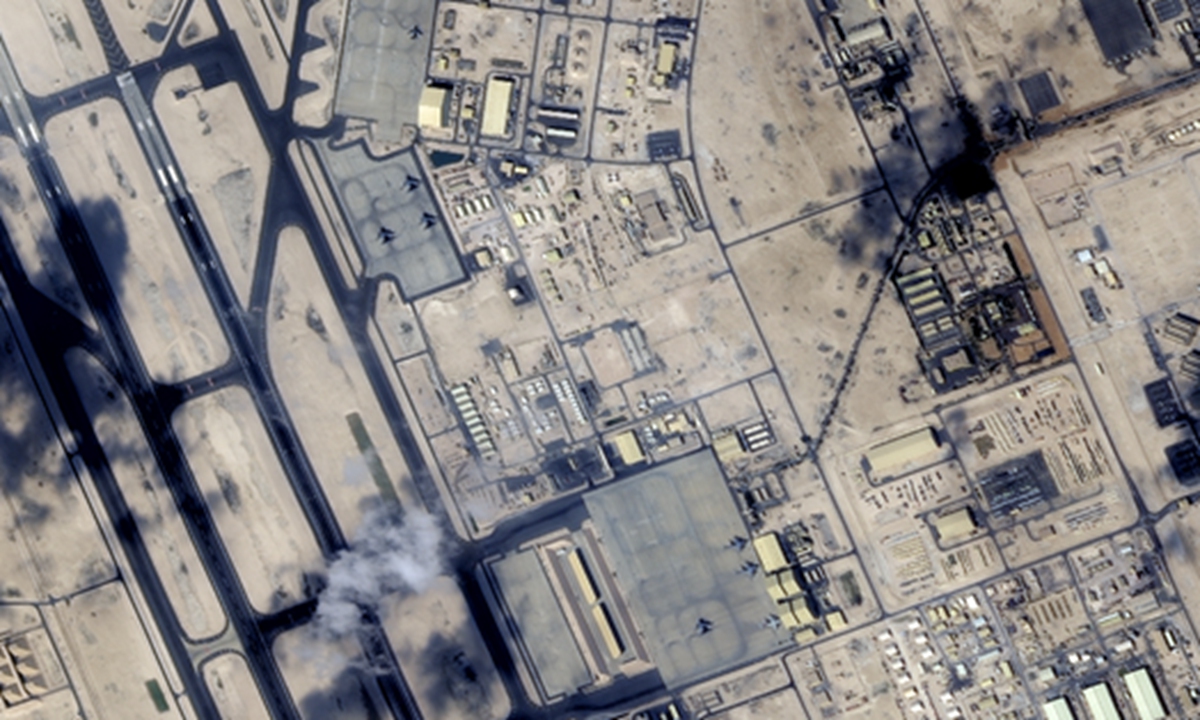
Satellite images taken on January 16 showed five KC-135 aerial refueling aircrafts at Al Udeid Air Base in Qatar
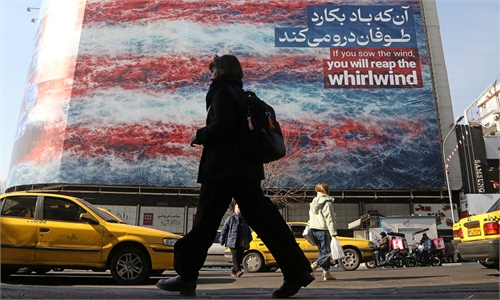
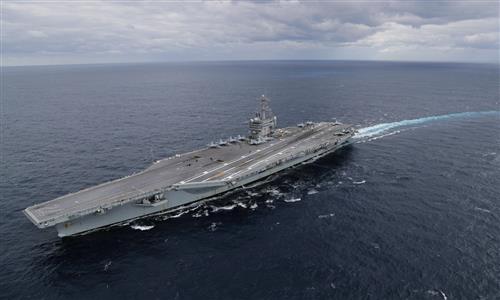
US President Donald Trump said on social media platform Truth Social on January 28 local time that a carrier strike group led by the Abraham Lincoln aircraft carrier is heading toward Iran, warning that any further US military action against Iran would be "far worse" than last summer's US strikes on Iranian nuclear facilities. On the same day, Ali Shamkhani, senior political adviser and representative of Iran's Supreme Leader Khamenei, wrote on social media that "any military action by America, from any source and at any level, will be considered the beginning of a war, and the response will be immediate, comprehensive, and unprecedented, and will target the aggressor, the heart of Tel Aviv, and all its supporters"
As the US and Iran trade increasingly sharp rhetoric and publicly showcase military readiness, the Middle East is facing a growing sense of confrontation. Exclusive satellite images obtained by Global Times indicate that US forces have markedly stepped up military movements at bases surrounding Iran in recent weeks, with enhanced deployments aimed at both attack and defense.
Analysts told Global Times that the probability of Washington opting for a limited, targeted strike against Iran is on the rise. Whether the US military will ultimately pull the trigger, they added, will hinge on several critical signals in the coming period.
Satellite images shows more US aircrafts
The US and Iran were similarly at daggers drawn in mid-January. On January 14, a Reuters report citing Israeli officials said the US military intervention could come in the next 24 hours. Qatar said drawdowns from its Al Udeid air base, the biggest US base in the Middle East, were "being undertaken in response to the current regional tensions." Iran, for its part, temporarily closed its airspace for nearly five hours on January 15 local time, according to media reports.
Despite the atmosphere at the time having been amply stoked, foreign satellite imagery previously obtained by Global Times from the Chinese satellite remote sensing and geospacing analysis company MizarVision showed that US military bases in the Middle East—situated on the front line of any potential conflict—had relatively limited force deployments.
At Al Udeid Air Base in Qatar, the largest comprehensive US military base in the Middle East, satellite images taken on January 16 showed that only a small number of KC-135 aerial refueling aircraft and C-17 transport planes were deployed at the base at the time.
Satellite images taken on January 16 showed five KC-135 aerial refueling aircrafts at Al Udeid Air Base in Qatar
At Prince Sultan Air Base in Saudi Arabia, satellite imagery taken on January 17 likewise showed that US forces had deployed only a limited number of KC-135 aerial refueling aircraft, C-17 transport planes, and F-15 and F-16 fighter jets.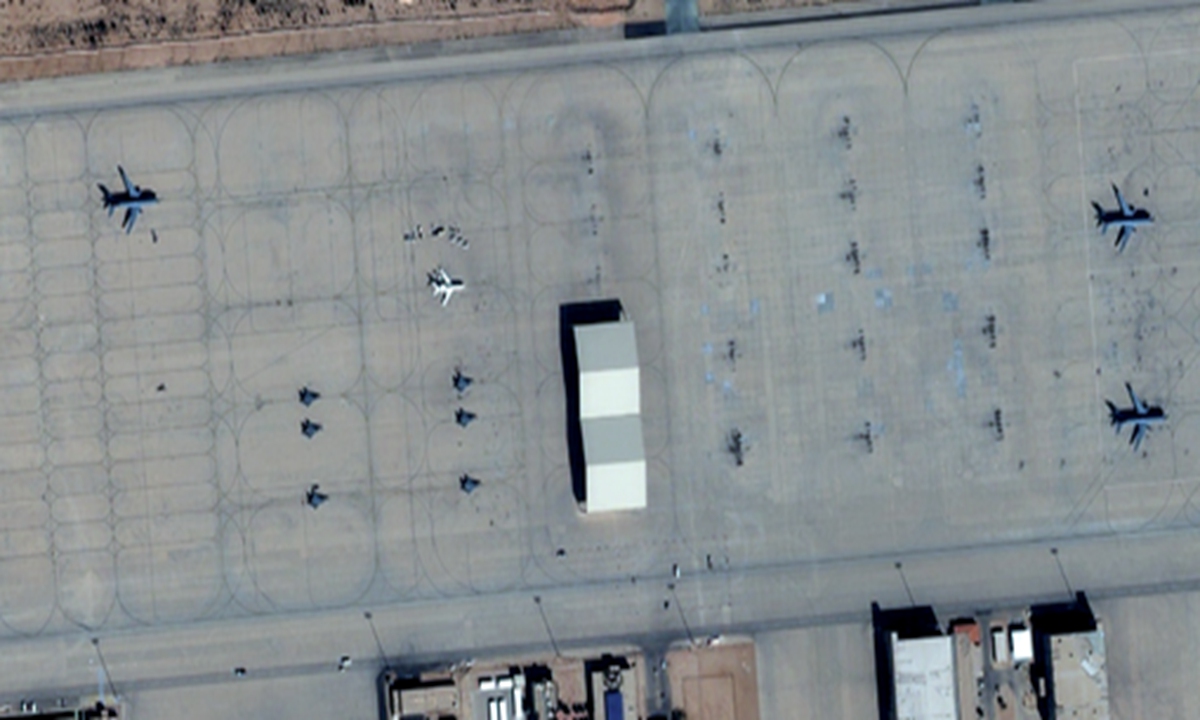
Satellite imagery taken on January 17 at Prince Sultan Air Base in Saudi Arabia
As for naval forces, satellite imagery taken on January 12 showed that at the Naval Support Activity Bahrain Base in Bahrain, US forces had deployed only three littoral combat ships and two Arleigh Burke-class destroyers. At the time, the US aircraft carrier Abraham Lincoln was still operating in the South China Sea.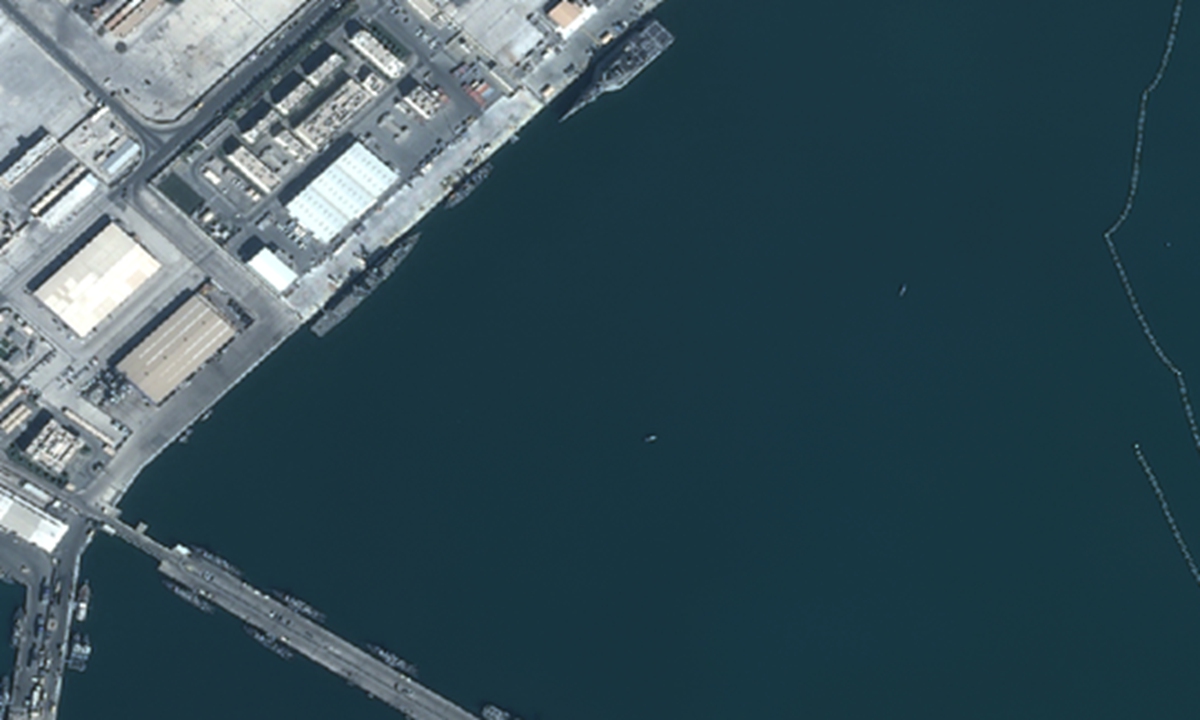
Satellite imagery taken on January 12 at the Naval Support Activity Bahrain Base in Bahrain
However, over the past week or so, US military bases in the Middle East have undergone noticeable changes. A new set of foreign satellite images obtained by Global Times from MizarVision shows that as of January 25, the number of KC-135 aerial refueling aircraft parked on the apron at Al Udeid Air Base had increased significantly.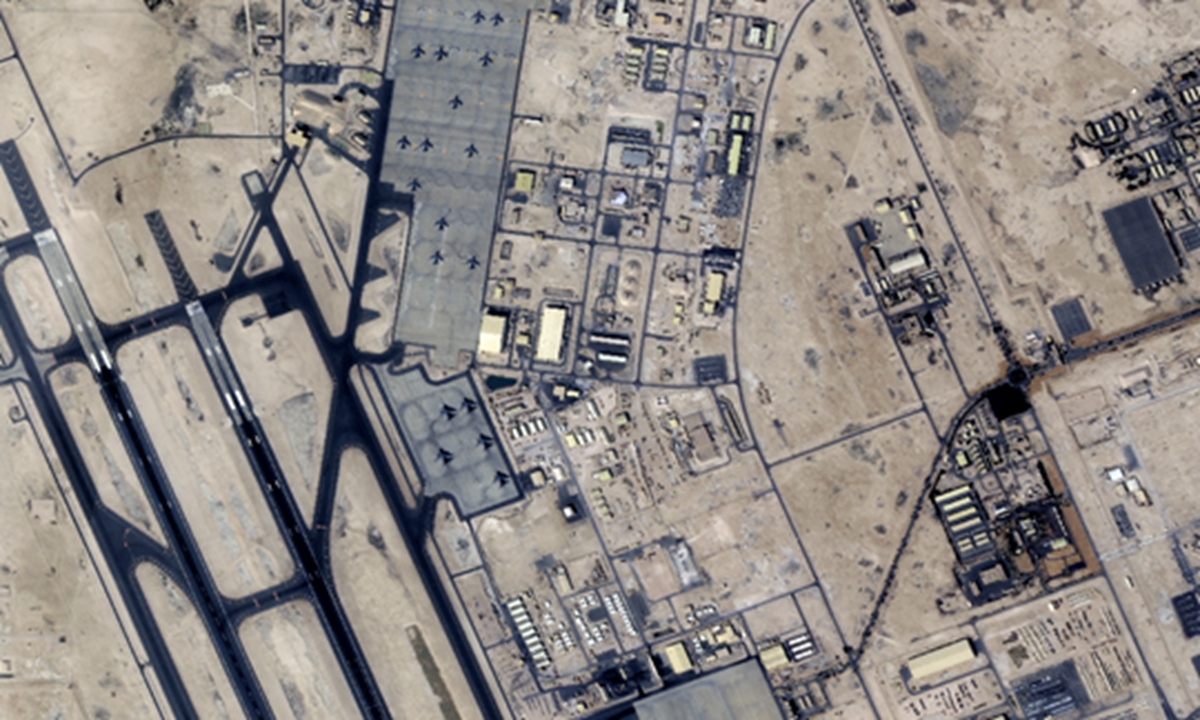
Satellite images taken at the Al Udeid Air Base on January 25 showed 14 KC-135 aerial refueling aircrafts
In addition, another satellite image taken on January 25 shows new equipment deployments around Al Udeid Air Base. After analysis, technical personnel from the MizarVision company assessed that the site is likely a newly installed Patriot air defense system at the base.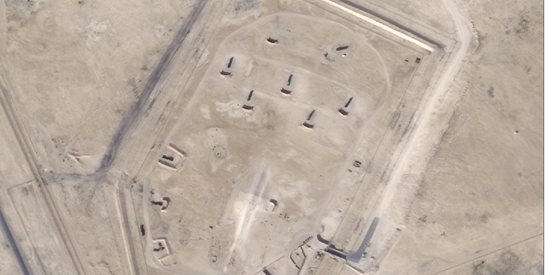
Technical personnel from MizarVision assessed that satellite imagery taken on January 25 shows that air defense shelters around Al Udeid Air Base are equipped with an integrated air and missile defense system, consisting of Patriot missile launchers, AN/MPQ-65 radar vehicles, and other related units.
At Ali Al Salem Air Base in Kuwait, satellite imagery taken on January 26 likewise shows increased air defense deployments. After analyzing the images, technical personnel from MizarVision company said the base is suspected of having deployed a Patriot air and missile defense system.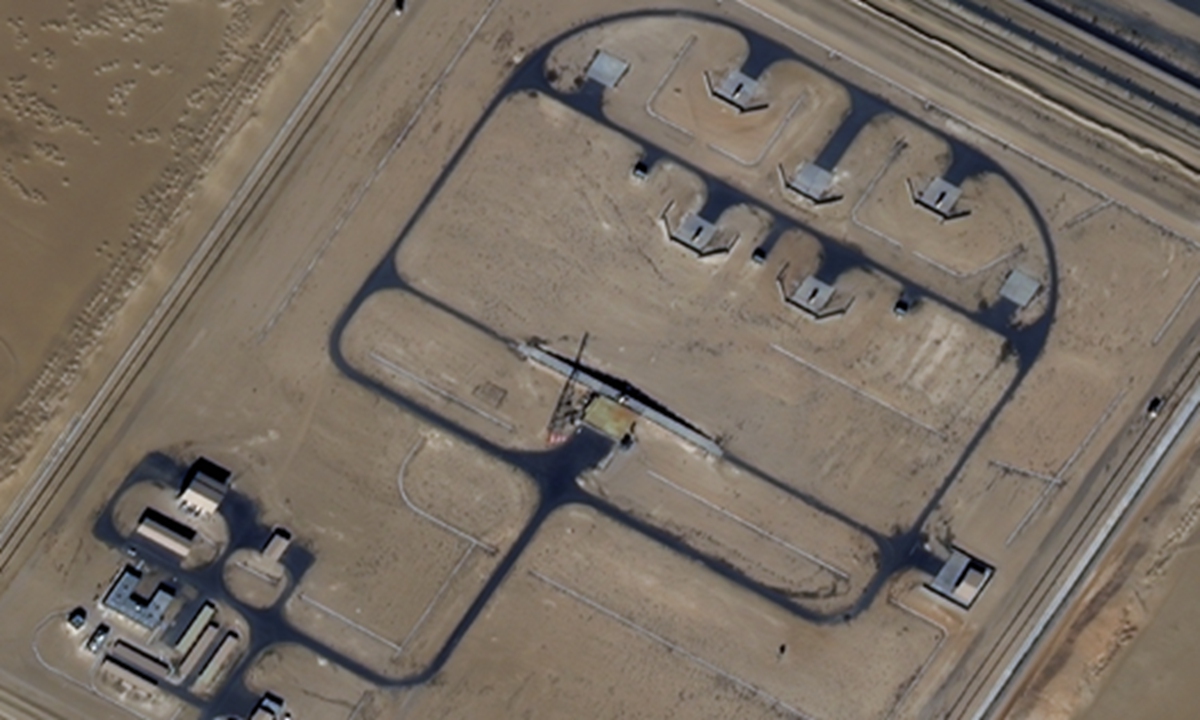
Technical personnel from MizarVision assessed that satellite imagery taken on January 26 shows that the US military's Ali Al Salem Air Base in Kuwait has also strengthened the deployment of air and missile defense weapon systems, including Patriot missile launchers and AN/MPQ-65 radar vehicles.
In addition, satellite imagery taken on January 21 shows that a large number of F-15E fighter jets have been deployed at Muwaffaq Salti Air Base in Jordan.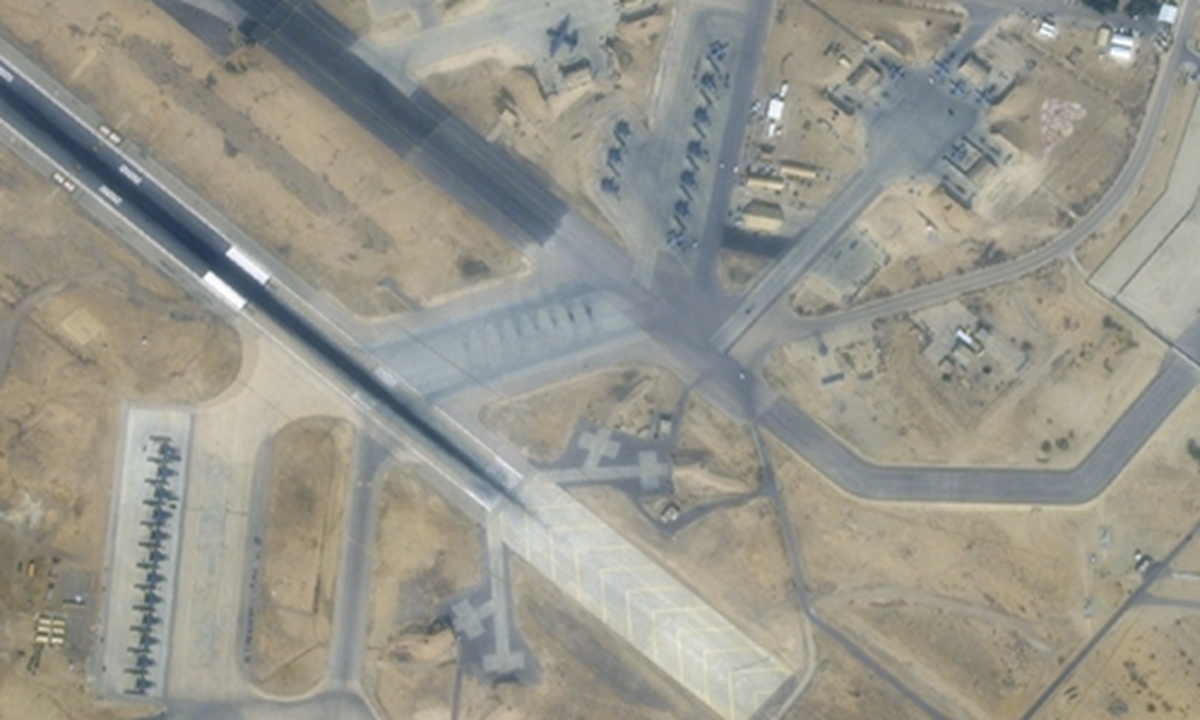
Technical personnel from MizarVision assessed that satellite imagery dated January 21 shows a large number of F-15 fighter jets neatly parked at the Muwaffaq Salti Air Base in Jordan, having been redeployed to the base.
Not enough for large-scale action
Despite the US military's continued buildup in the Middle East, US media observers believe that the current scale of US forces in the region still appears insufficient to launch a large-scale military operation against Iran. A report published on January 28 by The War Zone noted that there has still been no mass influx of US Air Force tactical airpower into the Middle East. The War Zone wrote, "this is something we would likely see if the US intends to execute a sustained campaign, even if limited in scope, against Iran. This points to a more limited operation, unless Israel steps in to provide its tactical fighter force in a joint operation."
"Beyond deploying a carrier strike group, the movement of US strategic bombers—including the B-2 and B-52—toward the Middle East would also be an important signal that the US military may carry out strikes against Iran, and could even be considered a necessary condition," military expert Zhang Junshe told Global Times on Friday.
Zhang explained that many of Iran's key military facilities and missile bases are located in underground shelters and large cave complexes, with special hardening measures in place. As a result, conventional air-dropped munitions and precision-guided weapons have limited effectiveness. The use of large strategic bombers carrying more specialized weapons—such as the GBU-57 Massive Ordnance Penetrator—would be far more destructive.
"During last year's US 'Midnight Hammer' operation, the US military employed stealth aircraft to suppress Iran's air defense systems before dispatching B-2 stealth bombers to strike Iranian nuclear facilities—a tactic that indeed caused Iran significant difficulties," he said.
Based on previous instances in which B-2 stealth bombers were dispatched to the Middle East for strike missions, there are two main operational routes. In addition to taking off from the US mainland and flying directly to Iran with the support of aerial refueling tankers, another option is to deploy to the US military base on Diego Garcia in the Indian Ocean and use it as a forward hub for strike operations in the Middle East.
"If the intention is to launch military action against Iran, Diego Garcia is indeed an 'ideal location' for deploying B-2 bombers," Zhang said. He noted that Diego Garcia is one of the few overseas military bases capable of hosting B-2 stealth bombers. Located nearly 4,000 kilometers from Iran, the base lies within the B-2's operational radius.
Given that Iran's longest-range missile, the Khorramshahr-4, has a range of just over 2,000 kilometers, deploying bombers there would also help avoid Iranian missile strikes. Moreover, some Middle Eastern countries have stated that they will not allow the United States to use US bases on their territory to carry out military operations against Iran, further highlighting Diego Garcia's growing role as a strategic "hub," said the expert.
Satellite images taken on January 17 and January 26 and obtained by Global Times show that only two C-17 transport aircraft were parked at Diego Garcia during this period, with no signs of additional military deployments.
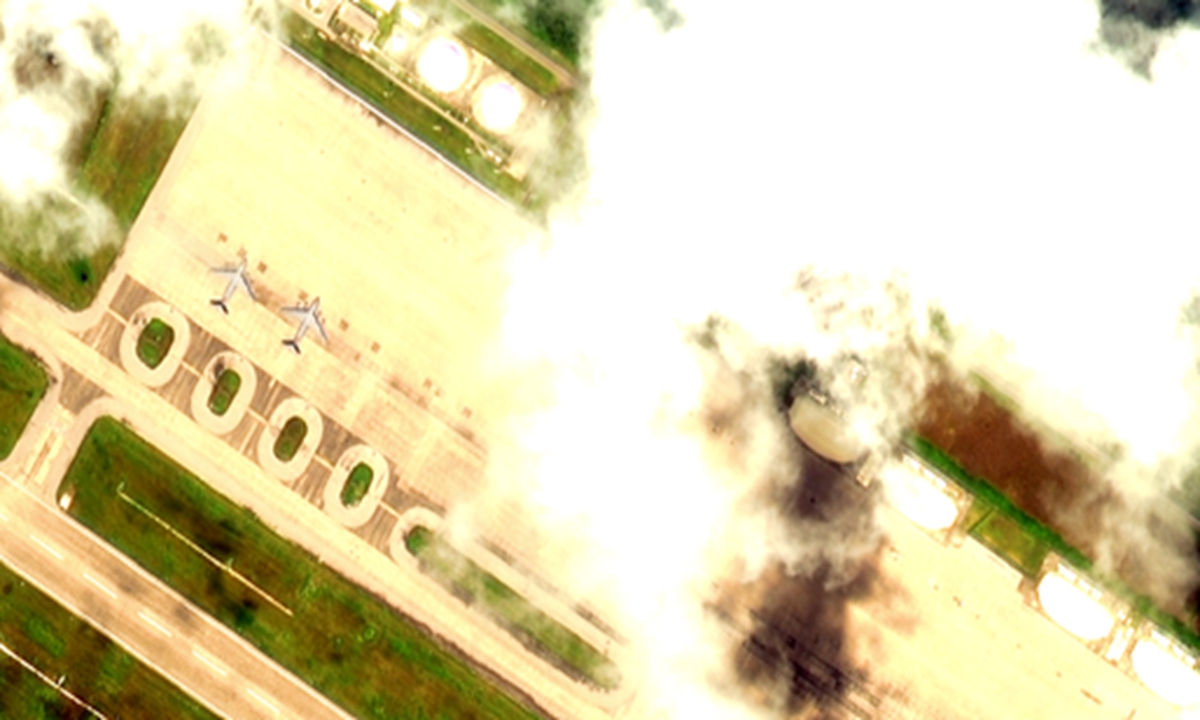
Diego Garcia base as captured by satellite imagery on January 17
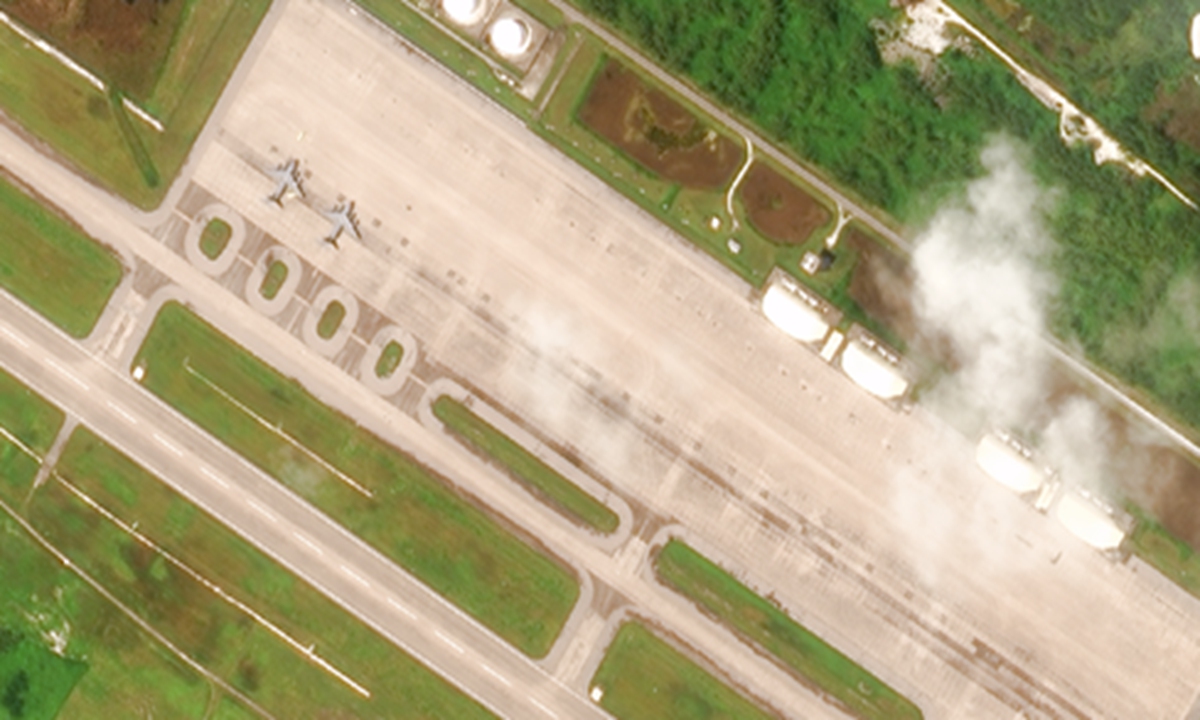
Diego Garcia base as captured by satellite imagery on January 26
Beyond strategic bombers, Zhang said that the US military's next steps in deploying special operations forces and air and missile defense assets in the Middle East—particularly missile defense systems—could also serve as a key "signal" in assessing whether Washington is preparing to take military action.
"Iran possesses a large arsenal of ballistic missiles and attack drones, which, if launched in large numbers, could pose serious challenges to US bases in the Middle East and to Israeli territory," Zhang said. "If the US is determined to use force against Iran, it would also take preventive measures in advance by strengthening defenses at key locations—for example, by deploying more THAAD missile defense systems."
"Iran is clearly drawing lessons from the conflict last June," Sun Degang, director of the Center for Middle East Studies at Fudan University, told the Global Times. He noted that Israel launched its surprise attack at the time under the cover of US-Iran nuclear talks, catching Iran off guard.
Now, with Tehran acutely aware of the gathering clouds of war and having made extensive defensive preparations in advance, the difficulty for the US and Israel to mount another surprise strike has increased significantly, said Sun.
Hard to copy Venezuela action
On January 28 local time, US President Donald Trump posted on the social media platform Truth Social that a fleet led by the aircraft carrier Abraham Lincoln is heading toward Iran, adding "Like with Venezuela, it is, ready, willing, and able to rapidly fulfill its mission, with speed and violence, if necessary."
"Operations against Venezuela focused primarily on forcibly seizing of President Nicolás Maduro, whereas Iran's power structure is not centered on a single individual, making it difficult to shake the foundations of the regime by targeting only a handful of key figures," Sun said.
According to Sun, US planners have envisioned three categories of targets: first, core clerical figures represented by the Supreme Leader; second, dozens of key military and political leaders, such as the chief of staff of the Islamic Revolutionary Guard Corps and the commander-in-chief of the armed forces; and third, strategic assets and facilities including ballistic missile and drone storage sites, production plants and launchers, as well as nuclear facilities. The plan would be to weaken Iran's core military capabilities through precision strikes.
However, from a practical standpoint, Sun said it would be far from easy for the US to overturn the current Iranian government through such means alone. Achieving that goal would inevitably require the deployment of ground forces, which runs counter to Trump's stated preference for an operational approach centered on "air intervention, massive bombardment, and zero contact." "As a result, the core objective of this round of US action is more likely to be to weaken the governing capacity of Iran," Sun said.
"Iran's national resilience forged through long-term confrontation with the United States, combined with its geographic distance from the U.S. homeland, makes it difficult for Washington to replicate the 'Venezuela model' in Iran," Liu Zhongmin, a professor at the Middle East Studies Institute of Shanghai International Studies University, told the Global Times. He also noted that without the deployment of ground forces, the likelihood of the US fully overthrowing Iran's current government remains low.
Liu further explained that even strikes targeting Iran's senior leadership through air attacks or special operations would be unlikely to bring about regime change. From the perspective of opposition forces, neither domestic Iranian opposition groups nor the exiled heir of the former dynasty based in the US can provide Washington with a viable alternative capable of replacing the current government. This further increases the difficulty for the US to topple Iran's ruling establishment through limited strikes or so-called "decapitation" operations.
Moreover, while it cannot be entirely ruled out that an extreme decapitation strike by the US could plunge Iran into chaos, such an uncontrolled outcome is unlikely to be what Washington ultimately wants to see.
Sun said that if Iran were struck by the US and Israel, Tehran's resolve and the intensity of its retaliation would far exceed previous episodes. Compared with the largely symbolic counterattacks during the conflict last June, Iran's current leadership—from the Supreme Leader to the president and foreign minister—has sent consistently tough signals. They understand that failure to respond decisively this time could expose the regime to the risk of being overturned and pose a fatal threat to its core interests. As a result, Iran's retaliation could be more clearly defined and broader in scope, no longer limited to selective, symbolic strikes, but potentially directed straight at the opponent's key personnel and strategic facilities.
Liu said the US' Middle East strategy remains one of retrenchment, aimed at avoiding entanglement in a prolonged war and preventing itself from being dragged into a full-scale regional conflict that would be difficult to exit.
In addition, the latest National Security Strategy Report explicitly calls for reducing US involvement in the Middle East, no longer providing "public goods" for the region, and requiring allies to shoulder greater responsibilities. These strategic choices, Liu said, all point to a relatively low likelihood that the Trump administration would proactively launch a long-term war against Iran, said Liu.