Tension lingers as Trump claims Iran is ‘talking to’ US, hinting at deal to avoid military strikes; Situation in fragile balance of ‘deterrence and probing’: Chinese expert
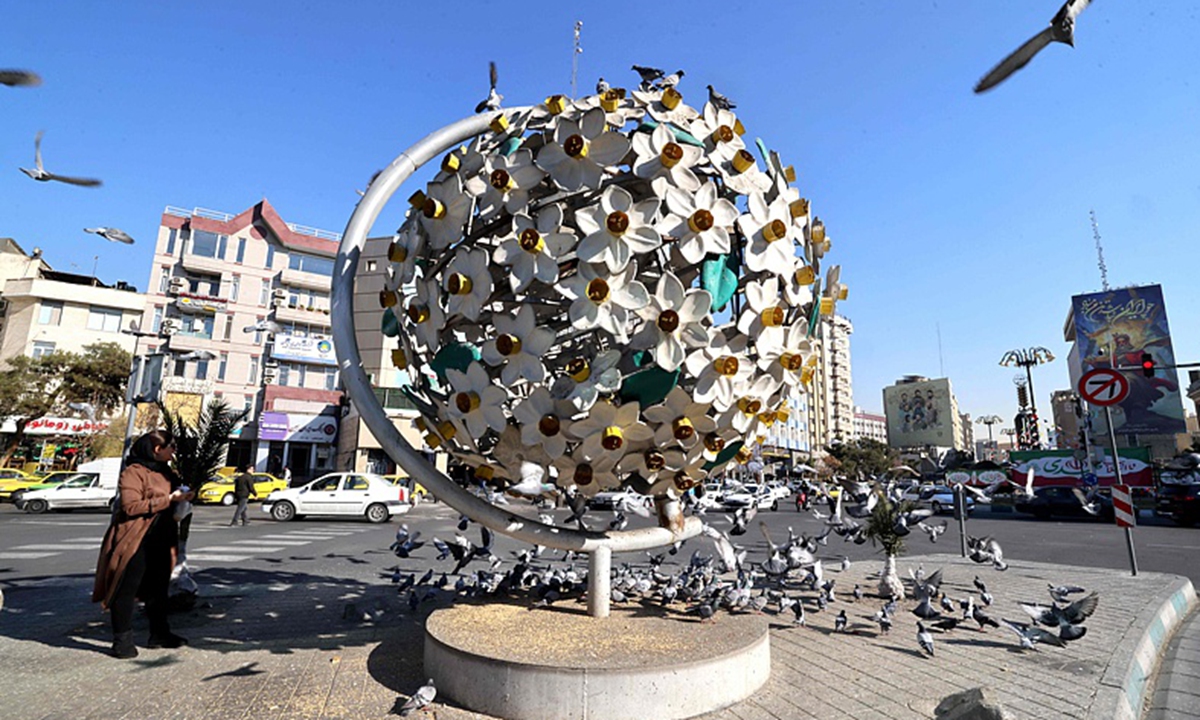
An Iranian woman walks past pigeons gathered at the foot of a sculpture in the Iranian capital Tehran on January 31, 2026, ahead of the 47th anniversary of the 1979 Islamic Revolution.
US President Donald Trump claimed Iran is "talking to" the US and hinted at a deal to avoid the use of military strikes on Saturday, according to The Guardian. Iran's top national security official has said the "formation of a structure for negotiations is progressing" as tensions rise in the Gulf amid a military buildup by Washington in the region.
A Chinese expert said on Sunday that at present, the current situation is in a fragile balance of "deterrence and probing." The possibility of contact and negotiations between the two sides still exists, however, there is a severe lack of mutual trust in the US-Iran relationship, and in the short term, reaching an agreement that allows both sides to save face remains highly challenging.
"The plan is that [Iran is] talking to us, and we'll see if we can do something. Otherwise, we'll see what happens," Trump told a Fox News correspondent.
He added that "the last time they negotiated, we had to take out their nuclear, didn't work, you know. Then we took it out a different way, and we'll see what happens."
Trump added that US allies in the region were not being told of plans for possible strikes due to security reasons. He has threatened to intervene in Iran in the wake of anti-government protests, The Guardian reported.
Ali Larijani, head of Iran's Supreme National Security Council, posted on X on Saturday that, "unlike the artificial media war atmosphere, the formation of a structure for negotiations is progressing."
Against the backdrop of mounting tensions, Iranian media published images on Saturday showing Supreme Leader Ali Khamenei in public for the first since the protests erupted - attending prayers at the tomb of Islamic Republic founder Ruhollah Khomeini to mark 47 years since the Islamic Revolution, The Times of Israel reported.
The current situation is in a fragile balance of "deterrence and probing." Currently, both the US and Iran have intensified their tit-for-tat military postures at both the cognitive and operational levels. While exerting pressure on Iran, Trump continues to issue public statements in an attempt to compel Iran to return to the negotiating table. On Iran's side, despite adopting a similarly hardline stance, including conducting military exercises, it still seeks to avoid a large-scale conflict with the US amid its internal and external challenges, Liu Zhongmin, a professor at the Middle East Studies Institute of Shanghai International Studies University, told the Global Times on Sunday.
At present, the possibility of contact and negotiations between the two sides still exists. However, given the US strikes on Iranian nuclear facilities on June 21 to 22, 2025, there is a severe lack of mutual trust in the US-Iran relationship.
The latest exchange follows a warning from US Central Command (CENTCOM) to Iran's Islamic Revolutionary Guard Corps (IRGC) on Friday over its plans to hold a two-day naval exercise in the Strait of Hormuz, a Gulf maritime passage critical to global trade. "Any unsafe and unprofessional behavior near US forces, regional partners or commercial vessels increases risks of collision, escalation, and destabilization," CENTCOM said in a statement.
Iranian Minister of Foreign Affairs Abbas Araghchi hit back on Saturday, saying in a social media post that the US military, operating off Iran's shores, "is now attempting to dictate how our Powerful Armed Forces should conduct target practice on their own turf".
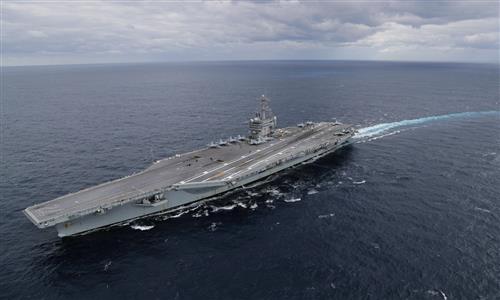
Recently, the US has significantly mobilized its military forces, including the deployment of aircraft carriers, adopting a resolute stance. If a negotiation fails to yield results that would allow US president to declare a "US victory," the risk of military action cannot be entirely ruled out, Liu said.
Consequently, even if negotiations resume, against the backdrop of escalating and intensifying confrontations between the two sides in recent times, reaching an agreement that allows both parties to save face in the short term remains highly challenging, Liu explained.
RELATED ARTICLES