ARTS / CULTURE & LEISURE
Exhibitions celebrate Year of the Horse ahead of Spring Festival
Museums bring Chinese zodiac traditions to life
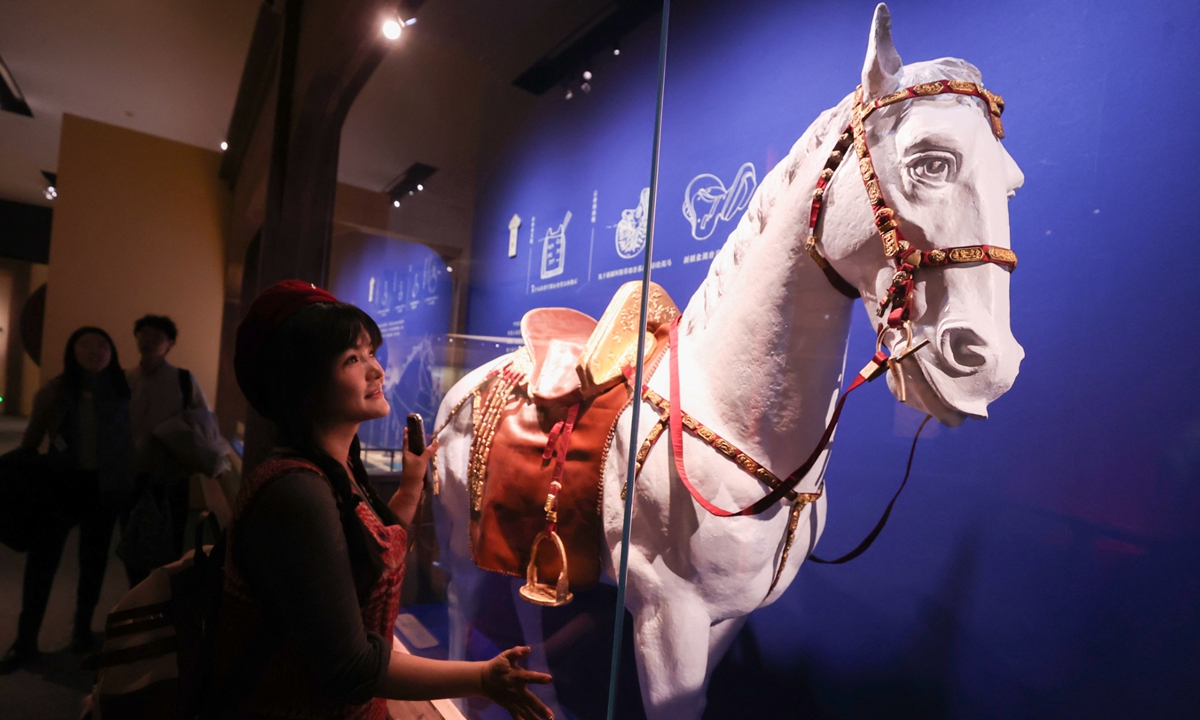
Photo: VCG
As the Spring Festival approaches, museums across China have opened exhibitions featuring everything from ancient relics to cutting-edge digital installations to celebrate the Year of the Horse.As a zodiac symbol, the horse combines practical significance with spiritual meaning and aesthetic appeal, making it one of the most popular and enduring figures in the Chinese zodiac. These exhibitions not only mark the beginning of a new lunar year but also highlight the historical significance of the horse in Chinese culture, Bu Xiting, an associate researcher at the School of Cultural Industries Management at the Communication University of China, told the Global Times on Tuesday.
The horse has long been a crucial companion to humanity. Since its domestication, the horse has played an indispensable role in the advancement of human civilization. From a symbol of social status and military power to facilitating the movement of goods and information across vast distances, the horse has had a profound impact on Chinese society. It was also vital to connecting the East and the West along the Silk Road, enabling cultural exchanges that shaped the history of the region, said Bu.
In addition to its practical significance, the horse holds deep cultural and emotional meaning in Chinese folklore, which captures the deep-rooted connection between the Chinese people and the horse as a symbol of vigor and prosperity.
On January 30, the National Museum of China in Beijing launched a large-scale exhibition themed around the Year of the Horse. The exhibition, showcasing more than 120 cultural relics, delves into the horse's role in Chinese history, from its domestication to its symbolic place in imperial ceremonies.
Featured items include intricate saddle and bridle craftsmanship and artifacts from the Silk Road.
One of the exhibition's star attractions is a Tang Dynasty (618-907) tri-colored glazed ceramic horse, a longtime favorite among visitors to the National Museum of China. The rare black-glazed figure is noted for its polished surface and powerful stance.
Xia Yin, who has visited the exhibition, told the Global Times that she eagerly reserved a ticket as soon as she learned of the exhibition. "I'm a person born in the Year of the Horse, so seeing these historical artifacts, especially those related to my zodiac sign, is both thrilling and educational."
In addition to the National Museum of China, other institutions are also offering their own exhibitions to commemorate the Year of the Horse. The Beijing Folk Custom Museum is set to display horse-themed artifacts from February 17, the first day of the 2026 Chinese New Year, through December. The museum will showcase cultural relics that highlight the horse's diverse roles in Chinese traditions, including its use in ceremonies, rituals, and popular customs.
Meanwhile, the Tianjin Natural History Museum has introduced a multi-faceted exhibition on horses. The exhibition explores the horse's evolution from its prehistoric ancestors to modern species, featuring fossil evidence alongside displays of living members of the horse family, including wild horses, wild asses and zebras. Using multimedia projections, it introduces the animal's physical traits, behavior and conservation status. It also traces the history of domestication, examining how horses evolved from a source of food and labor into trusted partners in war, culture and sports.
The exhibition also features, for the first time, a specimen of Przewalski's horse, a nationally protected species in China and the world's only surviving truly wild horse, making it a major highlight of the show.
In Shanghai, the Shanghai Science and Technology Museum is gearing up for a special exhibition on the Year of the Horse that will open on February 17, marking the museum's first major collaboration with the Palace Museum since its reopening.
The exhibition will feature 27 precious horse-related artifacts from the Palace Museum, spanning from the Han Dynasty (206BC-AD220) to the Ming (1368-1644) and Qing (1644-1911) dynasties. Highlights include ceremonial horse gear, weapons, artworks and specimens representing some horse breeds.
An exhibition at the China National Silk Museum in Hangzhou, East China's Zhejiang Province, brings together 288 horse-themed cultural and creative products from more than 40 museums, cultural institutions, design companies and individual designers nationwide, showcasing how traditional horse imagery from museum collections has been reinterpreted in contemporary design.
Ji Xiaofen, director of the China National Silk Museum, said the works reflect both growing cultural confidence among young people and the diversity of the current era, as these historical horse motifs are creatively transformed into modern lifestyle and fashion products, according to China Radio International.
The popularity of the Year of the Horse exhibitions reflects a convergence of timing, innovation and cultural resonance, coinciding with the Spring Festival travel and holiday season, supported by museums' creative approaches to presentation, and driven by the enduring appeal of horse culture itself, noted Bu.
According to Bu, the trend underscores "how museums, using contemporary forms of communication, can tap into deeply rooted cultural symbols such as the Chinese zodiac to engage the public, allowing ancient artifacts and traditions to find renewed relevance in modern life."
RELATED ARTICLES