ARTS / CULTURE & LEISURE
Ancient pottery sheds light on Beijing’s role as late Neolithic cultural corridor
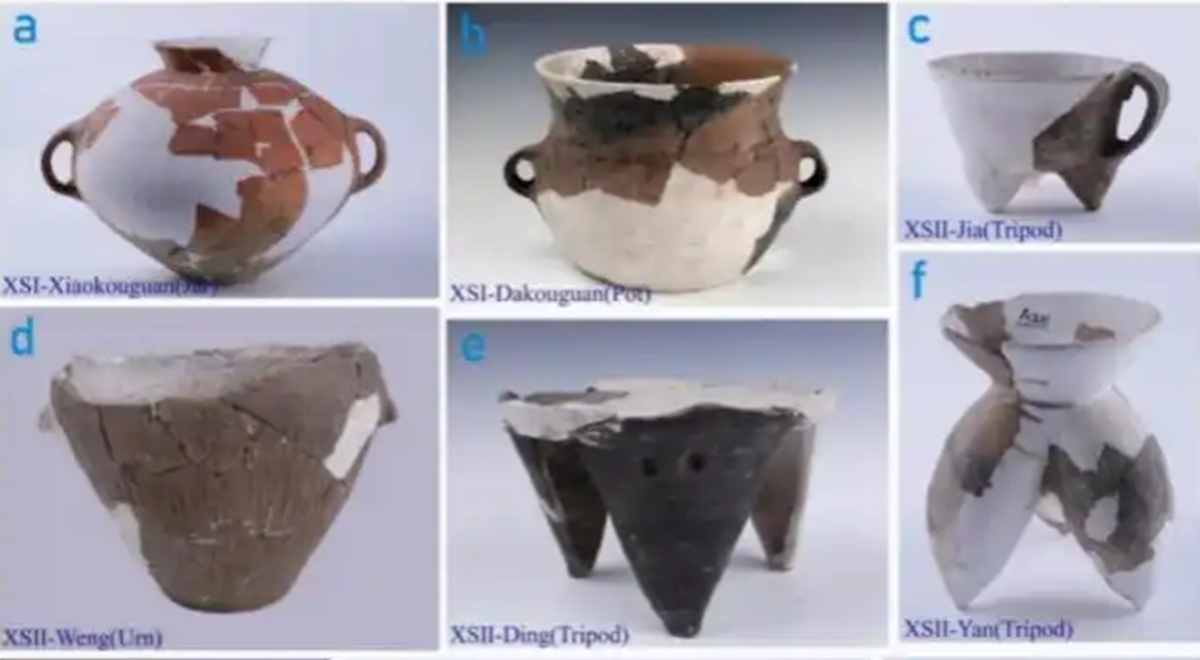
Pottery from the Xueshan archaeological site in Beijing
New research analyzing ancient pottery from the Xueshan archaeological site in Beijing offers fresh insights into how the region functioned as a "cultural corridor" during the late Neolithic period.The multidisciplinary study, published in the Journal of Archaeological Science: Reports, reveals how early communities in the area blended local traditions with influences from multiple neighboring cultures, providing evidence of the dynamic social interaction across northern China more than 4,500 years ago.
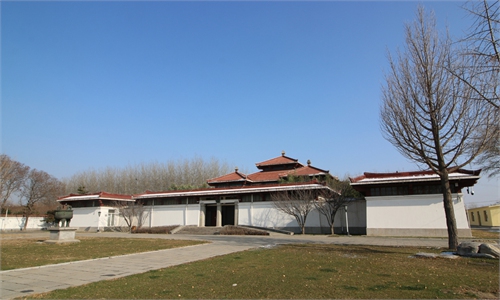
Located in northern Beijing's Changping district, the Xueshan site contains buried cultural deposits spanning the late Neolithic to the early Bronze Age (about 3000BC-1500BC). Excavations have identified two distinct cultural phases, Xueshan I and Xueshan II, but until now detailed scientific analysis of the material remains has been limited.
A research team from Capital Normal University's School of History and the Beijing Municipal Institute of Archaeology conducted an extensive study of pottery shards uncovered at the site, using technologies including X-ray Fluorescence Spectroscopy (XRF) and X-ray Diffraction (XRD), alongside traditional craft analysis.
The results indicate that over a span of more than a thousand years, the Xueshan inhabitants demonstrated both dynamic technological advances and remarkable consistency in their craft. The raw pottery materials for both coarse-paste and fine-paste pottery in the two phases of the Xueshan site were not significantly different, suggesting a common source.
However, an analysis of the pottery-making technology at the site shows that the pottery manufacturing techniques of the Xueshan Phase II culture were clearly more advanced than those of the Xueshan Phase I culture, reflecting the development of manual production technology over time, according to the paper.
In preparing materials, Xueshan Phase I potters added talc to small, narrow-necked jars to improve heat resistance. Phase II potters, by contrast, took a more refined approach, sifting clay and adding ground quartz to precisely tweak material performance. The shift reflects a broader trend in pottery craftsmanship, moving from simple techniques toward specialized production, according to a report on the website of the Capital Normal University.
By analyzing pottery shapes, chemical composition, and production techniques, the new study clearly highlights Beijing's unique role as a Neolithic "cultural corridor," according to the report.
Pottery from Xueshan Phase I shows close connections with northern Inner Mongolia, the Hongshan culture, and the Xiaheyan culture. Phase II pottery reflects a more complex "interaction network," incorporating techniques, molded forms and decorative styles from the other Neolithic cultures in other regions.
Neolithic communities in Beijing responded to outside cultural influences with a flexible approach: They built on local production while selectively integrating foreign elements. Rather than blindly imitating external styles, they adapted new techniques to meet their own social needs while remaining grounded in local resources.
Liu Zheng, a member of the Chinese Society of Cultural Relics, told the Global Times on Monday that Beijing lay at the junction of the Central Plains' farming civilization and the northern grassland nomad civilization. The Yanshan Mountains both divided and connected these two regions, marking a boundary between the north and the south while linking the plains with the steppe.
Sitting squarely within this corridor, the Xueshan cultures absorbed cultural influences from both the grasslands and the agricultural south. The site's pottery, in particular, underscores the site's role as a conduit for interaction between northern and southern civilizations, earning it the description as a Neolithic cultural corridor.
This big diversity and low standardization in production reflects how early Beijing communities used handicraft techniques to navigate social identity and differences as the region progressed along the path of increasing societal complexity, noted Liu.
RELATED ARTICLES